



Long Low Bench
A long low bench offers low-slung seating and display space, bringing extended proportions and character to interiors.
Long Low Bench
A long low bench encompasses extended forms used for seating and low placement, appearing across various historical periods.
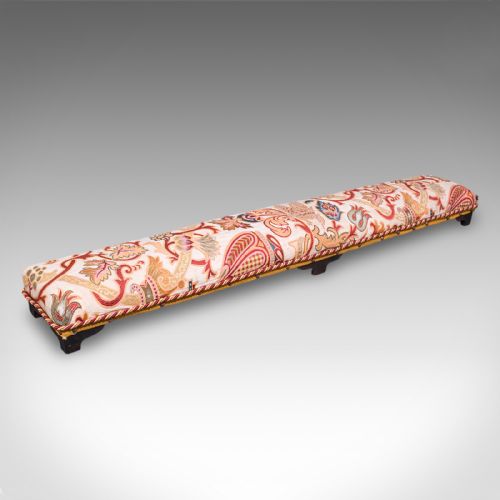
Buyers encounter footstools, fender stools, window seats, coffee tables, and narrow pig benches matching this description.
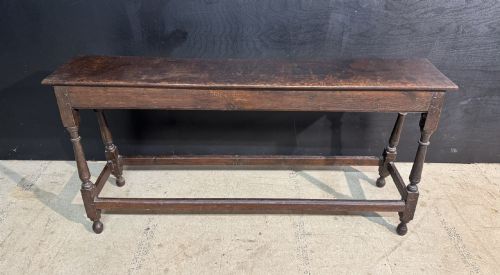
The selection ranges from oak joint stools and prayer stools to walnut fender stools and mahogany framed pieces.
How they were made
Construction relies primarily on timbers such as oak, walnut, mahogany, and pine, shaped into frames and supports.
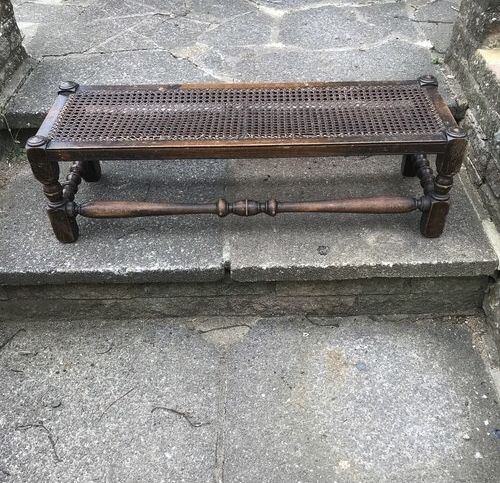
Upholstery involves materials like leather, cane, textile, wool, and tweed, complemented by brass details and carved ornamentation.
A narrow hardwood pig bench brings rustic agricultural utility directly into the modern living room as an unexpected coffee table.
What varies in quality
The degree of hand carving and the intricacy of stylistic details, such as French Régence or Venetian Renaissance Revival motifs, distinguish individual examples.
The retention of original elements, including period fabric, cane seating, and turned legs, influences the character of each piece.
The Long Low Bench Glossary
- Fender stool
- A long, low seat designed to sit in front of a fireplace hearth. These pieces traditionally provided fireside seating within the fender area.
- Joint stool
- A sturdy wooden stool constructed with mortise and tenon joints using wooden pegs. These early forms demonstrate robust framework.
- Window seat
- An elongated seat built or placed specifically for positioning beneath a window. They often feature upholstered tops or carved wooden frames.
- Cabriole leg
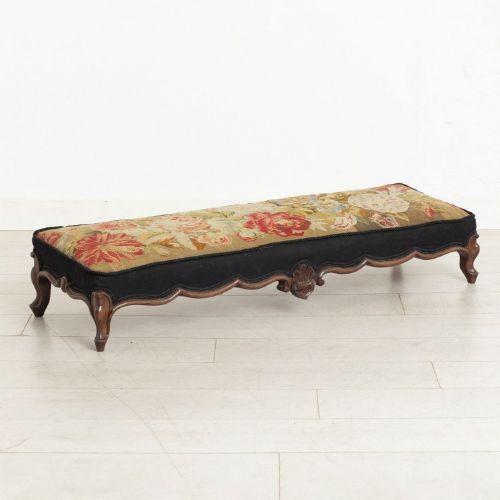
- A furniture leg that curves out and then in, resembling an animal's leg. This design appears frequently on Victorian walnut frames.
Long Low Bench: Frequently Asked Questions
What is a long low bench used for?
These pieces serve multiple functions as footrests, window seats, fireside rests, and low coffee tables in living spaces.
Their elongated, low proportions allow them to fit beneath windows or serve as extended seating without blocking views.
How do I identify a Victorian long low bench?
Victorian examples often feature walnut or mahogany frames supported by cabriole legs, alongside original fabric or leather upholstery.
Makers of this era also produced fender stools designed specifically for placement along hearths.
What materials are common in these benches?
Common timber frames include oak, walnut, mahogany, and pine, reflecting the periods from the eighteenth century onward.
Upholstered variants incorporate cane seating, wool, tweed, and leather, occasionally accented with brass fittings or gilding.
Are these benches suitable for coffee tables?
Several pieces function effectively as coffee tables or magazine tables, particularly narrow wooden variants and converted pig benches.
Upholstered versions can also accommodate trays for stable surface use.