


Georgian Long Stool
A georgian long stool is a substantial seat built for utility or rest, bringing authentic period character and low-profile seating to any room.
Georgian Long Stool
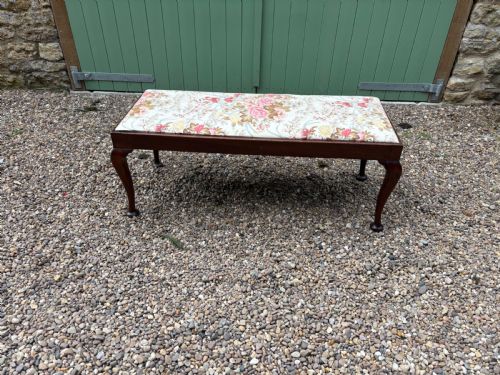
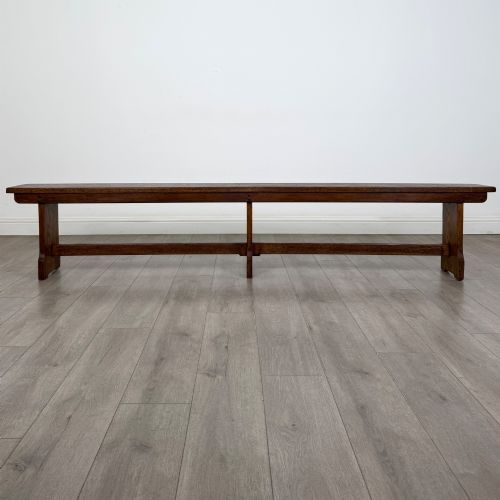
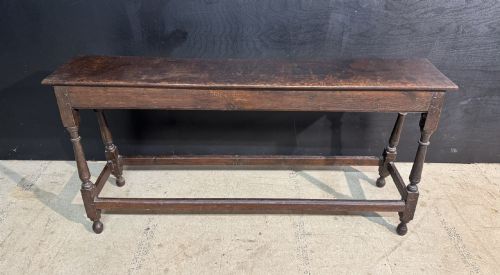
When you search for a georgian long stool, you encounter an array of elongated seating forms built during the 18th and 19th centuries, alongside later revivals. These pieces encompass oak joint stools, mahogany window seats, and long footstools designed for fireside or dressing use.
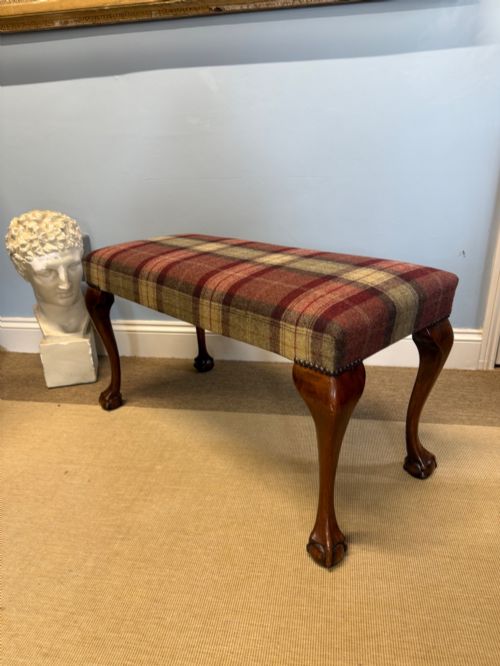
The versions you are most likely to meet on this page range from solid oak tavern benches and joint stools to mahogany frames upholstered in wool, velvet, leather, or ticking. They cross several eras including Georgian, Victorian, and early 20th-century revival periods.
Makers of the period adapted these long forms for specific domestic tasks, producing everything from miniature mahogany footstools to large window seats with buttoned leather and brass studs. Each piece serves as a functional survivor of traditional woodworking and upholstery methods.
How They Were Made
Carpenters constructed the sturdy frames of these long stools primarily from solid timber such as mahogany and oak, employing traditional jointing techniques to ensure stability across an extended span. Hardwood underframes provide the structural backbone for daily sitting and resting.
Upholstered variants rely on traditional stuffing materials covered in wool, velvet, leather, tweed, or ticking, frequently secured with brass studs. This combination of dense textile work and timber framing defines the physical construction recorded in the evidence.
Listings span the eighteenth, nineteenth, and early twentieth centuries, uniting mahogany and oak frames with wool, leather, and ticking upholstery.
What Varies in Quality
The distinction between standard and superior pieces rests in the proportion and elegance of the timber frame, where well-drawn lines and refined proportions elevate the design. Finer examples display meticulous joinery and harmonious scaling rather than purely utilitarian bulk.
Material selection and upholstery finish also divide the range, from simple solid oak tops to carefully buttoned leather or ticking with precise brass-stud detailing. The integrity of the original wood grain and the quality of the textile covering dictate the standing of each piece.
The Georgian Long Stool Glossary
- Joint stool
- An early form of wooden stool constructed with mortise and tenon joints, predating the widespread use of upholstered seating. These sturdy pieces rely entirely on exposed pegged timber framing.
- Window seat
- A long stool specifically proportioned to sit within the recess of a domestic window. They often feature upholstered tops designed for extended sitting.
- Buttoned
- An upholstery technique where twine is pulled through the padding and secured to create a grid of recessed points. This method holds the filling firmly in place while adding texture to leather or fabric.
- Kilim
- A flat-woven textile originating from the Middle East or Eastern Europe, sometimes utilised to cover nineteenth-century footstools. Such coverings introduce geometric patterns and distinct colour to the piece.
- Ticking
- A tightly woven cotton or linen fabric traditionally used to contain feather or down stuffing. Its striped pattern appears frequently on period footstools.
Georgian Long Stool: Frequently Asked Questions
Where did people use long stools?
These long seats served multiple purposes around the home, appearing beside firesides for resting feet or positioned by windows for reading and sewing.
Taverns and larger domestic rooms utilised them as benches for multiple occupants, while dressing rooms accommodated padded variants for daily routines.
How do I identify a Georgian frame?
Authentic pieces from the period display characteristic timber selection, primarily solid mahogany or oak, shaped with restrained classical lines.
Proportions remain balanced and elegant, avoiding the heavier ornamentation seen in later Victorian revivals.
Can I use these stools daily?
Most of these pieces are built from sturdy hardwoods like oak and mahogany, making them entirely suitable for regular seating or foot support.
Upholstered variants provide comfortable padding, though historical textiles may require careful placement to preserve their condition.
What is a carriage stool?
A carriage stool is a compact portable seat designed for use during travel or within limited domestic spaces.
They combine robust hardwood frames with practical upholstery such as tweed to withstand frequent movement.