

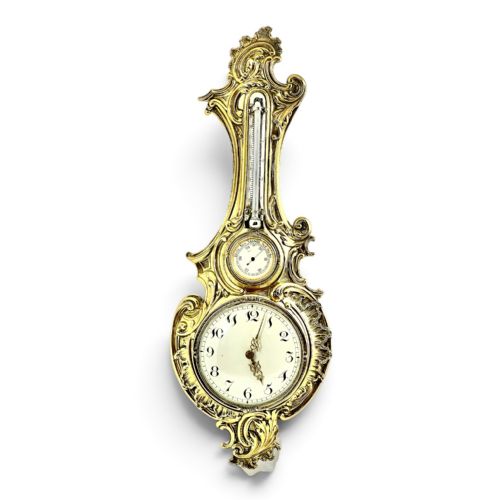


London Station Clock
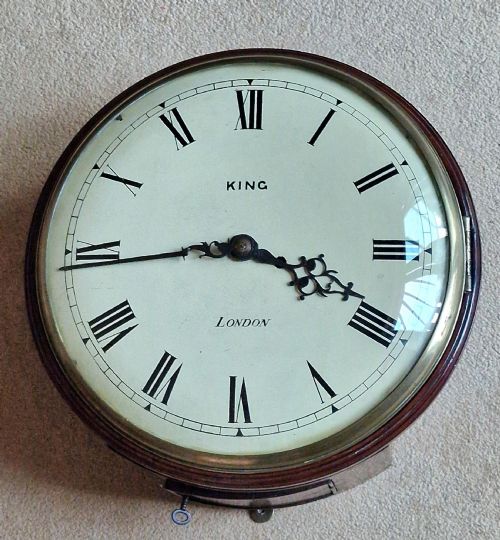
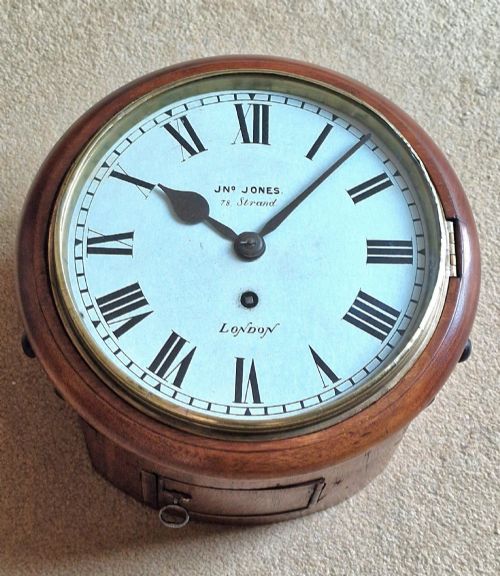
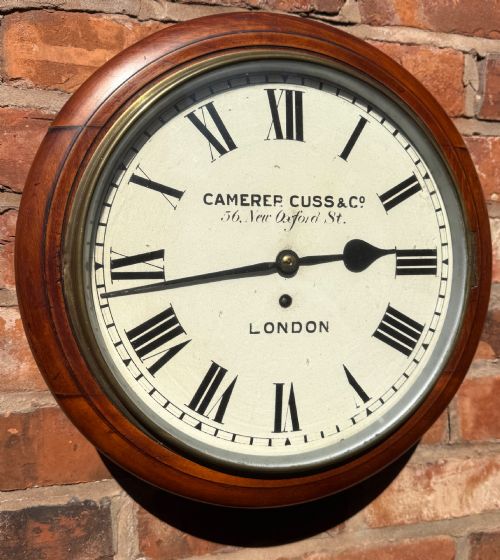
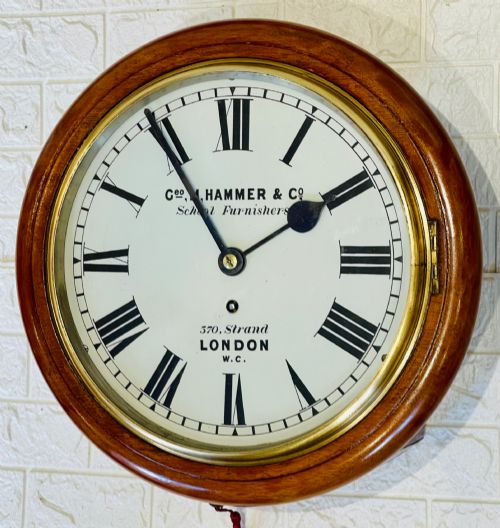
These london station clock examples are substantial timepieces built for public platforms and municipal offices, offering heavy brass movements and clear painted dials.
London Station Clock
A london station clock is a robust timepiece originally designed for public transit networks and municipal buildings, where legibility and reliable timekeeping matter most. When you examine this selection, you encounter wall-mounted fusee dials alongside barometers and striking drop dial pieces dating from the eighteenth century through to the twentieth century.
The most common formats on this page are circular wall timepieces featuring mahogany or oak surrounds, clear glass covers, and enameled or painted iron faces. Makers such as John Walker and Camerer Cuss dominate these listings, supplying railways like the LMS and British Railways as well as local authorities.
Materials and construction
Makers housed these movements in sturdy timber cases, utilising dense hardwoods like mahogany and oak to protect the internal brass gears from atmospheric shifts in busy transport hubs. Glass protects the painted iron or enameled dials, while heavy brass bezels secure the front aperture.
Internal mechanics rely on chain fusee movements and eight-day timepieces designed to maintain steady tension on the gear train as the mainspring unwinds. This mechanical arrangement delivers the sustained accuracy required for railway scheduling.
London Station Clock Retail Price Guide 2026
Typical asking prices for london station clock among the pieces listed under this phrase on Sellingantiques today, from the lower quarter to the upper quarter. They describe what is for sale here now, not the wider market.
Listings feature wall clocks and barometers constructed from mahogany, oak, brass, and painted iron, spanning the eighteenth through to the twentieth century.
Distinctions in quality
Quality in a london station clock rests upon the precision of the fusee movement and the original condition of the painted dial rather than surface embellishment. Finer examples retain their original maker signatures on the face and brass plates, alongside uncompromised wooden drum cases.
The horological pedigree of the maker separates standard utility pieces from exceptional items commissioned for major termini or municipal council chambers. Original matching components and documented railway or civic provenance elevate the standing of any individual clock.
Camerer Cuss And Co·John Walker·Dent Of London·John Wilson·Pearson And Price
The London Station Clock Glossary
- Fusee
- A conical pulley connected to the mainspring by a chain or cord, designed to equalise the torque as the spring unwinds. This mechanism ensures consistent force is delivered to the escapement throughout the eight-day run.
- Chain fusee
- A specific drive system using a fine metal chain rather than catgut to link the fusee cone to the barrel housing the mainspring. It provides robust durability suited to heavy-use commercial and railway timepieces.
- Drop dial
- A clock case featuring a circular dial at the top mounted above an extended wooden trunk or box below. This lower section often houses a pendulum and allows space for a striking train.
- Timepiece
- A clock that indicates the time of day but lacks any striking mechanism or bell to sound the hours. Many railway and station wall clocks are configured strictly as timepieces for silent operation.
- Convex dial
- A clock face that curves outward toward the glass cover, helping to reduce glare from overhead station lighting and improve legibility from acute angles along a platform.
London Station Clock: Frequently Asked Questions
How do fusee movements work?
A fusee movement uses a conical drum and a chain to regulate the pull of the mainspring as it loses tension over time. This clever mechanical design delivers constant power to the gears.
Such steady force helps the clock maintain accurate time across its entire eight-day running cycle without losing seconds as the power winds down.
Where were these clocks hung?
These clocks hung in railway termini, platform offices, municipal town halls, and administrative headquarters where crowds needed clear visibility. Their large proportions and bold numerals suited cavernous public spaces.
Today, they transition easily into domestic hallways, kitchens, or studies, serving as practical wall art with a distinct industrial heritage.
How do I wind my wall clock?
Winding requires inserting the appropriate key into the winding hole on the dial face and turning it gently clockwise until resistance is felt. Care must be taken not to overwind the mainspring.
Most traditional fusee models require attention once a week to keep the pendulum swinging and the hands moving accurately across the face.
Are railway clocks marked with company names?
Many railway and station clocks feature the specific operating company name or initials painted directly onto the dial surface. Names such as British Railways or the London Midland and Scottish Railway often appear.
In addition to company lettering, the individual clockmaker who supplied or maintained the piece frequently signed the dial or movement plates.