

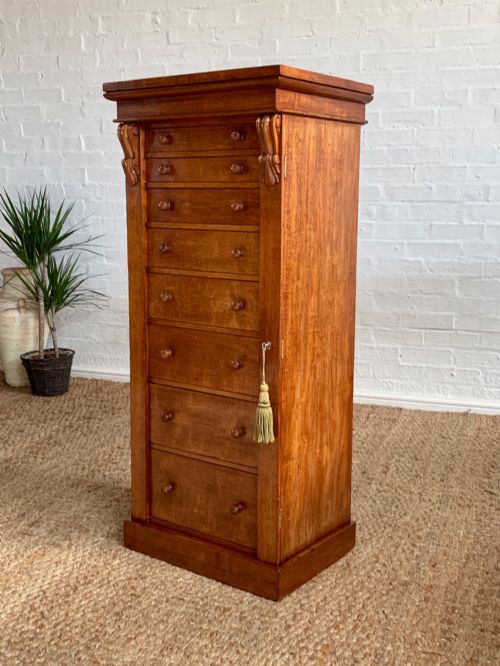
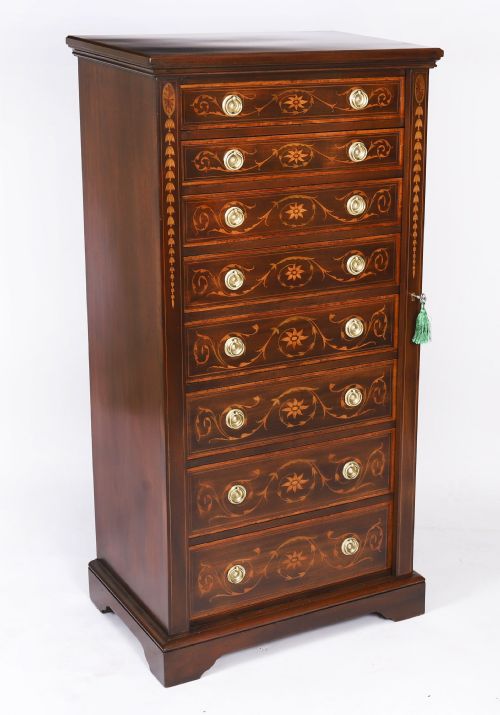
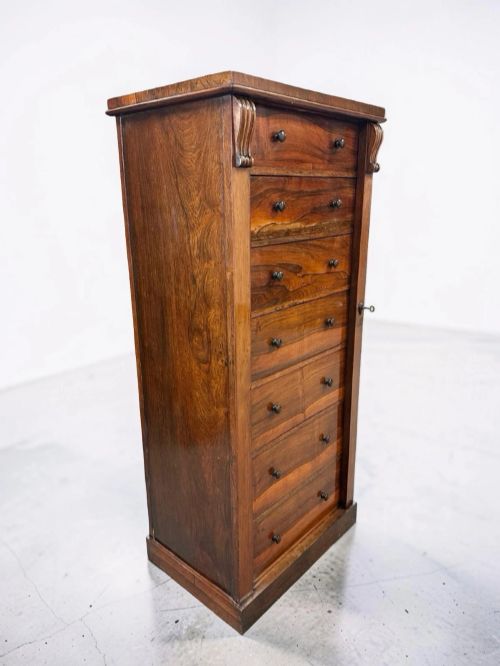
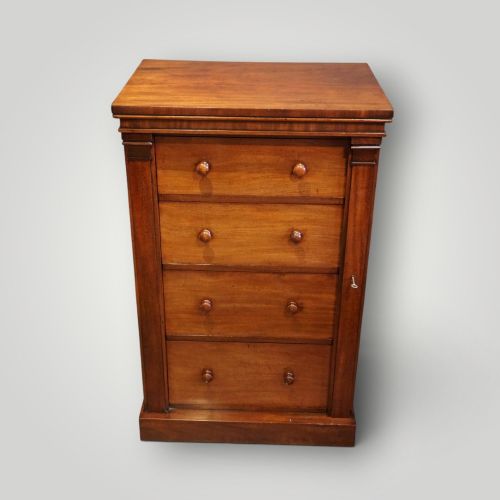
Locking Tall Chest
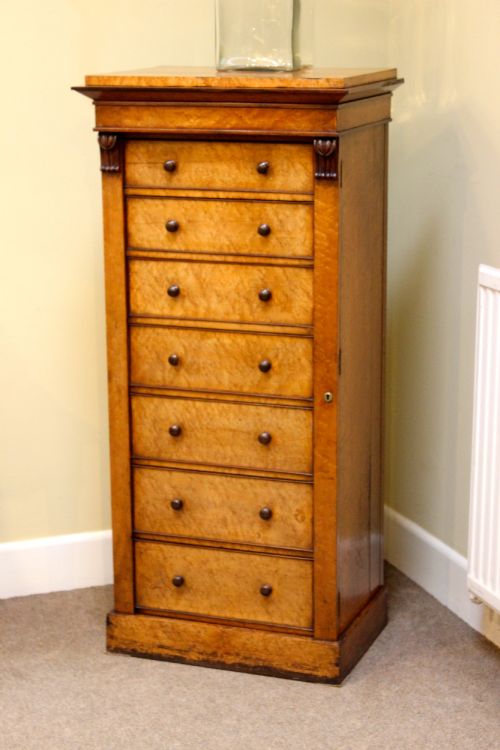
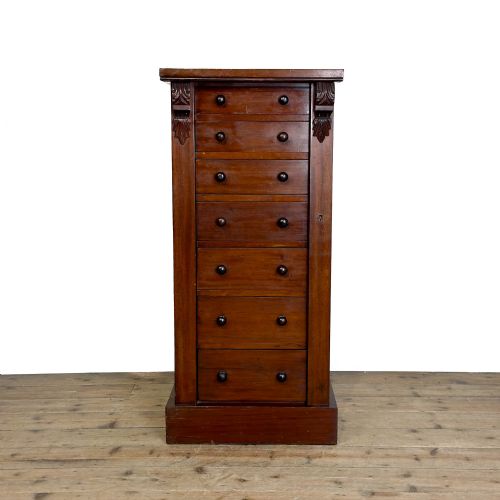
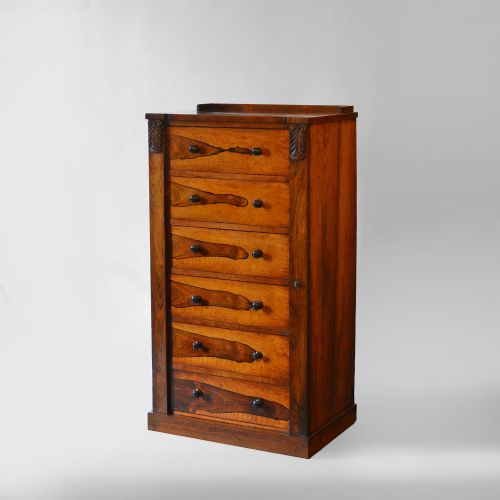
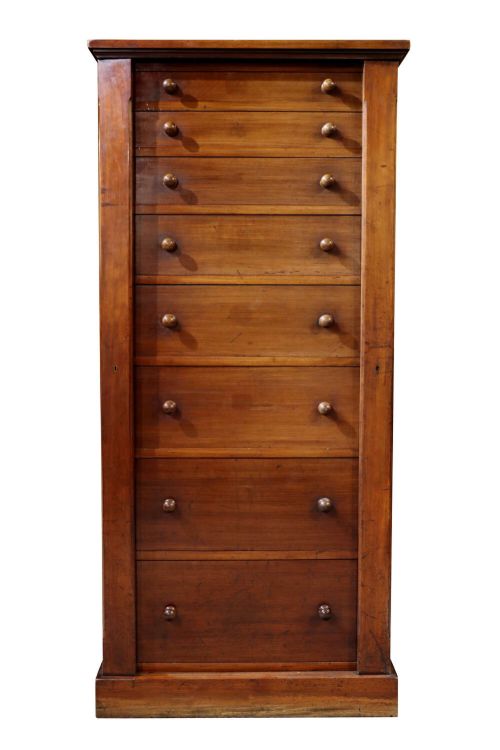
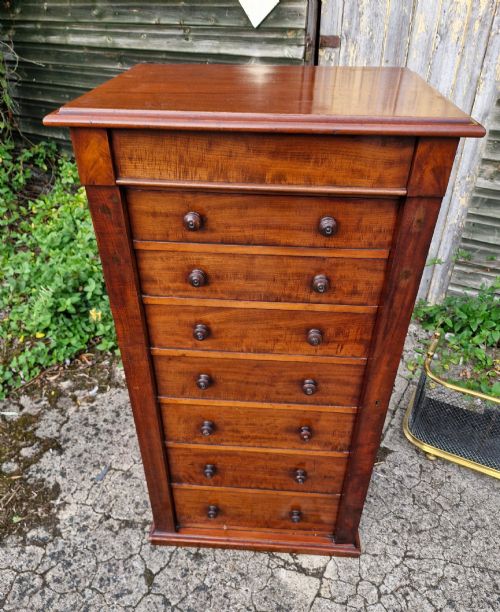
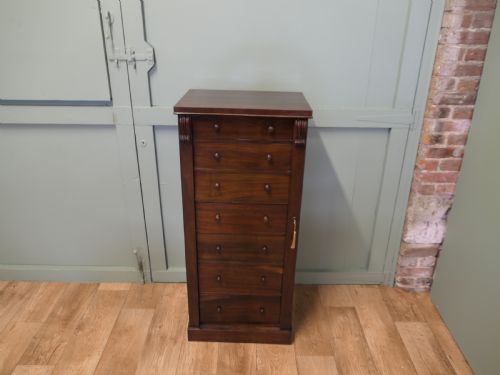
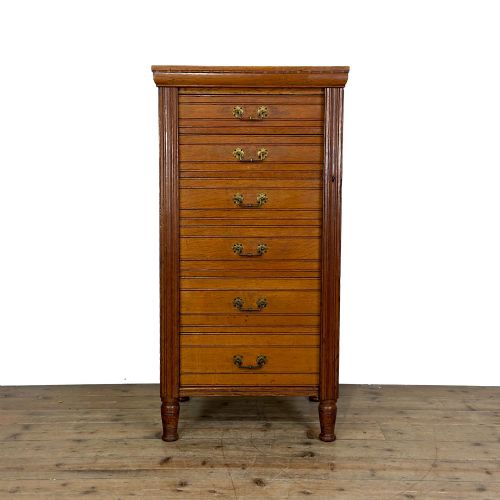
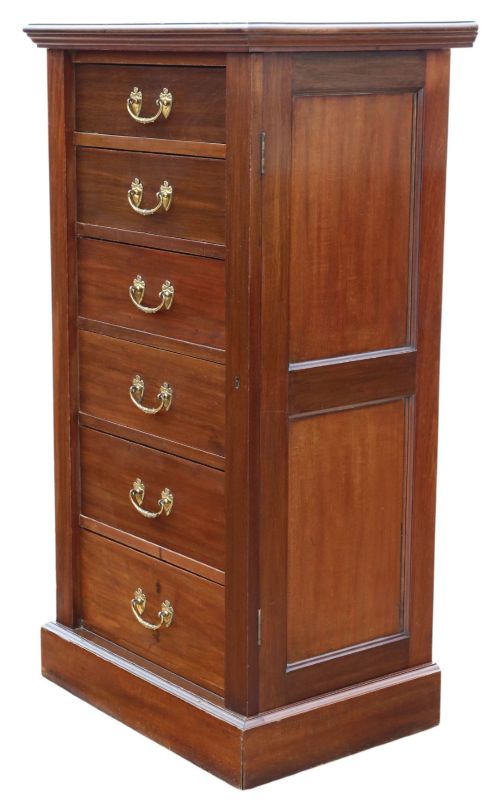
A locking tall chest, traditionally known as a Wellington chest, provides secure vertical storage with a clever hinged locking pilaster.
Locking Tall Chest
When you search for a locking tall chest, you enter the world of nineteenth-century Wellington chests designed to hold papers, linens, or collections safely in a compact footprint. These upright chests of drawers stand tall and narrow, making efficient use of floor space while offering multiple tiers of storage.
You are most likely to meet Victorian and Edwardian examples on this page, spanning periods from the mid-nineteenth century up to nineteen hundred. The primary form is a tall rectangular carcass fitted with several stacked drawers, operated by a locking side pilaster.
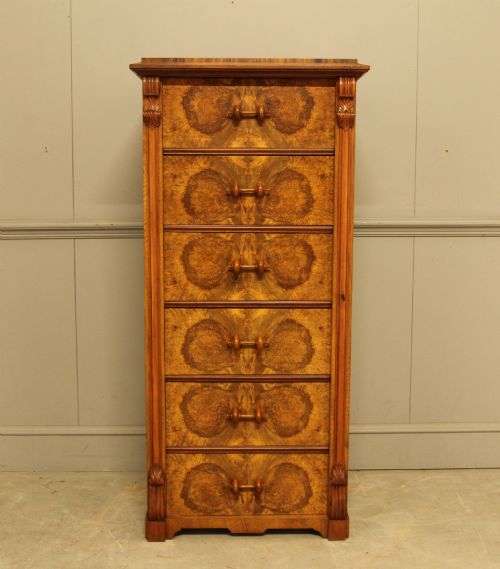
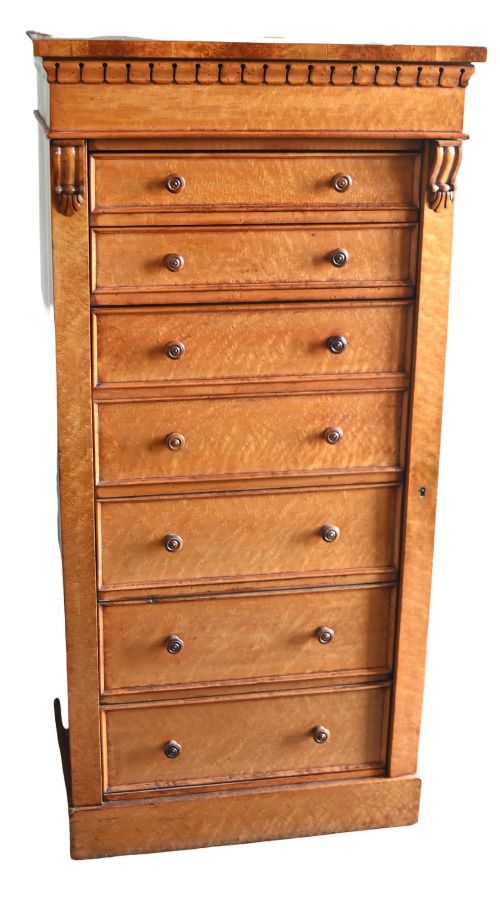
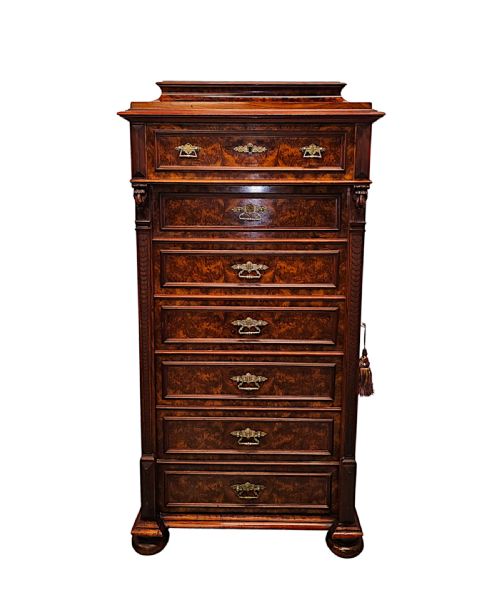
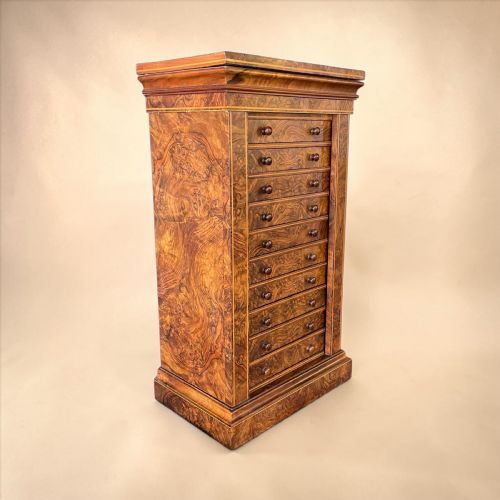
Woods range from dense mahogany and figured walnut to oak, rosewood, and exotic veneers like burr walnut and birds-eye maple. Some pieces double as campaign furniture or specialised specimen cabinets for collectors.
What varies in quality
Quality rests in the choice of timber figures and the precision of the locking mechanism. Fiddleback mahogany, burr walnut, and birds-eye maple mark out superior examples, where grain selection creates depth and movement across the front.
The integration of the locking pilaster and its original key show the maker's hand. Smooth action in the hinged locking bar and tight dovetail joints separate standard utility pieces from finer cabinet work.
Locking Tall Chest Retail Price Guide 2026
Typical asking prices for locking tall chest among the pieces listed under this phrase on Sellingantiques today, from the lower quarter to the upper quarter. They describe what is for sale here now, not the wider market.
Periods represented range from the Georgian and Regency eras through William IV, Victorian, and Edwardian times.
J Shoolbred·Holland & Sons·Gillows of Lancaster
The Locking Tall Chest Glossary
- Wellington chest
- A tall, narrow chest of drawers secured by a hinged locking pilaster on one side. This form gained popularity during the nineteenth century for domestic and office use.
- Pilaster
- A vertical architectural element applied to the side of the chest that swings outward to release the drawers. It holds the locking mechanism in place.
- Flame mahogany
- A timber veneer cut from timber fork joints displaying dramatic, flame-like grain patterns. It forms decorative surfaces on premium nineteenth-century furniture.
- Burr walnut
- A highly figured wood grain taken from tree growths, prized for its swirling patterns. Cabinet makers utilised it on luxury Victorian chests.
- Specimen cabinet
- A specialised storage chest containing shallow drawers designed for holding natural history collections or small artefacts. These often feature internal locking bars.
Locking Tall Chest: Frequently Asked Questions
What is a locking tall chest?
A locking tall chest is a narrow upright set of drawers featuring a hinged locking pilaster down one side. This wooden bar fastens with a key to secure all drawers simultaneously.
Originating in the nineteenth century, these pieces maximise vertical storage space while keeping contents private and secure.
How did people use them?
These chests served primarily for storing documents, linens, clothing, or valuable collections in studies and bedrooms. Their narrow footprint suited smaller rooms where floor space was at a premium.
The locking mechanism made them practical for keeping personal papers or precious items safe from casual access.
How do I live with one?
Position your chest against a sturdy wall where its tall, narrow proportions remain stable and secure. Leave enough clearance beside the piece for the locking pilaster to swing open fully.
Keep the original key safe, as operating the locking bar depends entirely on having the correct matching key.
How do I date these chests?
Examine the secondary woods, construction techniques, and exterior veneer styles to determine the period. Mid-nineteenth-century examples often feature rich mahogany or rosewood, while later Victorian and Edwardian pieces introduce lighter oak or satinwood.
Drawer construction with hand-cut dovetails and original turned wooden knobs or brass fittings help narrow down the decade of manufacture.