

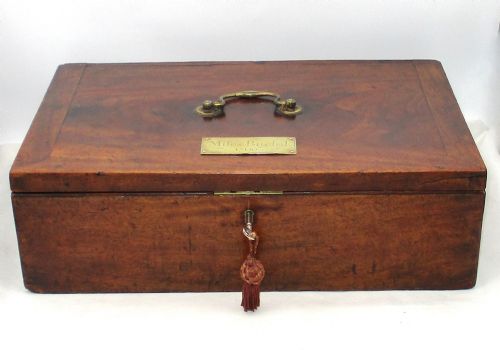


Lockable Wooden Document Box
These lockable wooden document box examples are practical containers designed to secure papers, travelling letters and deeds behind working locks.
Lockable Wooden Document Box
A lockable wooden document box provides a secure receptacle for important papers, letters and deeds. When you examine a lockable wooden document box on this page, you encounter forms ranging from simple folk art containers to elaborate writing slopes and presentation boxes.
The selection spans several periods, featuring 18th-century pieces alongside Victorian and Regency examples. Forms include dedicated document containers, writing boxes with fitted interiors, and specialised storage pieces.
Origins vary from British workshops to continental makers, including Italian Grand Tour pieces and Scandinavian folk art. These containers served domestic, military and travel needs, reflecting the administrative habits of past centuries.
How They Were Made
Cabinet makers utilised dense hardwoods such as mahogany, rosewood, walnut and satinwood for the primary carcasses. Timber selection determined the weight and durability of each container.
Decorative techniques include marquetry, original paintwork decoration and contrasting ebonised wood details. Metal components such as brass bindings, hinges and working locks provide structural reinforcement and security.
Surfaces received careful smoothing and polishing to display the natural grain of the timber. Inlaid motifs and Sorrento marquetry added visual refinement to grander examples.
Lockable Wooden Document Box Retail Price Guide 2026
Typical asking prices for lockable wooden document box among the pieces listed under this phrase on Sellingantiques today, from the lower quarter to the upper quarter. They describe what is for sale here now, not the wider market.
One military presentation box commemorates the King’s Own Regiment on a specific late 19th-century autumn day.
What Varies in Quality
The sophistication of the timber preparation and veneer work sets finer pieces apart from utilitarian containers. Selection of figured mahogany, rich rosewood or intricate marquetry indicates higher workshop ambition.
Complexity of the internal arrangement distinguishes basic storage from elaborate writing slopes. Fitted compartments, secret drawers and integrated brass hardware represent superior craftsmanship.
The integrity of the original lock mechanism and associated hardware contributes to the historical and practical status of the container. Retained original paintwork or surface decoration preserves the authentic character of folk art examples.
The Lockable Wooden Document Box Glossary
- Writing slope
- A portable desk featuring a sloping lid designed for correspondence and paperwork. These containers often fold open to reveal inkwells and pen storage.
- Marquetry
- The art of applying decorative veneer pieces in wood to form geometric or pictorial designs. This technique decorates surfaces on Victorian and Italian pieces.
- Grand Tour
- A cultural journey of Europe undertaken by wealthy young men in the 18th and 19th centuries. Souvenirs included Sorrento marquetry boxes acquired during Italian travels.
- Ebonised wood
- Timber treated to resemble ebony through staining or painting. This dark finish creates sharp contrast against lighter woods like satinwood.
Lockable Wooden Document Box: Frequently Asked Questions
What were document boxes used for?
These containers held important legal deeds, letters and private papers securely at home or during travel. The inclusion of a working lock ensured sensitive correspondence remained private.
Owners relied on them for daily administrative tasks before the widespread use of modern filing systems. Their portable nature allowed valuable papers to move between rooms or properties.
How do I date a wooden box?
Dating relies on observing timber choices, construction techniques and decorative styles associated with specific periods. Regency and Victorian pieces often feature distinct brass hardware and cabinet-making methods.
Examining internal linings, secondary woods and lock types provides further chronological clues. Stylistic markers like Art Nouveau or folk art paintwork also point to specific eras.
Are keys usually included?
Many antique boxes survive without their original keys, though the locks themselves frequently remain intact. Specialist locksmiths can often provide replacement keys for working mechanisms.
The presence of an original key adds to the completeness of a piece, but absence does not prevent daily use for storage.
How do I care for antique wood?
Keep wooden boxes away from direct sunlight and sources of heat to prevent timber shrinkage and veneer splitting. Gentle dusting with a dry cloth maintains the surface finish.
A light application of appropriate wax polish occasionally helps nourish older hardwoods without building up excessive residue.