





Liqueur Glass Decanter Set
Liqueur glass decanter set options combine matched glassware and secure stands for serving spirits, offering both display presence and practical hospitality.

Liqueur Glass Decanter Set
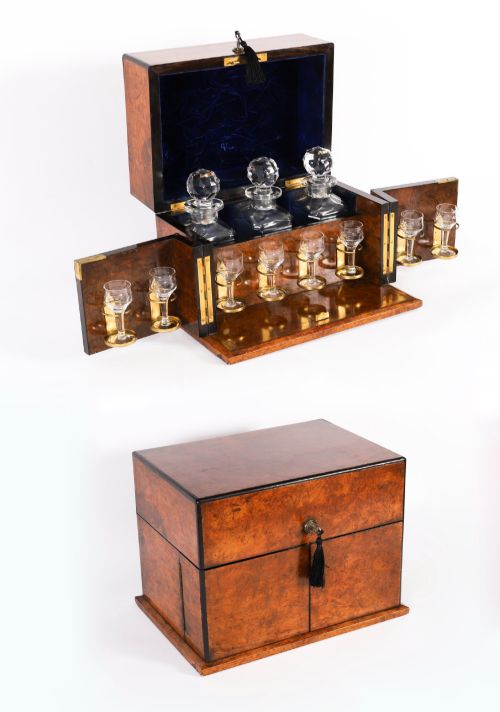
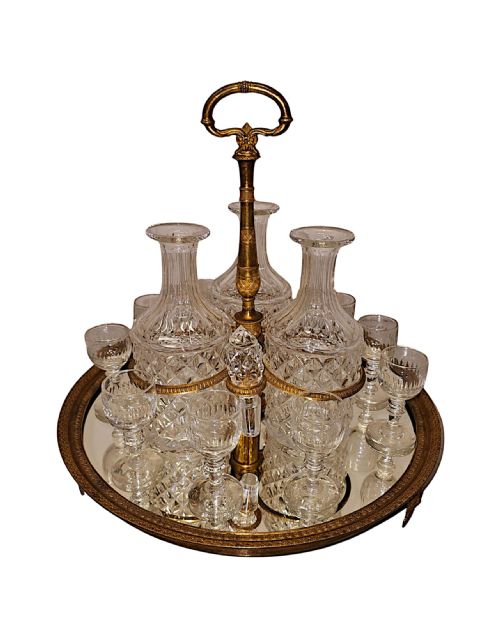
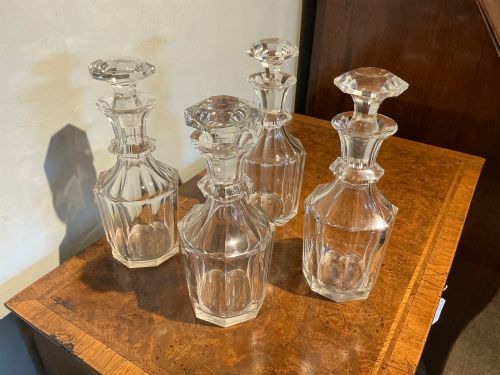
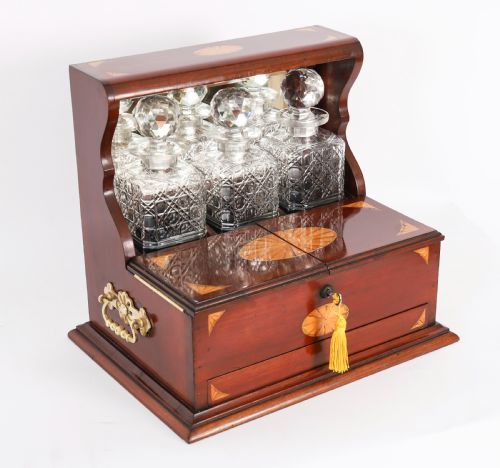
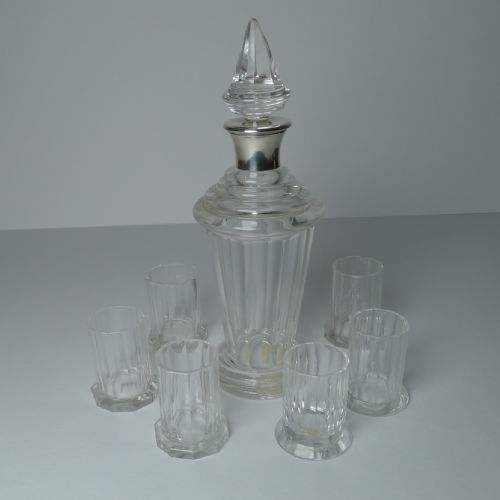
A liqueur glass decanter set brings together matching vessels and small serving containers designed specifically for digestifs and cordials. These arrangements appear in various configurations, from simple glass groupings on trays to elaborate locking containers.
The selections span distinct periods, including Victorian examples alongside Art Deco iterations from nineteen thirty. Formats range from traditional decanters and glasses to fitted tantalus sets and wooden cave a liqueur boxes.
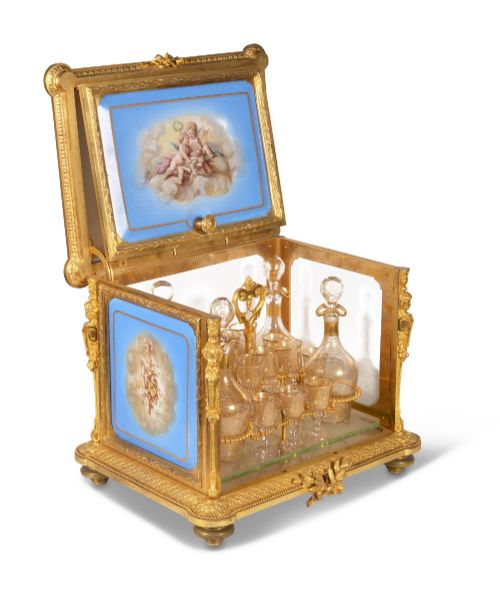
Buyers encounter both English and continental European origins, incorporating materials such as cut crystal, brass, and ormolu mounts. The grouping serves as a focal point for entertaining, maintaining matching glasses alongside each primary bottle.
Materials and construction
Makers utilised high-clarity lead crystal and standard glass, often employing techniques like deep cutting, enamelling, and gilding to decorate the surfaces. Trays and stands frequently combine glass with brass, ormolu, silver plating, or inlaid wood such as satin wood.
Caves and tantalus frames required precision cabinet work to house fragile vessels securely within locking enclosures. Glassware production involved blowing and moulding, followed by hand-finishing details like polished pontil marks and fitted stoppers.
Liqueur Glass Decanter Set Retail Price Guide 2026
Typical asking prices for liqueur glass decanter set among the pieces listed under this phrase on Sellingantiques today, from the lower quarter to the upper quarter. They describe what is for sale here now, not the wider market.
Listings feature items from the Victorian era, eighteen sixty, eighteen eighty, eighteen ninety, nineteen hundred, and nineteen thirty, utilising glass, enamel, brass, ormolu, and crystal.
Distinctions in craftsmanship
Quality rests upon the weight and clarity of the crystal, the crispness of the cut or enamelled decoration, and the integrity of any associated metal mounts. Finer pieces demonstrate superior integration between the glass vessels and their fitted wooden or metal housings.
The presence of a full complement of matching glasses alongside the original tray or locking box elevates the cohesion of the set. Maker attribution and refined surface ornamentation separate standard production items from distinguished studio or factory examples.
Baccarat·Val Saint Lambert·Karl Palda·Moser·Salviati
The Liqueur Glass Decanter Set Glossary
- Tantalus
- A locking wooden or metal stand that secures decanters so the contents cannot be poured without a key. The frame displays the bottles while preventing unauthorized access to the liquor inside.
- Cave a liqueur
- A fitted box or cabinet, often lined with velvet or silk, containing matching decanters and liqueur glasses. These French portable service chests frequently feature ornate woodwork or ormolu mounts.
- Lead crystal
- Glass containing metallic oxide that increases weight, brilliance, and refractive index. This material allows for deep, sharp cutting that catches light effectively.
- Ormolu
- Gilded bronze used for decorative mounts and handles on nineteenth-century stands and boxes. The technique applies a gold-mercury amalgam or gold leaf to a cast bronze base.
Liqueur Glass Decanter Set: Frequently Asked Questions
What is a cave a liqueur?
A cave a liqueur is a portable fitted box designed to hold a set of decanters and matching glasses securely inside.
These containers often feature hinged lids, secure locks, and interior compartments lined to protect fragile glassware during transport or display.
How do tantalus sets work?
A tantalus secures decanters beneath a metal bar that blocks the stoppers from being removed while the lock is engaged.
This mechanism allows hosts to display expensive spirits openly while physically preventing guests from pouring drinks without the key.
How do I date a decanter set?
Dating relies on stylistic markers, such as geometric Art Deco forms from nineteen thirty versus ornate Victorian or French Second Empire metalwork.
Material choices, cabinet making styles, and manufacturer signatures or marks inscribed on the glass or mounts also help narrow the period of origin.
Are all glasses matching in antique sets?
Many sets retain their original complement of matching glasses produced by the same factory alongside the decanters.
Some historical groupings assembled over time may show slight variations in glass form or etching, making matched original sets particularly desirable.