

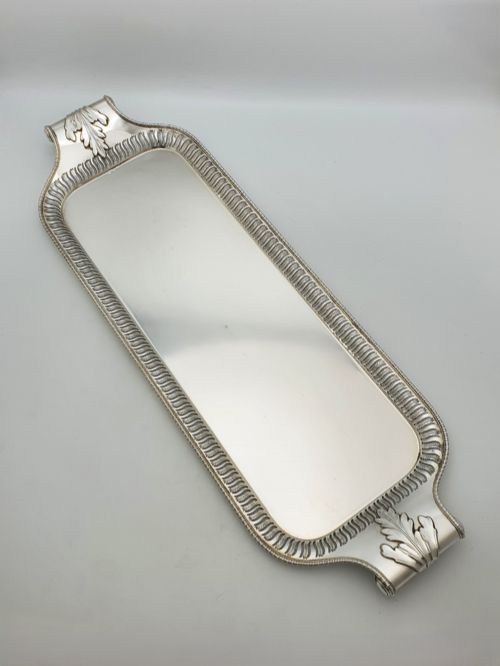


Silver Gallery Drinks Tray
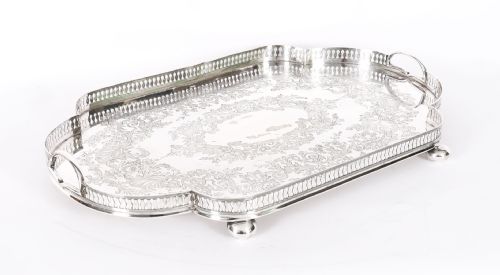
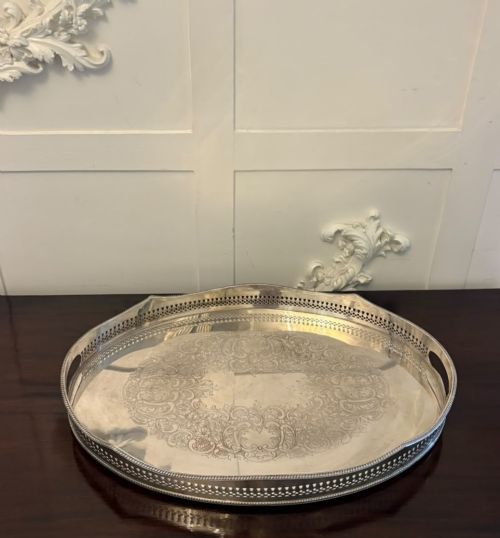
A silver gallery drinks tray brings an elevated standard to hospitality, combining a raised protective border with a polished surface designed for serving spirits and glassware.

Silver Gallery Drinks Tray
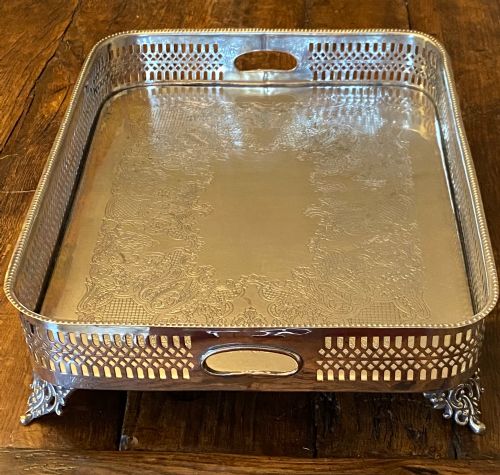
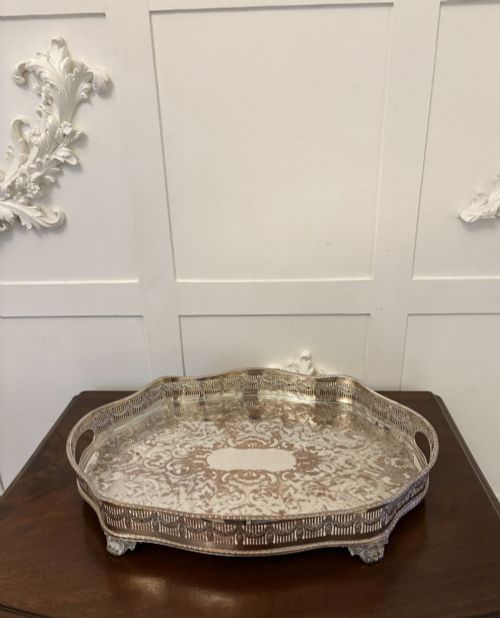
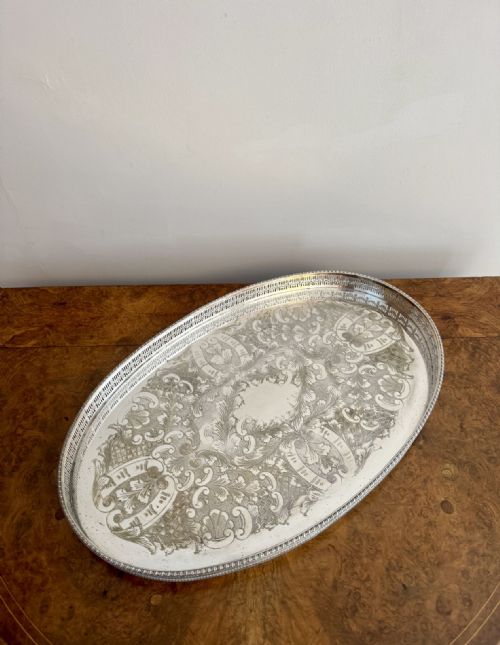
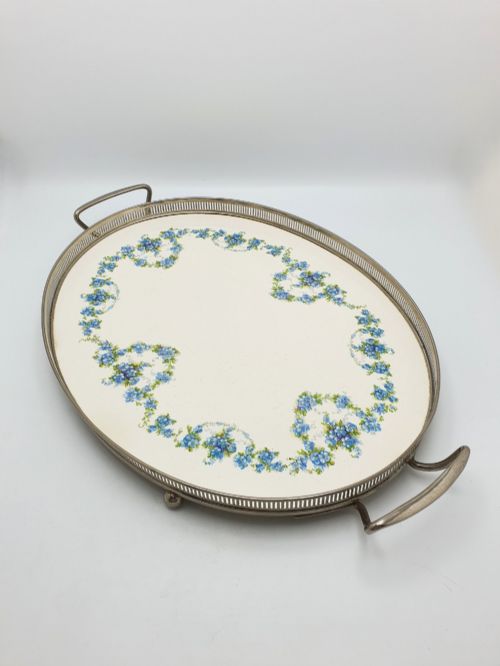
When you search for a silver gallery drinks tray, you encounter flat serving pieces distinguished by an enclosing fretwork or pierced railing known as a gallery. The examples on this page predominantly date from the Victorian and Edwardian eras, stretching from the late nineteenth century through to the interwar period of the 1920s and 1930s.
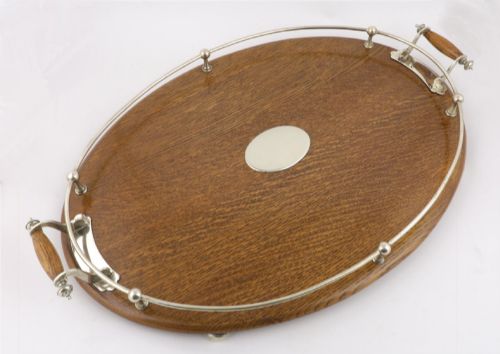
Forms span large rectangular and oval shapes alongside circular formats, frequently equipped with integral handles. Many incorporate wooden bases in mahogany or oak paired with metallic borders, while others rely entirely on silver plate or Sheffield plate construction for an all-metal presentation.
Materials and construction methods
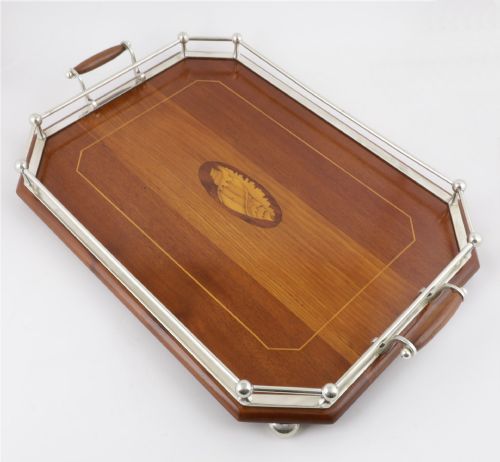
Makers utilised electroplated nickel silver and standard silver plate over base metals, alongside traditional Sheffield plating techniques where a thin sheet of silver was fused to a copper core. Wooden elements like mahogany and oak provide sturdy floor foundations, occasionally enhanced by shell inlay or contrasting ebonised finishes.
Galleries were constructed using pierced, reticulated, or engraved sheet metal soldered to the base rim, accompanied by cast handles. Surface decoration relied heavily on hand engraving, embossed scrolls, and etched floral centres.
Silver Gallery Drinks Tray Retail Price Guide 2026
Typical asking prices for silver gallery drinks tray among the pieces listed under this phrase on Sellingantiques today, from the lower quarter to the upper quarter. They describe what is for sale here now, not the wider market.
Several trays feature built-in wooden handles so polished they practically beg for a crystal decanter to slide across them.
Distinctions in quality and execution
The weight and gauge of the metal foundation dictate durability and substance, separating substantial heavy gauge items from lighter pressed alternatives. Crispness in the piercing of the gallery and the depth of hand-engraved scrolls reveal the level of artisan skill involved in the production.
The integration of secondary materials, such as figured mahogany or oak bases with precise joinery, marks out superior workshops. Maker marks from established silversmiths also indicate higher standards of period craftsmanship.
James Deakin·Mappin & Webb·Elkington·Lee & Wigfull·J.H. Potter·John Grinsell
The Silver Gallery Drinks Tray Glossary
- Gallery
- A raised pierced or fretwork metal border fitted around the edge of a tray to prevent decanters and glassware from sliding off.
- Sheffield Plate
- An early plating method created by fusing a sheet of silver onto a copper ingot before rolling them together into sheets.
- EPNS
- Electroplated Nickel Silver, a durable base alloy coated with a layer of pure silver through an electrical process.
- Reticulated
- Describes metalwork patterned with an open network of geometric or floral piercings.
- Salver
- A flat serving tray traditionally used for presenting drinks, letters, or calling cards.
Silver Gallery Drinks Tray: Frequently Asked Questions
How do I clean a silver gallery drinks tray?
Use a soft cloth and a gentle silver cream formulated to protect plated surfaces without stripping the underlying metal.
Avoid harsh abrasives, particularly around the pierced joints of the gallery where residue can accumulate.
Can I use these trays for daily cocktail service?
These trays were built for functional hospitality and accommodate decanters, glasses, and cocktail shakers with ease.
Purchasing a version with a sturdy wooden base or a heavy silver plate ensures it handles frequent movement.
What is the difference between Edwardian and Victorian trays?
Victorian examples tend to display heavier proportions with deeply embossed scrolls and substantial Sheffield plating.
Edwardian pieces often embrace lighter aesthetics, featuring Sheraton Revival influences, inlaid mahogany bases, and refined pierced galleries.
How do I identify silver plate versus solid silver?
Examine the piece for maker stamps and specific plating marks rather than standard sterling hallmarks like the lion passant.
Silver plate often reveals subtle base metal showing through on high-wear areas under magnification.