


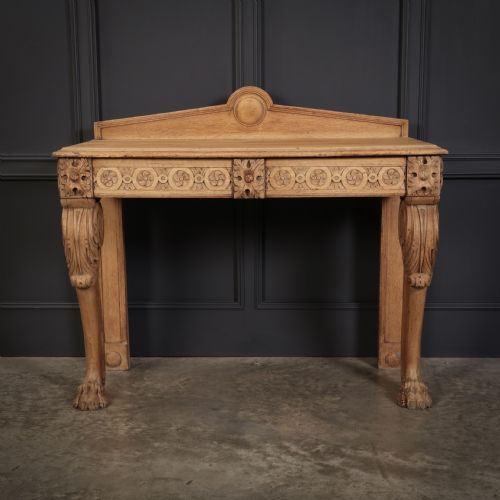


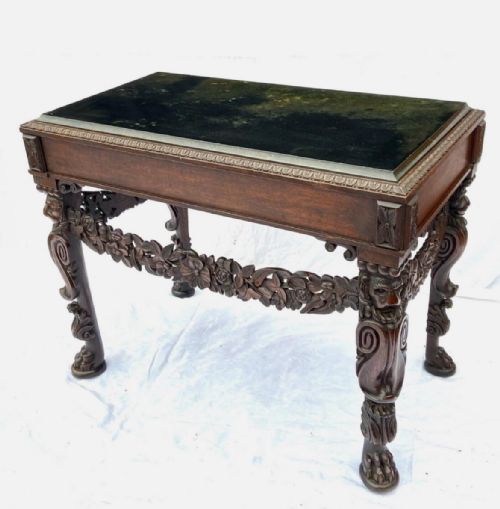


Lion Paw Console Table
These lion paw console table examples combine solid timbers and carved supports, offering a striking focal point for a formal hallway or drawing room.
Lion Paw Console Table
A lion paw console table is a freestanding or wall-secured furniture form designed primarily for display and formal reception spaces. When you search for this phrase, you encounter pieces spanning the Georgian, Regency, and Victorian eras, along with various revival styles. These tables typically stand against a wall, serving as a decorative surface beneath a mirror or painting.
The most common versions met on this page date from the nineteenth century, utilising dense timbers such as mahogany and oak. Many examples incorporate distinct regional characteristics, including Irish Rococo revival motifs or Swedish Empire influences. Their primary defining feature remains the carved or cast paw foot, which anchors the architectural design of the legs.
Alongside standard console tables, the inventory includes related forms such as serving tables, sofa tables, and hall tables sharing similar support motifs. These variations range from monumental gilded Italian Baroque revival pieces with marble tops to simpler provincial oak and cast iron constructions. Each piece reflects the aesthetic preferences of its period, balancing structural utility with ornate carving.
Construction and Materials
Makers utilised heavy hardwoods including mahogany, padouk, and oak for the primary framework and tabletops. These timbers were frequently selected for their figured grain, such as flame mahogany or rich rosewood veneers applied to carcase structures. Joinery techniques relied on traditional cabinetmaking methods to support substantial upper surfaces.
Carved ornament often involved gesso applied over timber bases, particularly in giltwood pieces finished with gold leaf. Cast elements like brass and cast iron appear in structural or decorative components, adding weight and industrial stability to specific nineteenth-century designs.
Stone tops, notably marble and breccia marble, were fitted directly onto carved wooden bases to provide durable and luxurious surfaces. The combination of carved wooden lion paw supports with stone or timber tops required precise engineering to distribute the considerable weight evenly.
Lion Paw Console Table Retail Price Guide 2026
Typical asking prices for lion paw console table among the pieces listed under this phrase on Sellingantiques today, from the lower quarter to the upper quarter. They describe what is for sale here now, not the wider market.
Listings feature pieces spanning the Georgian, Victorian, and Regency periods, constructed from mahogany, oak, giltwood, and marble.
Assessing Craftsmanship
The distinction between standard and superior pieces rests largely on the depth and crispness of the carving on the lion paw supports. Master carvers achieved realistic musculature and fur texture, whereas lesser examples present flat or repetitive detailing. This sculptural ambition directly influences the visual impact of the table.
Material selection dictates another tier of quality, seen in the choice of solid timbers versus secondary woods with veneer overlays. Tables featuring unbroken marble slabs or finely figured flame mahogany command greater attention due to the cost and skill required in sourcing and preparing such materials.
Proportion and architectural coherence separate provincial adaptations from high-style workshop productions. A successful console maintains balanced proportions between the heavy carved base and the upper framework, ensuring the piece resolves its decorative elements without feeling clumsy.
The Lion Paw Console Table Glossary
- Console table
- A table designed to stand against a wall, often supported by brackets or console legs rather than four independent vertical posts.
- Giltwood
- Timber that has been coated with a thin layer of gold leaf over a prepared gesso ground, common in decorative revival furniture.
- Breccia marble
- A multi-coloured composite stone made of angular fragments embedded in a fine-grained matrix, frequently used for tabletops.
- Gesso
- A plaster-like mixture applied to wood as a base for gilding or intricate surface moulding and carving.
- Padouk
- A heavy tropical hardwood with a distinctive reddish-brown colour, utilised in Anglo-Indian and colonial furniture making.
Lion Paw Console Table: Frequently Asked Questions
Where should I place a console table?
These tables traditionally occupy entrance halls, formal living rooms, or dining spaces where wall space permits a shallow surface. They function effectively beneath mirrors, sconces, or large artworks.
Because many historical examples were designed to stand flat against a wall, they anchor narrow corridors without obstructing movement through a room.
How do I care for marble tabletops?
Marble surfaces require regular dusting with a soft, dry cloth to prevent abrasive grit from scratching the polished finish. Avoid placing acidic liquids directly onto the stone.
Coasters and protective mats help guard against staining, while specialised stone soaps maintain the natural sheen over years of use.
What is the difference between a console and a sofa table?
A console table is stationary and typically designed to sit flush against a wall as a decorative architectural feature. In contrast, a sofa table is finished on all sides and traditionally placed behind a freestanding sofa.
Sofa tables often feature drop leaves and moveable components, whereas consoles prioritize fixed structural presence.
How do I identify Regency period furniture?
Regency pieces draw heavily on neoclassical design, featuring clean architectural lines, classical motifs, and dark imported timbers like mahogany and rosewood. Brass inlay and gilt paw feet frequently appear during this era.
The style reflects an archaeological interest in ancient Roman, Greek, and Egyptian forms adapted for nineteenth-century interiors.