



Baroque Revival Table
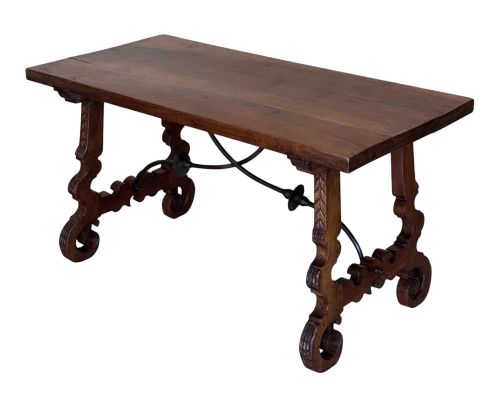
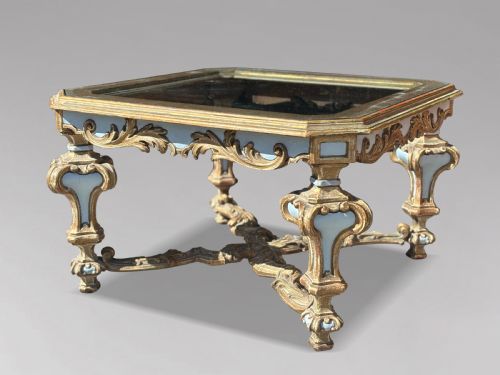
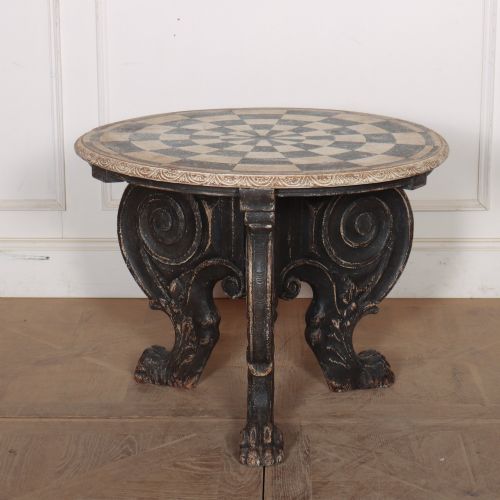
These baroque revival table examples bring grand walnut, giltwood, and marble forms into modern rooms with heavy carving and sculptural presence.
Baroque Revival Table
A baroque revival table draws on historical Italian, Spanish, and English forms, translating heavy 17th-century grandeur into pieces made during the Victorian and Edwardian periods. Buyers searching for a baroque revival table seek striking centrepieces that anchor a room with carved detail and substantial timber.
The selections available here span numerous practical forms, including large dining sets, occasional side tables, coffee tables, console tables with marble tops, and writing desks. Walnut and oak dominate the timber choices, often paired with wrought iron, giltwood, and cane inserts.
Origin points range widely across continental Europe and Britain, with specific pieces showing distinct Spanish, Italian, German, and Regency influences. Buyers frequently encounter 19th-century and 1920s examples that preserve classical scrollwork, lion's paw supports, and deep relief carving.
Materials and construction
Makers built these tables primarily using solid hardwoods such as walnut and oak, selecting dense grain patterns to withstand deep chisel work and high-relief carving. Giltwood surfaces appear on grander console tables, applying thin gold leaf over prepared gesso grounds.
Secondary materials introduce textural contrast and structural support, including wrought iron stretchers, breccia marble tops, and inserted fabric or cane panels. Joinery relies on traditional methods suited to heavy timbers, supporting monumental stone tops and extensive carved aprons.
Baroque Revival Table Retail Price Guide 2026
Typical asking prices for baroque revival table among the pieces listed under this phrase on Sellingantiques today, from the lower quarter to the upper quarter. They describe what is for sale here now, not the wider market.
Listings feature 19th-century, Victorian, and Edwardian periods alongside 1920s examples, constructed in walnut, oak, giltwood, and marble.
What separates the best pieces
The depth and crispness of the hand-carved detail define the upper tiers of quality, separating sharp, spirited chisel work from soft, mechanical shaping. Superior examples feature masterwork figural carving, cherubs, or complex scrolling foliage executed with clear intent.
Material selection and integrity mark the difference between standard production and exceptional craftsmanship. High-grade pieces incorporate flawless marble slabs like breccia, superior giltwood finishes, and choice cuts of figured walnut rather than simpler stained pine or basic oak.
Harrods·Angiolo Barbetti Firenze·B Battioli, Varese
The Baroque Revival Table Glossary
- Giltwood
- Wood that has been coated with gold leaf or gold paint. This finish frequently highlights the intricate carved mouldings on grand console and centre tables.
- Breccia marble
- A multicoloured marble composed of broken fragments cemented together in a fine-grained matrix. It provides a heavy, decorative surface for Italian console tables.
- Console table
- A table designed to stand against a wall, often secured to it for stability. These pieces commonly feature elaborate front supports such as lion's paws.
- Centre table
- A freestanding table finished on all sides to sit in the middle of a room. Regency and Victorian examples in this category use ebonised and gilt details.
- Pier table
- A table designed to fit against the wall beneath a wall mirror or between windows. They frequently serve as decorative lamp or display surfaces in formal interiors.
Baroque Revival Table: Frequently Asked Questions
How do I clean a marble top?
Wipe the surface gently using a soft, damp cloth with mild pH-neutral soap. Avoid acidic cleaners that etch stone.
Dry the marble thoroughly afterwards to prevent water spots and maintain the polished sheen.
Where should I place a console table?
Position these tables against a flat wall in an entryway, hallway, or living room. They fit well beneath large mirrors or artwork.
Ensure heavy stone-topped versions are secured properly if foot traffic or children are nearby.
How do I care for carved walnut?
Dust the deep recesses of the carving regularly with a soft bristle brush. Feed the timber periodically with appropriate furniture wax.
Keep the wood away from direct heat sources and strong sunlight to prevent splitting.
Are these tables suitable for daily dining?
Large oak and walnut dining tables handle regular daily use effectively. Protect finished surfaces using mats and pads under hot dishes.
Check stretcher joints and leg fixings occasionally to ensure stability under heavy loads.
How do I distinguish 19th-century pieces?
Examine the timber shrinkage, hand-cut joinery marks, and the tool signatures left in the carved relief. 19th-century makers used traditional hand-chiselling methods.
Compare the secondary woods underneath and inside drawers to confirm period construction traits.