


Lion Mask Cachepot
A lion mask cachepot is a striking vessel designed to house potted plants, bringing a strong sculptural presence and classical decorative accent to any room.
Lion Mask Cachepot
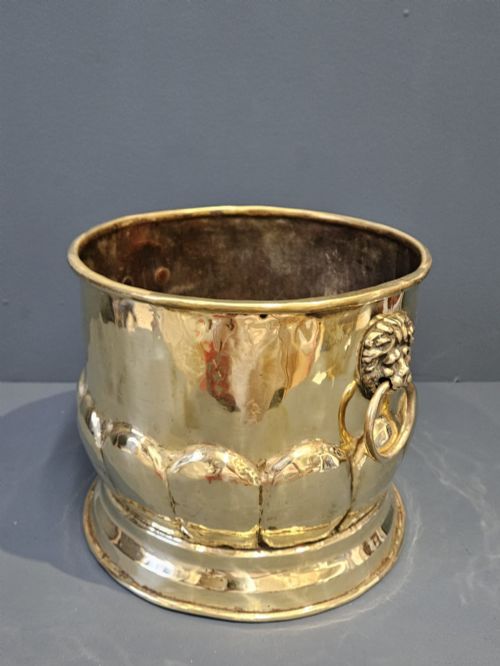
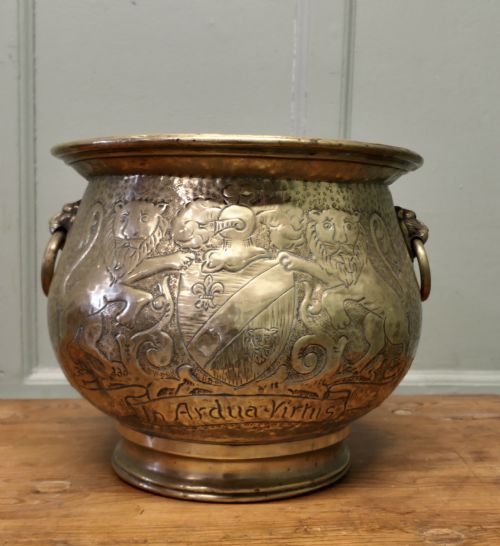
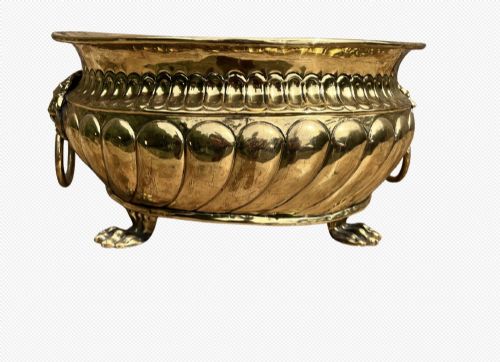
A lion mask cachepot is a decorative plant container defined by its distinctive cast or applied feline handle motifs, frequently taking the form of a jardiniere or planter. When searching for this specific form, buyers encounter vessels primarily from the nineteenth century alongside eighteenth-century examples, spanning styles such as Victorian, Gothic Revival, French Empire, and Arts and Crafts.
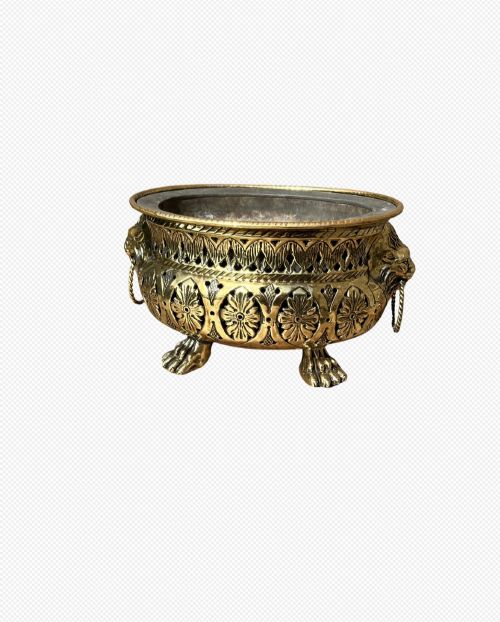
The most common versions met on this page are fashioned from brass, often featuring cylindrical bodies, pierced metalwork, or repoussé decoration. Alongside these brass pieces, collectors encounter stoneware, salt glaze with cobalt pigment, copper, and bronze, as well as glazed earthenware forms like Minton majolica.
How they were made
Metal vessels such as brass and copper jardiniere pieces were shaped using techniques like repoussé work, where designs are hammered from the reverse to create relief, and piercing to form openwork borders. Handles depicting lion masks and animal heads were typically cast separately and securely attached to the bodies of the planters.
Ceramic cachepot examples utilised stoneware and earthenware methods, incorporating salt glazing and cobalt pigment decoration fired at high temperatures. English majolica and German salt-glazed wares relied on meticulous moulding to achieve the crisp architectural details and animal motifs seen on the finished jardinieres.
Materials utilised across the selection include brass, metal, stoneware, salt glaze, cobalt pigment, glazed earthenware, copper, and bronze.
What varies in quality
In ceramic and stoneware specimens, excellence is measured by the vibrancy of the glaze, the precision of the cobalt pigment application, and the clarity of the moulded relief. Finer makers achieved a harmonious balance between the functional vessel and the sculptural ornament, whereas lesser pieces show softer definition and plain construction.
Minton
The Lion Mask Cachepot Glossary
- Cachepot
- A decorative container used to conceal an ordinary flowerpot. The term translates from French as hiding pot and implies a vessel without a drainage hole.
- Jardiniere
- A large ornamental pot or stand for flowers or plants. These decorative receptacles often sit on floor pedestals or table surfaces and frequently incorporate handles.
- Repousse
- A metalworking technique in which a malleable metal is hammered from the reverse side to create a design in relief. This method brings texture and dimension to brass and copper planters.
- Salt Glaze
- A ceramic finish created by throwing common salt into the kiln during the high-temperature firing process. This produces a characteristic textured surface resembling orange peel.
- Majolica
- A type of earthenware decorated with opaque coloured glazes over a tin-enameled ground. It gained popularity during the Victorian era for brightly coloured ornamental wares.
Lion Mask Cachepot: Frequently Asked Questions
How were these cachepots used?
These vessels were placed upon tables, sideboards, or plant stands within nineteenth-century interiors to display indoor flora. Because they generally lack drainage holes, they served to catch excess water.
Their robust construction in materials like brass, bronze, and heavy earthenware allowed them to support substantial ferns and flowering plants securely.
How do I date a brass cachepot?
Dating a brass cachepot involves examining the manufacturing methods, such as hand-hammered repoussé work versus machine stamping. Eighteenth-century and nineteenth-century pieces often display distinct patination and assembly methods.
Stylistic cues like Gothic Revival arches or Arts and Crafts simplicity further help align the piece with specific historical periods.
How do I care for antique metal planters?
Antique metal planters require gentle dusting with a soft cloth to preserve the natural aged surface and patina. Aggressive cleaning should be avoided to maintain the historic character of the brass or copper.
Using a plastic liner inside the vessel protects the interior metal from moisture damage caused by direct watering of live plants.