

Linen Press Chest
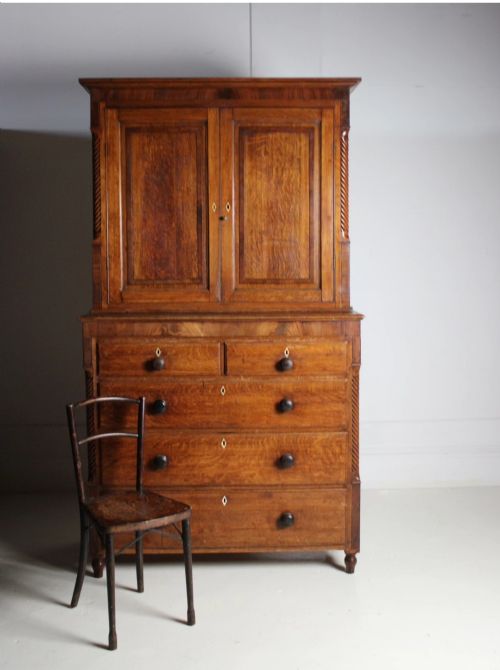
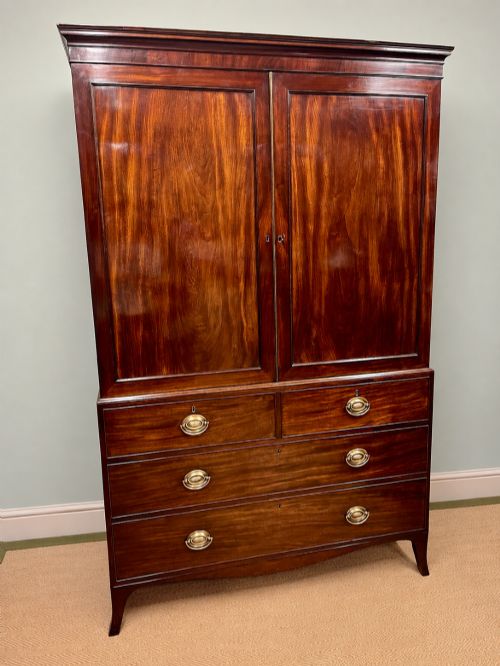
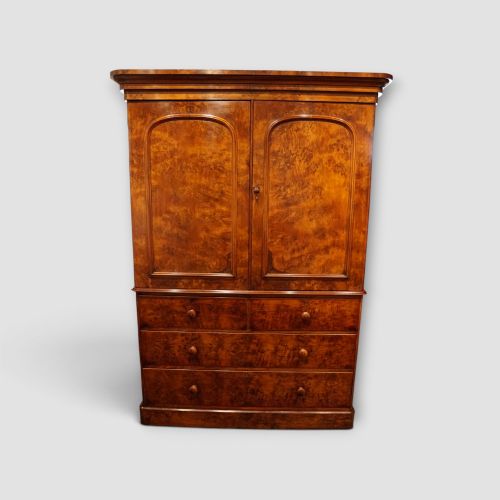
When hunting for a linen press chest, you are tracking down large storage furniture that combines upper cupboard doors with a lower chest of drawers.
Linen Press Chest
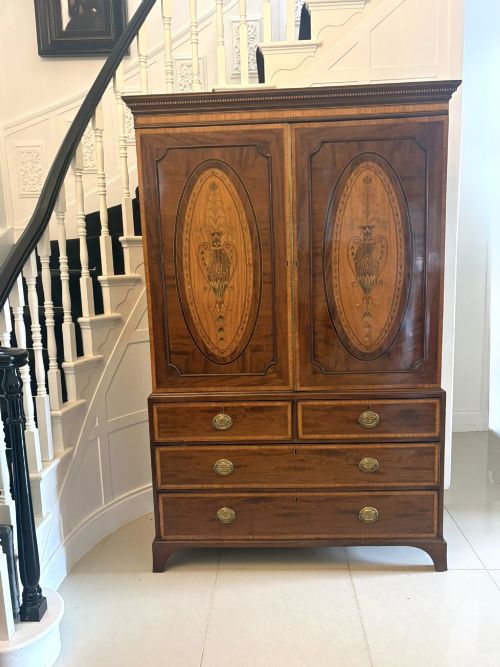
A linen press chest is a substantial storage piece uniting a shelved upper cabinet with a chest of drawers beneath. When you search for a linen press chest, you will find examples stretching from the 18th century through the Georgian, Victorian, and Edwardian eras.
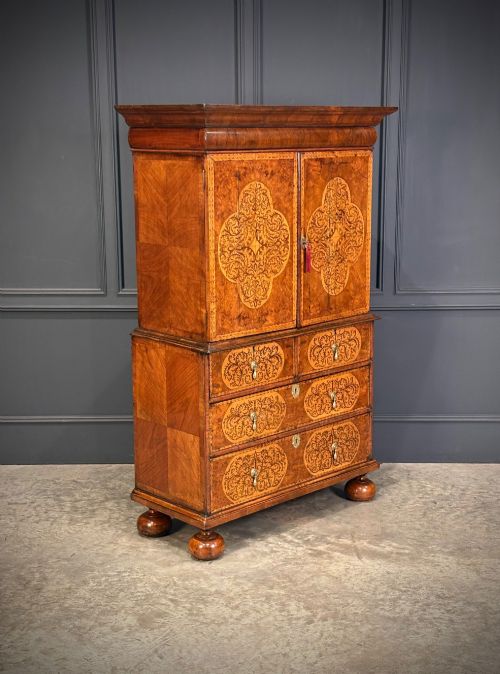
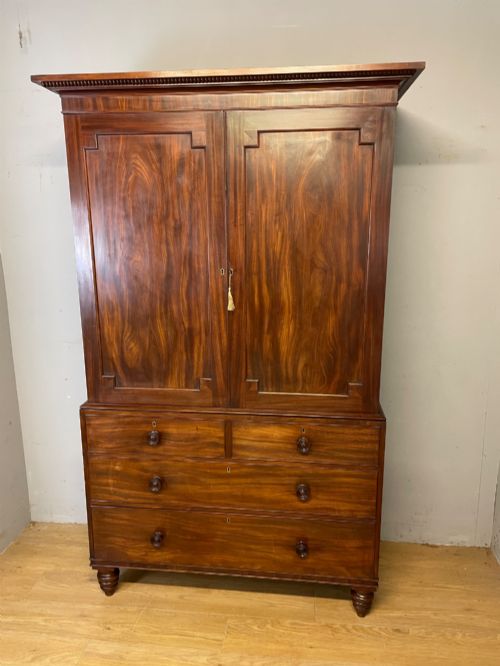
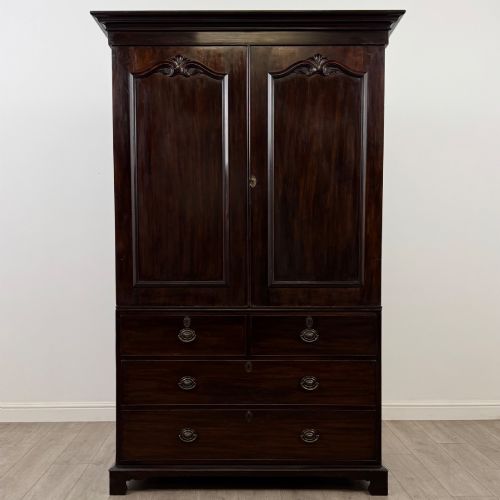
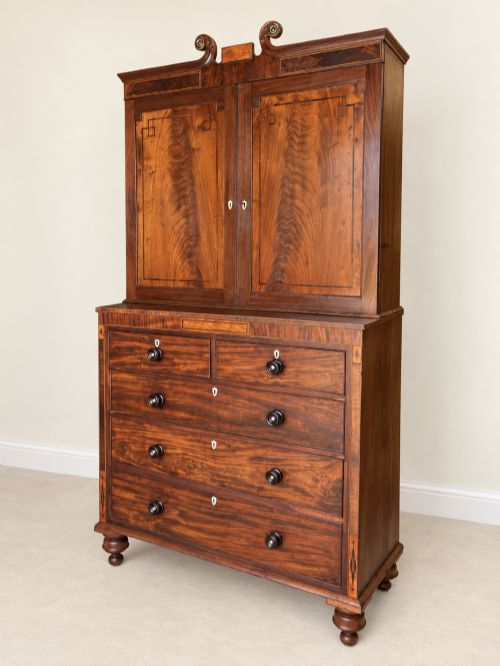
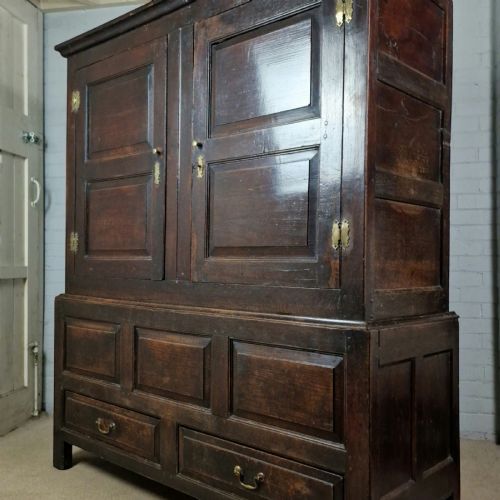
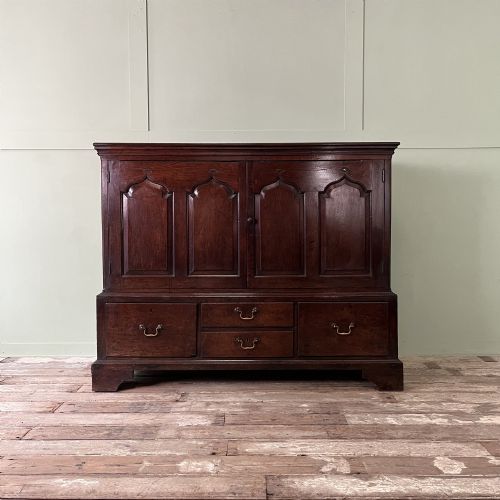
The most common forms on this page pair mahogany or oak construction with panelled upper doors designed originally to store folded textiles. Many pieces integrate sliding trays inside the upper section rather than standard hanging space.
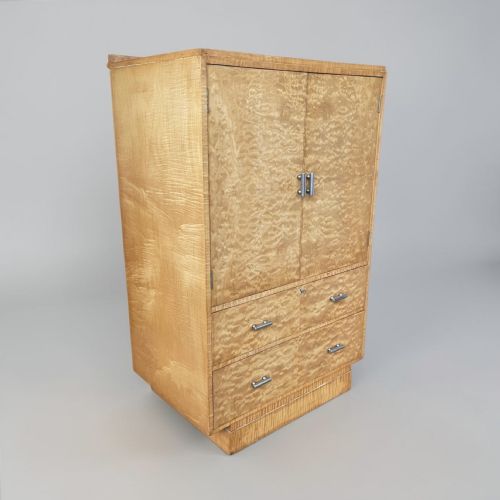
Makers adapted these hybrid cupboards across regional workshops and grand cabinet makers alike. You encounter tallboys, compactums, and gentleman's wardrobes sharing this dual-section architecture.
How They Were Made
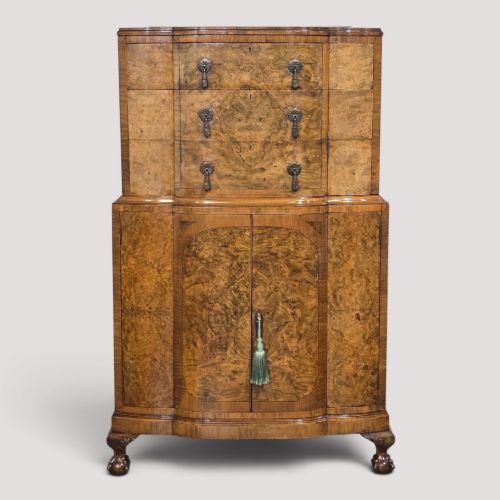
Cabinet makers relied on solid timbers like oak and mahogany, often applying figured veneers such as flame mahogany or burr walnut to primary visible surfaces. Secondary woods like pine and ash frequently form the internal drawer linings and carcass backs.
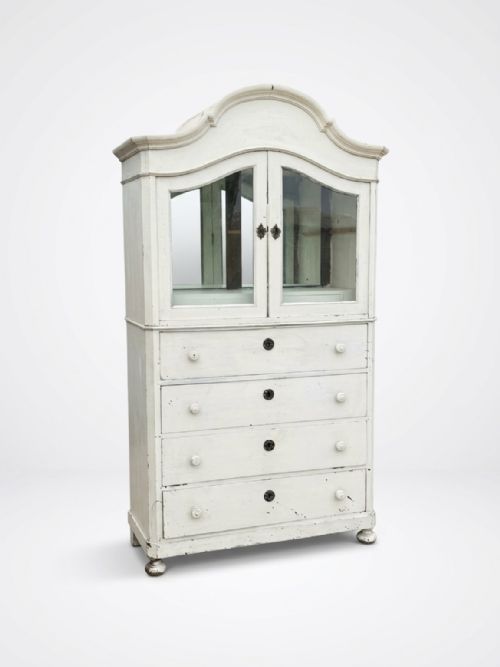
Joinery techniques combined traditional dovetailed drawer construction with pegged frame and panel doors on the upper cupboards. Decorative flourishes utilised satinwood inlay, marquetry, and occasional painted finishes or scumble glaze.
Listings feature woods spanning mahogany, oak, walnut, burr walnut, pine, ash, and teak across Georgian, Victorian, and Edwardian periods.
What Varies in Quality
The choice of timber grain fundamentally divides standard utility pieces from exceptional commissions. Figure matching in flame mahogany or burr walnut veneer denotes higher workshop output.
Internal execution signals grade through the presence of solid oak drawer bases, finely fitted sliding linen trays, and retained brass hardware. Structural integrity relies on crisp moulding work and unwarped panel doors.
Maple & Co.·Gillows·Druce & Co.·Waring & Gillow
The Linen Press Chest Glossary
- Linen press
- A tall cupboard used for storing folded linen, typically featuring sliding trays behind upper doors and drawers below. These pieces evolved to accommodate household textiles before modern wardrobes became common.
- Tallboy
- A tall chest of drawers standing upon another chest or cabinet base. This form maximises vertical storage space in bedrooms.
- Marquetry
- Decorative veneer work created by fitting together small pieces of different coloured wood to form pictorial patterns. Artisans used this technique to ornament cabinet doors and drawer fronts.
- Flame mahogany
- A veneer cut from the fork of the mahogany tree where the branches join the trunk. This timber exhibits a distinctive flickering flame pattern.
- Compactum
- A fitted wardrobe or multi-purpose cabinet combining drawers, shelves, and hanging space in one unit. These items offer diverse storage configurations within a single footprint.
Linen Press Chest: Frequently Asked Questions
What is a linen press chest used for?
These pieces were originally built to store household linens, sheets, and folded garments flat on internal sliding trays. The lower chest of drawers provided additional space for smaller apparel.
Today, modern owners repurpose the upper shelving for general bedroom storage, clothing, or media equipment while utilising the drawers for everyday items.
How do I tell an 18th century piece from a Victorian one?
Georgian examples from the 18th century often display dense figuring in flame mahogany or solid regional oak, coupled with hand-cut dovetails and subtle bracket feet. They possess a clean architectural proportion.
Victorian pieces tend to be heavier in scale, sometimes utilising burr walnut, richer pine carcasses, or more elaborate applied mouldings and plinths.
Did these pieces always have sliding trays inside?
Most traditional presses housed pull-out wooden trays or shelves behind the upper doors to keep stacks of linen accessible without unfolding them. This interior arrangement defined the form.
Later adaptations and conversion pieces sometimes removed these internal trays to install vertical hanging rails for modern wardrobes.
Where should I place a linen press chest?
Because these items are exceptionally tall and heavy, they require a stable wall position in a bedroom, landing, or dressing room with adequate vertical clearance. Measure your ceiling height before siting them.
Keep them away from direct heat sources and strong sunlight to protect aged wood finishes and delicate mahogany or walnut veneers from drying out.