



Light Blue Aquamarine Ring
A light blue aquamarine ring offers a breath of cool clarity, bringing mid-century and art deco brilliance straight to the hand.
Light Blue Aquamarine Ring
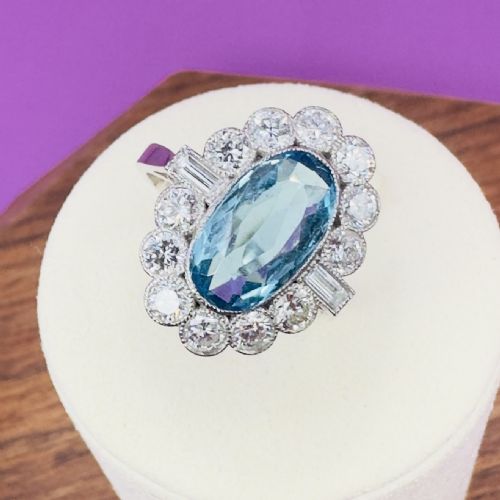
A light blue aquamarine ring is a statement piece defined by its striking pale beryl centre stone, frequently flanked by sparkling diamonds. Buyers hunting for a light blue aquamarine ring encounter impressive statement items ranging from modest dress pieces to massive multi-carat showstoppers.
The selections span several decades of design, drawing heavily on the streamlined geometry of the art deco period alongside the bolder volumes of mid-century modern aesthetics. These jewels appear primarily as dramatic cluster rings or clean solitaire settings designed to maximise the light passing through the pale blue crystal.
Origins cluster around the middle decades of the twentieth century, capturing the shifting tastes from platinum frameworks to warm yellow gold mountings. Every light blue aquamarine ring bridges the gap between historical glamour and wearable twentieth-century design.
How they were made
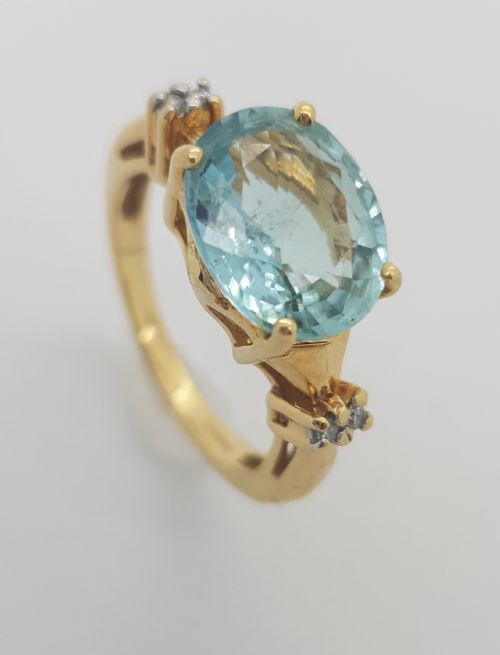
Master jewellers set these pale beryl stones into dense platinum or various grades of gold, including white gold and both fourteen and eighteen carat yellow gold. Platinum provides a secure, bright white claw setting for intricate cluster designs, while yellow gold offers a warmer contrast to the cool ice-blue hue of the central gem.
Cutting techniques dictate the character of each piece, featuring elongated oval cuts, large emerald cuts, and traditional brilliant facets that catch the light from every angle. Berto-faceted stones and old cut diamonds appear alongside baguette diamonds, showcasing the precise stonemasonry characteristic of twentieth-century workshops.
Current listings feature pieces spanning the 1930s, 1940s, 1950s, and 1960s, utilising platinum, white gold, 18ct gold, and 14ct yellow gold.
What varies in quality
Quality rests primarily on the saturation and clarity of the beryl crystal, where an even pale blue tone without heavy inclusions commands greater visual presence. The harmony between the central stone and its surrounding diamonds determines the overall sophistication of the composition.
The weight and gauge of the precious metal mountings also set pieces apart, distinguishing substantial platinum and solid gold architecture from lighter commercial settings. Structural integrity in the claws and the precision of the stone-setting define the longevity and finesse of the finished jewel.
The Light Blue Aquamarine Ring Glossary
- Aquamarine
- A pale blue variety of the mineral beryl, prized for its watery transparency and crystalline depth. It takes its name from the Latin for seawater.
- Cluster ring
- A ring featuring a prominent central gemstone encircled by a group of smaller stones, typically diamonds. This arrangement maximises overall sparkle and presence on the finger.
- Platinum
- A dense, durable, and naturally white precious metal used extensively for high-end jewellery mountings. It holds delicate claw settings securely without losing its colour.
- Art Deco
- A design style spanning the 1920s and 1930s characterised by sleek geometric shapes, stylised motifs, and linear symmetry. It heavily influences many twentieth-century cluster rings.
- Baguette diamond
- A small, rectangular cut diamond with step facets, frequently used as an accent stone in twentieth-century jewellery. Its clean lines complement bold central beryls.
Light Blue Aquamarine Ring: Frequently Asked Questions
How do I style a light blue aquamarine ring?
Wear a light blue aquamarine ring as a standalone cocktail piece to let its pale crystal take centre stage against simple evening attire.
Pair it with delicate platinum or white gold bands if you prefer stacking, or let a substantial yellow gold dress ring anchor your daily accessories.
Are these rings suitable for daily wear?
Beryl is a durable gemstone that withstands regular use, making a light blue aquamarine ring practical for frequent rotation.
Take care with heavy manual tasks to protect large emerald cuts and delicate platinum or gold settings from sharp impacts.
What periods do these rings come from?
The available selection spans the 1930s art deco era through the mid-century modern period up to the 1960s.
Art deco pieces lean toward geometric platinum clusters, while 1950s and 1960s examples often introduce warm yellow gold and massive solitaire stones.
What is the difference between a cluster and a solitaire?
A cluster ring surrounds the main pale beryl with a halo of smaller diamonds to amplify visual impact and brilliance.
A solitaire focuses entirely on a single unassisted aquamarine stone, highlighting the raw clarity and size of the crystal.