






Lidded Wooden Tea Box
A lidded wooden tea box is a sturdy domestic chest designed to keep dry leaves fresh, offering tactile warmth and period character.
Lidded Wooden Tea Box
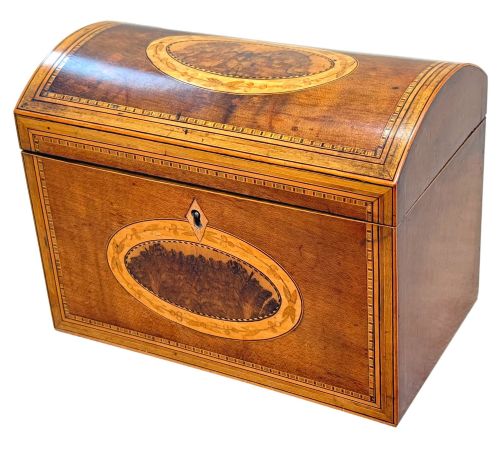
A lidded wooden tea box is a compact container designed to store and preserve dry tea leaves in domestic rooms. Buyers hunting for these pieces encounter forms ranging from simple rectangular containers to elaborate sarcophagus shapes and small chests.
The selections on this page span the eighteenth and nineteenth centuries, including Georgian, Regency, and Victorian iterations. Common formats include double tea caddies, domed variants, and specialised shapes such as a miniature chest of drawers.
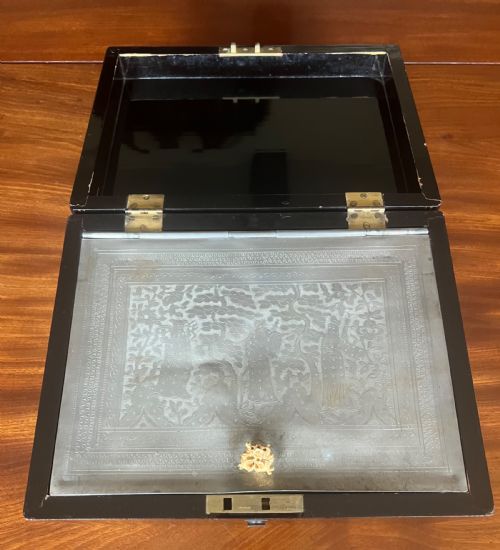
Makers utilised dense cabinet timbers and decorative veneers to signal status within the drawing room. These boxes survive in various states, housing internal lidded compartments meant to keep distinct tea varieties separated.
Construction and materials
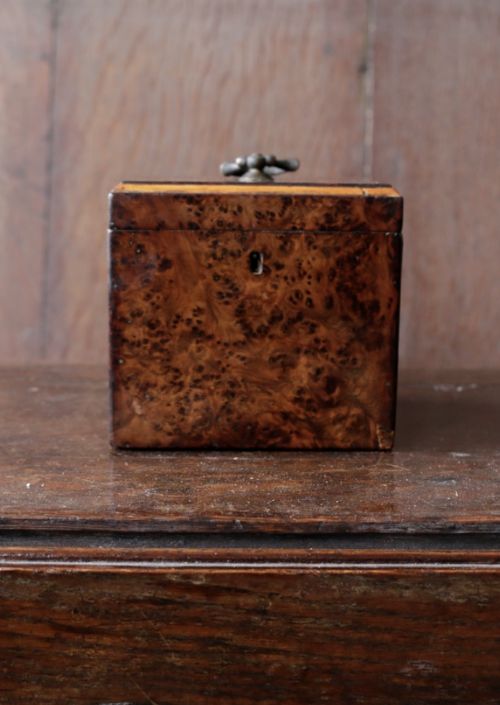
Cabinetmakers constructed the primary carcasses of these boxes using resilient timbers such as mahogany, walnut, and rosewood. Exotic veneers like burr walnut, burr yew, and birdseye maple were frequently applied to exterior surfaces to create striking grain patterns.
Intricate embellishments such as penwork decoration and inlaid brass lines finish the exteriors of select examples. Interiors often feature fitted wooden lids and occasionally bone elements for internal pulls or escutcheons.
Lidded Wooden Tea Box Retail Price Guide 2026
Typical asking prices for lidded wooden tea box among the pieces listed under this phrase on Sellingantiques today, from the lower quarter to the upper quarter. They describe what is for sale here now, not the wider market.
Listings feature eighteenth and nineteenth century periods, utilising mahogany, rosewood, burr walnut, brass, and bone across Regency and Victorian styles.
Judging quality and execution
Quality rests upon the selection of timber veneers and the precision of the cabinet work joining the corners. Boxes displaying carefully matched burr walnut or figured mahogany demonstrate superior craftsmanship compared to plain surfaces.
The integrity of the internal compartments and the survival of original lidded canisters within the box elevate a piece. Superior examples maintain crisp carving, balanced proportions, and functional hinges without heavy structural alterations.
The Lidded Wooden Tea Box Glossary
- Tea caddy
- A box or container specifically built to store dry tea leaves. Early versions included internal compartments for different blends.
- Sarcophagus
- A box shape featuring a domed or peaked lid sloping on four sides, resting on a pedestal or feet. This architectural form proved popular during the Regency period.
- Teapoy
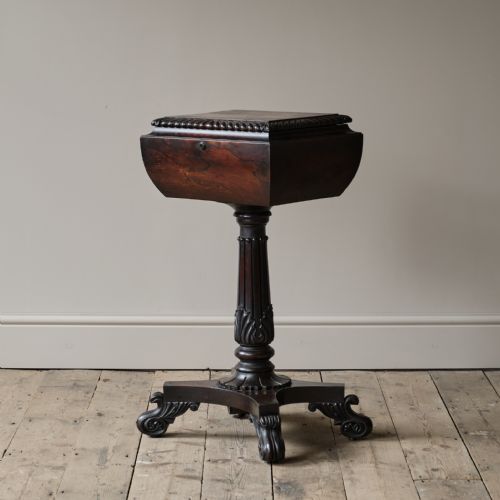
- A pedestal table fitted with a lidded box on top for holding tea. These stood beside chairs in the drawing room.
- Penwork
- A decorative technique using ink applied to wood to create fine illustrative motifs. It requires steady hand control and mimics more costly inlay methods.
- Burr walnut
- A wood harvested from the warted growths of walnut trees, yielding twisted and mottled grain patterns. Cabinetmakers prized this for veneering prominent surfaces.
Lidded Wooden Tea Box: Frequently Asked Questions
What is a lidded wooden tea box?
A lidded wooden tea box is a lidded container historically used to store expensive loose leaf tea. These vessels kept dry leaves safe from moisture and light in period drawing rooms.
Most examples feature internal compartments with secondary lids to separate different tea varieties. The boxes often include small locks to restrict access to the valuable contents.
How do I date a tea box?
Dating relies on observing the prevailing architectural styles, timber choices, and construction methods of the piece. Regency examples frequently feature sarcophagus shapes and brass paw feet, while Victorian pieces often employ burr walnut and Gothic revival details.
Examining the interior linings, hinge types, and fastener styles also helps establish the period of manufacture. Earlier Georgian pieces typically display simpler mahogany or walnut construction without heavy veneer work.
How were tea boxes used?
Tea boxes sat in the parlour or drawing room where the mistress of the house dispensed tea herself. Because tea was an expensive commodity, the container remained locked when not in use.
Servants brought the tea box to the table, and the host unlocked it to measure out leaves for the brew. The internal compartments allowed the household to offer guests a choice between green and black teas.
How do I care for wooden tea boxes?
Maintain these wooden boxes in stable indoor environments away from direct sunlight and strong heat sources. Extreme temperature shifts cause historic veneers to lift and split.
Dust the exterior gently with a dry, soft cloth and avoid using modern liquid polishes or harsh chemical cleaners. Conditioning the wood occasionally with appropriate wax helps preserve the historic finish.