


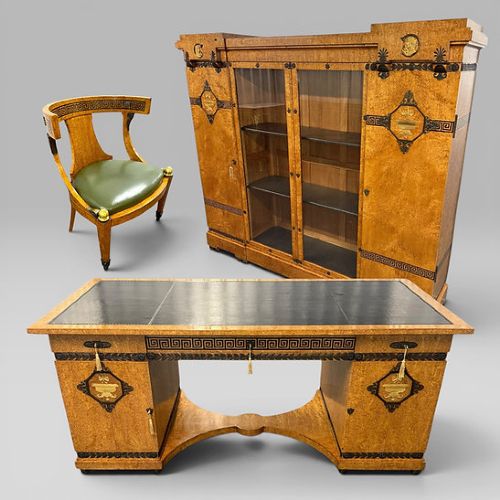

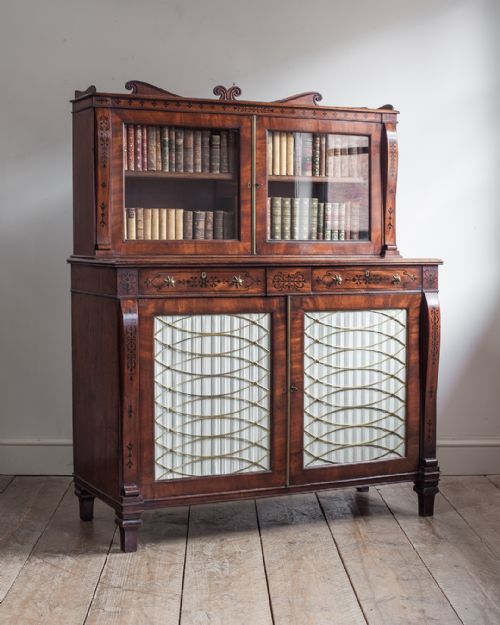


Library Writing Cabinet
These library writing cabinet pieces combine upper display space with a fitted writing drawer, offering a practical workspace that defines period study rooms.
Library Writing Cabinet
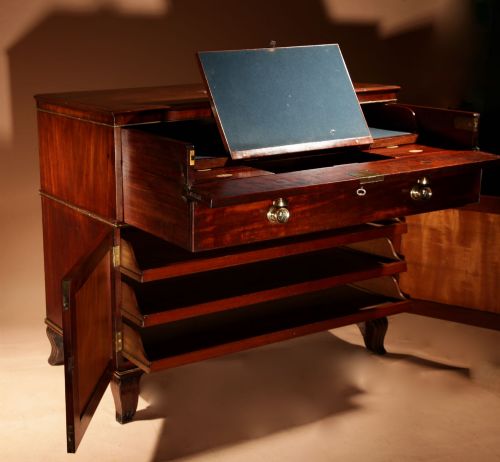
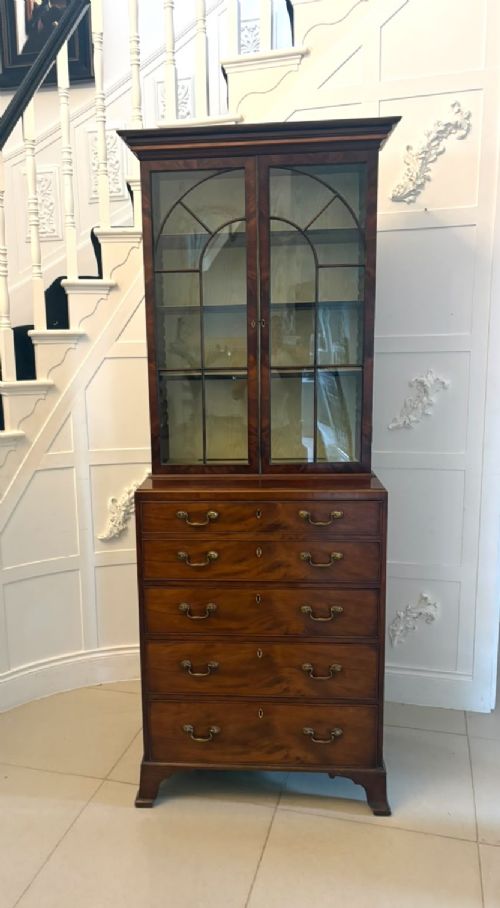
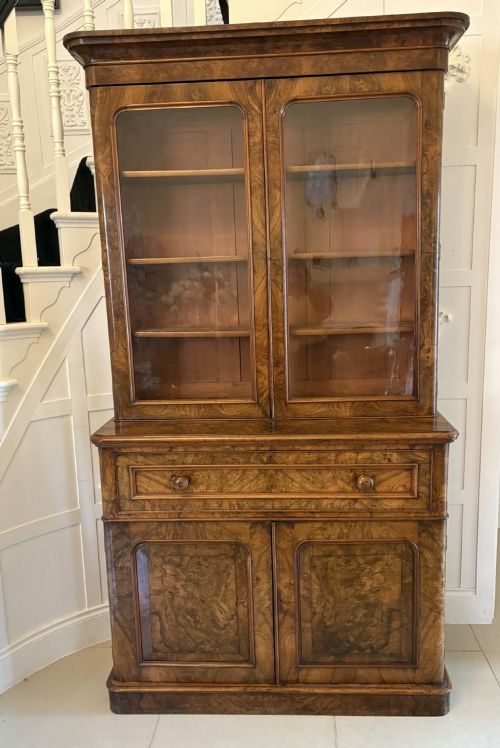
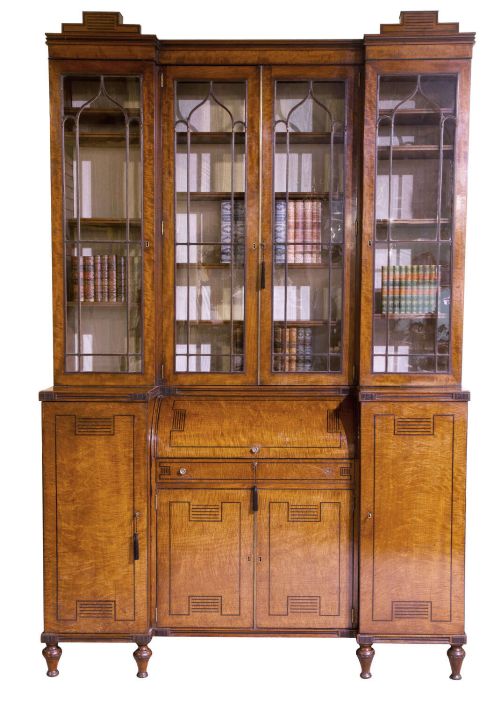
A library writing cabinet merges storage and writing facilities into a single piece of furniture, appearing in formats from Georgian breakfront bookcases to Regency secretaire cabinets. You will frequently encounter forms incorporating glazed upper doors alongside fitted drop-front drawers designed for correspondence.
The selection ranges across the 18th century, Georgian, Regency, William IV, Edwardian, and 19th-century periods, demonstrating how cabinet makers adapted these dual-purpose designs over generations. Common variations include secretaire bookcases, kneehole desks, and bureau styles outfitted with interior pigeonholes and small drawers.
Makers utilised specific regional traits, such as Scottish Regency pieces attributed to Edinburgh workshops or English designs bearing the hallmarks of Lancaster cabinet makers. These variations reflect the changing demands of domestic libraries and studies across successive eras.
How they were made
Makers constructed these cabinets primarily using solid and veneered timbers, selecting figured mahogany, Cuban mahogany, oak, rosewood, and satinwood for their exterior presence. Structural stability relied on dense hardwoods, while decorative accents frequently employed contrasting wood grains and moulded cornices.
Hardware and interior details incorporated brass handles, glass panes within astragal glazed doors, and inset leather writing surfaces on drop-front drawers. Finer examples integrated ormolu mounts, bronze elements, and specialised mechanical fittings to support fold-down writing slopes.
Library Writing Cabinet Retail Price Guide 2026
Typical asking prices for library writing cabinet among the pieces listed under this phrase on Sellingantiques today, from the lower quarter to the upper quarter. They describe what is for sale here now, not the wider market.
The documented periods span the 18th century, Georgian, Regency, William IV, Edwardian, and 1920.
What varies in quality
The standard of timber selection and cabinet work separates standard utility pieces from exceptional commissions. Fine examples display carefully matched flame mahogany veneers and precise dovetail joinery within the drawer construction.
Proportion and decorative restraint dictate the standing of a piece. Elaborate glazing bars, well-cast brass or ormolu mounts, and intact original fitted interiors with secret compartments elevate the overall execution.
Gillows of Lancaster·William Trotter·Mercier Frères·Morant And Co
The Library Writing Cabinet Glossary
- Secretaire
- A desk or cabinet featuring a pull-down or drop-front drawer that reveals a fitted interior of small drawers and pigeonholes. This mechanism conceals writing materials while maintaining a compact exterior profile.
- Astragal glazed
- Glass doors divided into smaller panes by narrow wooden mouldings called astragals. This technique allows clear display of library contents while keeping large glass sheets structurally secure.
- Breakfront
- A piece of furniture where the central section projects forward from the flanking wings. This architectural layout creates depth and visual weight in larger library cabinets.
- Kneehole
- A desk or bureau design featuring a central recessed space for the user's legs, flanked by pedestals of stacked drawers. It provides a stable, seated writing position.
- Ormolu
- Gilded bronze ornamentation applied to furniture, particularly popular in French-influenced neoclassical and revival pieces. It adds metallic contrast to dark timber surfaces.
Library Writing Cabinet: Frequently Asked Questions
What is a library writing cabinet?
A library writing cabinet is a dual-purpose piece of furniture combining bookshelf storage with a dedicated writing surface, usually concealed behind a drop-front drawer.
These pieces served as functional workstations and book storage for private studies, particularly during the Georgian and Regency periods.
How do I use a secretaire drawer?
The secretaire drawer pulls out horizontally and the front hinges downward to create a flat leather-lined writing surface. Internal pigeonholes and small drawers remain accessible while you write.
Supporting arms or automatic struts typically engage as the front lowers to bear the weight of the writing surface.
Where were these cabinets placed?
They stood primarily in domestic libraries, studies, or drawing rooms where books and correspondence were managed. Their substantial height and fitted storage made them the anchor furniture of a room.
Placement depended on natural light sources from windows to illuminate the desk surface and book titles.
How do I distinguish Regency from Georgian pieces?
Georgian pieces often display heavier architectural proportions, classical cornices, and detailed astragal glazing patterns. Regency furniture frequently adopts leaner lines, rosewood accents, and classical revival motifs inspired by French and Roman design.
Timber choice also shifts, with Regency examples making frequent use of highly figured Cuban mahogany and brass inlay.