



Library Reading Stand
A library reading stand brings practical book placement to studies and sitting rooms, offering adjustable surfaces and bookrests for daily reading.
Library Reading Stand
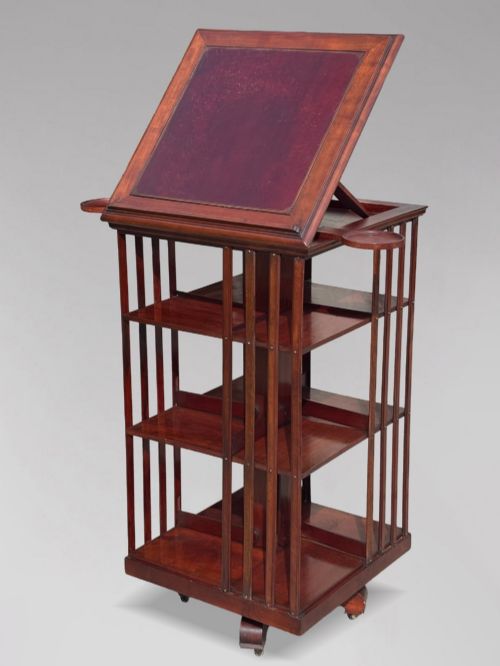
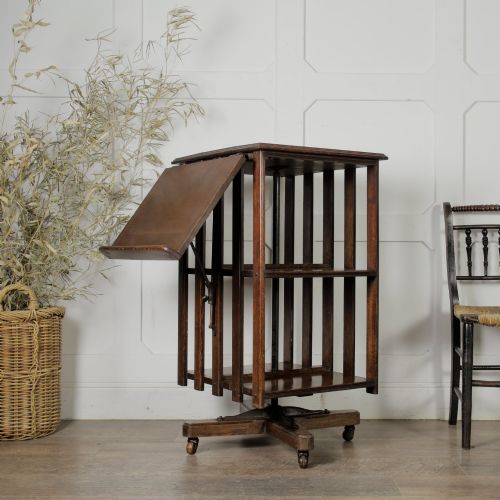
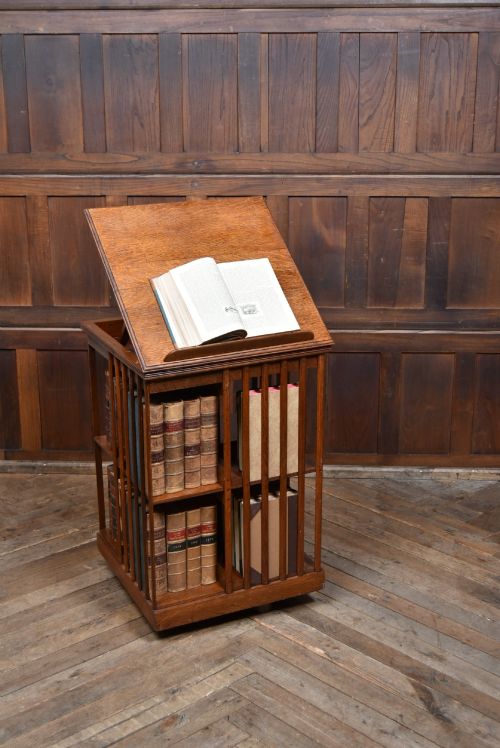
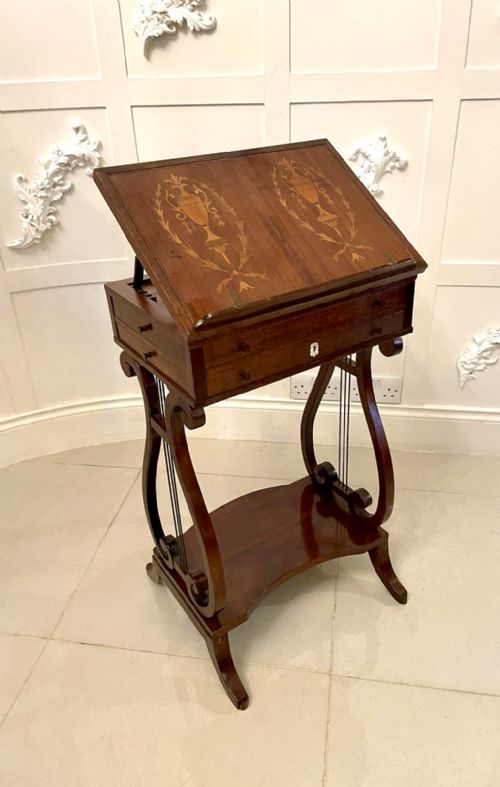
A library reading stand encompasses adjustable tables, chairside reading stands, desk-top book rests, and revolving bookcases designed to hold volumes at a convenient angle. These pieces emerge across Georgian, Regency, Victorian, and Edwardian periods, reflecting changing domestic habits in reading and writing.
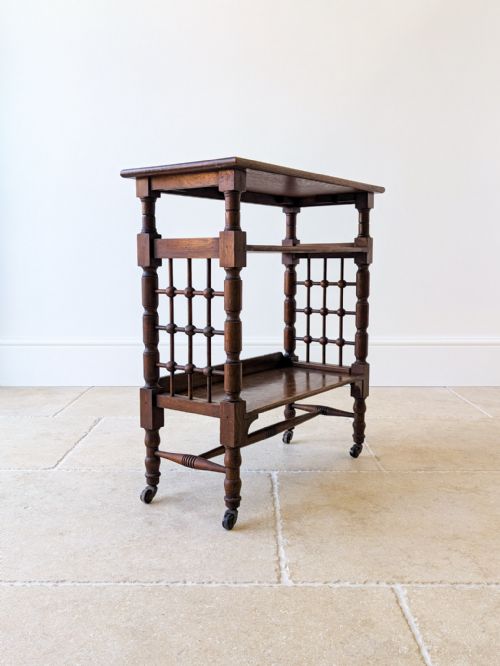
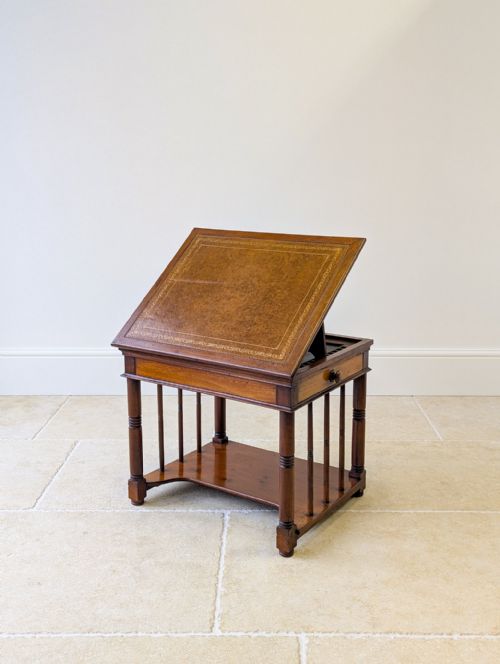
The most frequent form met on this page is the mahogany reading table or adjustable stand dating from the nineteenth century, often equipped with mechanisms to raise or tilt the surface. Alongside these stand revolving bookcases and occasional tables that integrate book storage with a reading surface.
Materials and construction
Makers utilised dense timbers such as mahogany, oak, rosewood, and walnut, frequently constructing tops and frames with solid wood or selected veneers. Satinwood and brass inlay appear on specific pieces, adding decorative contrast to the primary timber.
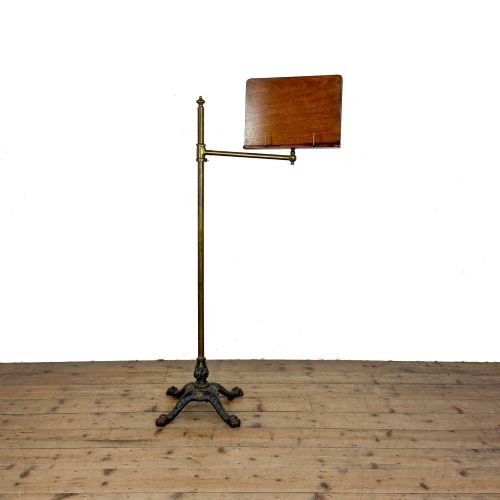
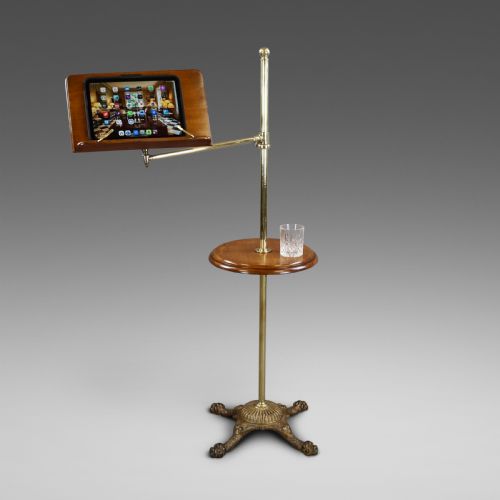
Adjustable mechanisms incorporate brass and cast iron components to allow movement in reading slopes and table heights. Metal standards and fittings provide structural support for reading lamps and magnifying glasses associated with library furniture.
Listings feature revolving bookcases, occasional tables, and standard lamps in mahogany, oak, brass, and rosewood.
Craftsmanship and mechanisms
Quality rests in the precision of the adjustable mechanism and the smoothness of its operation, whether raising a reading top or turning a revolving bookcase. Superior examples retain their original brass ratchets, screws, and hinges without replacement parts.
Timber selection and secondary framing dictate the standard of the piece, from plain utilitarian variants to finely figured burr walnut or inlaid mahogany. The integrity of the joints and the crispness of any carved or turned details separate standard production items from workshop pieces.
Gillows·Waring and Gillows·Carter·Benjamin Taylor and Sons·Harrods
The Library Reading Stand Glossary
- Reading table
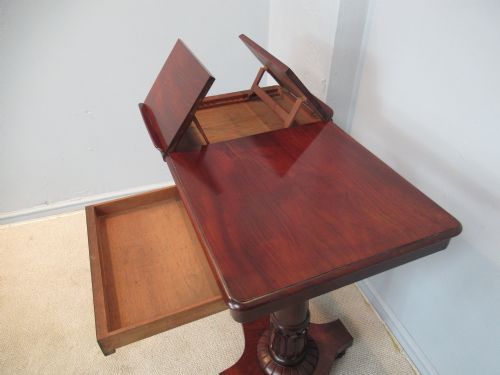
- A specialised table featuring an adjustable or tilting top designed to support books and papers at an ergonomic angle. These pieces often include sliding candle slides or small ledges to keep volumes in place.
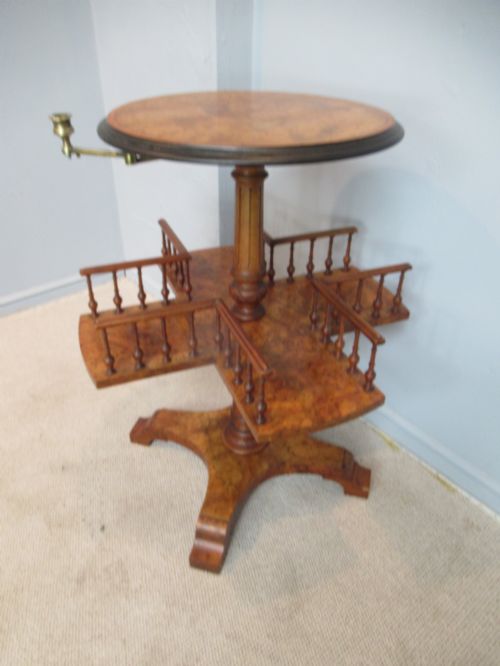
- Revolving bookcase
- A freestanding bookcase mounted on a low rotating base that allows access to books from all sides. They appear in solid oak, mahogany, and walnut across the Victorian and Edwardian eras.
- Whatnot
- A piece of open shelving with multiple tiers used for displaying or holding books and decorative objects. Regency and Victorian examples occasionally incorporate music or reading stands into their upper tiers.
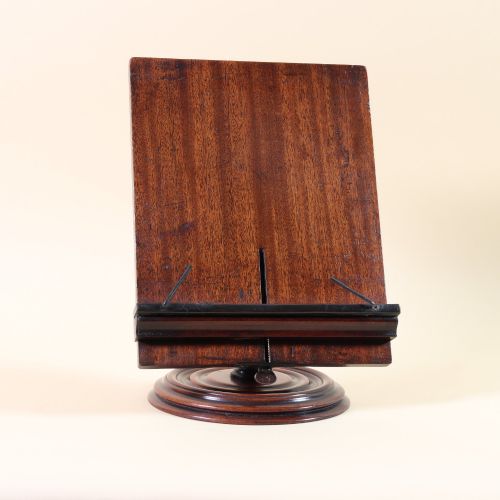
- Book rest
- A portable or desk-top stand designed to prop open a book for reading. They appear in mahogany and other timbers, sometimes folding flat when not in use.
- Folio stand
- A piece of furniture designed to hold large flat folios, prints, or maps. Examples from the nineteenth century sometimes combine writing surfaces with dedicated folio storage.
Library Reading Stand: Frequently Asked Questions
How do adjustable reading stands work?
Adjustable reading stands typically use a ratcheted brass arm beneath the wooden surface to hold the bookrest at various angles. Users lift the reading slope and engage the support bar into the desired notch.
Heavier reading tables often employ internal screw mechanisms or metal columns operated by thumbscrews to alter the overall height of the surface.
Where were library reading stands placed?
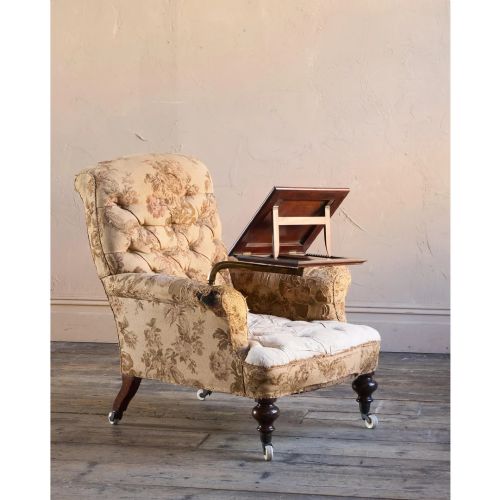
These pieces sat beside armchairs in studies, libraries, and drawing rooms where occupants spent hours reading or writing. Chairside reading tables were designed to pull up over the lap or sit immediately adjacent to the seat.
Revolving bookcases stood freely beside desks or near seating groups to keep frequently consulted volumes within arm's reach.
What timber was most commonly used?
Mahogany is the predominant timber found across eighteenth and nineteenth-century reading stands, prized for its stability and rich dark colour. Oak and walnut also appear frequently, particularly in Gothic Revival and Edwardian pieces.
Satinwood and rosewood were utilised for finer decorative tables, often enhanced with contrasting stringing or brass inlay.
Can these stands hold modern books?
Most antique reading stands feature wooden ledges at the base of the slope designed to support the weight of heavy volumes. Their dimensions accommodate standard hardbacks, reference books, and large folios.
Adjustable angles allow users to reduce strain on book bindings while keeping open pages securely positioned.
How do I identify a Victorian reading table?
Victorian reading tables generally display heavy mahogany construction, turnings, and robust brass adjustment hardware dating from the mid to late nineteenth century. They often feature rectangular tops with moulded edges and sturdy pillar bases.
Patented designs from this era frequently bear maker's stamps or brass plaques associated with specialised furniture makers.