
Library Book Shelves
Library book shelves organise heavy volumes with sturdy timber construction and adjustable tiers.
Library Book Shelves
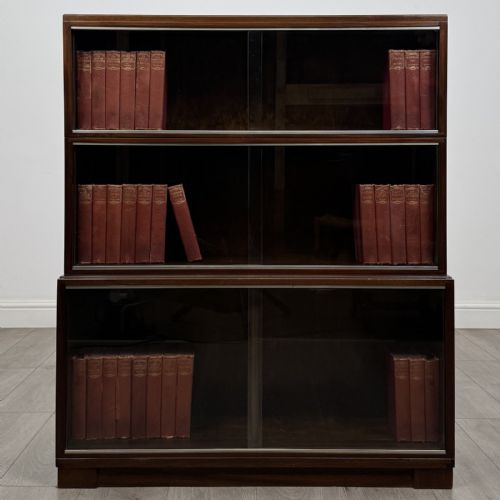
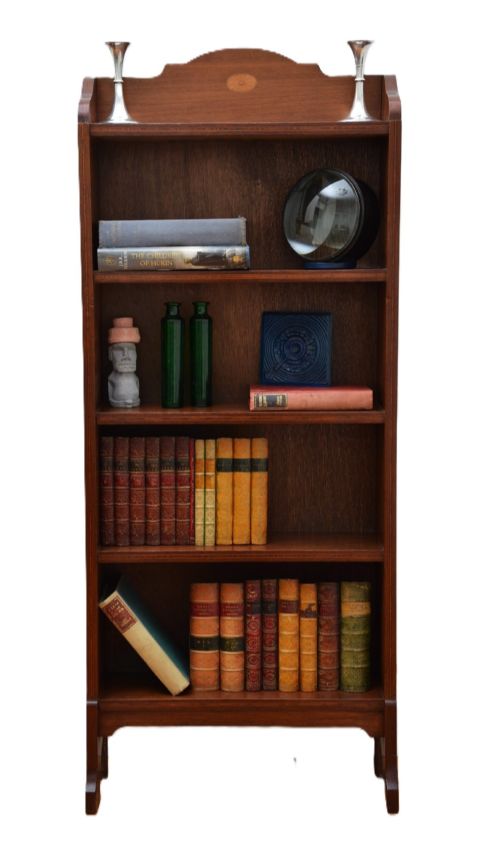
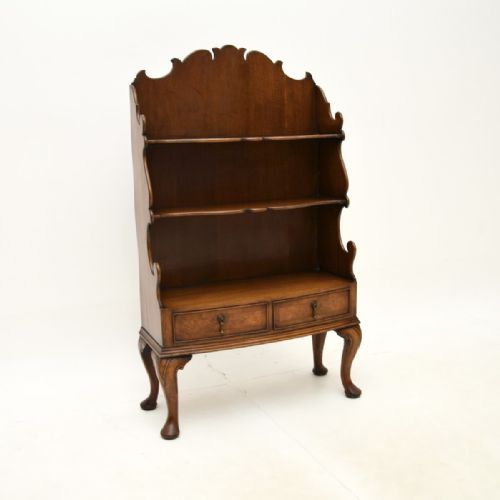
When you search for library book shelves, you encounter open bookcases, revolving designs, and tiered storage created for holding large collections of bound volumes. The selection relies heavily on nineteenth-century and early twentieth-century examples spanning the Victorian, Edwardian, and Regency eras.
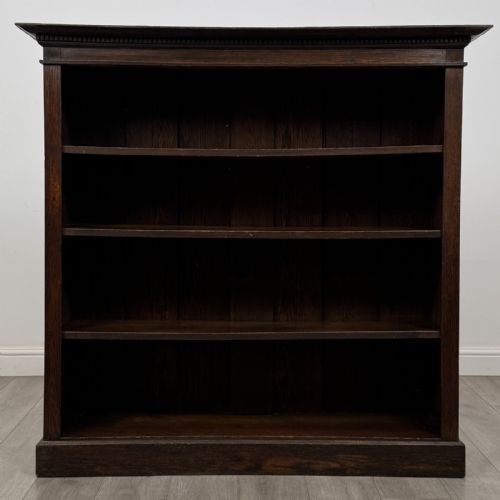
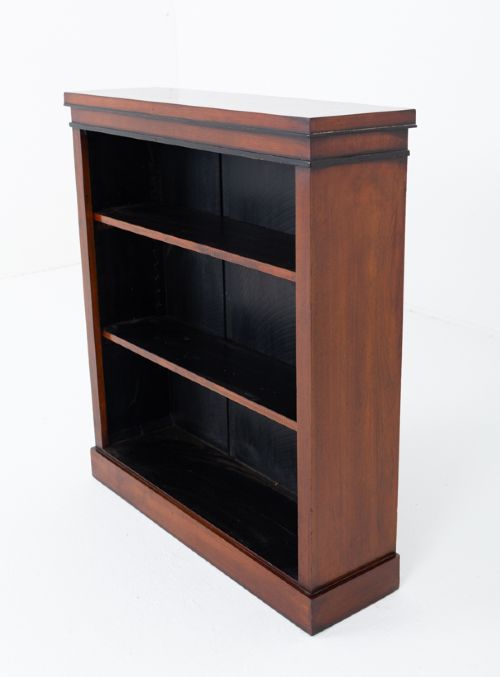
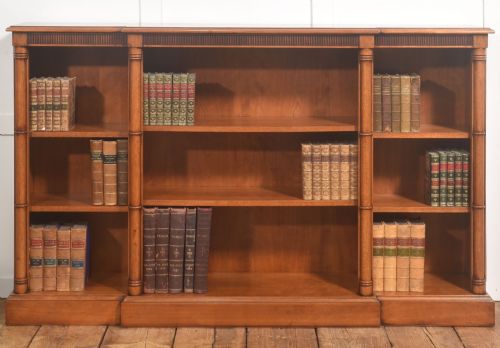
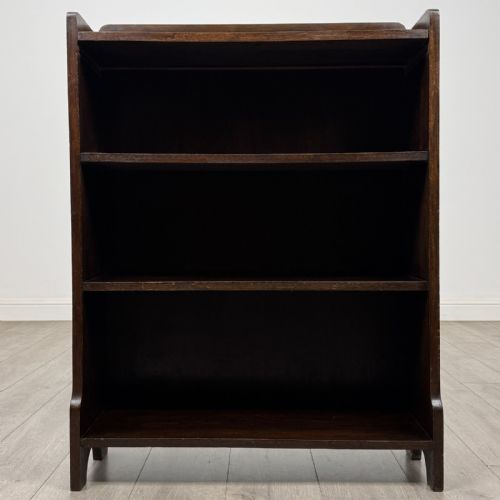
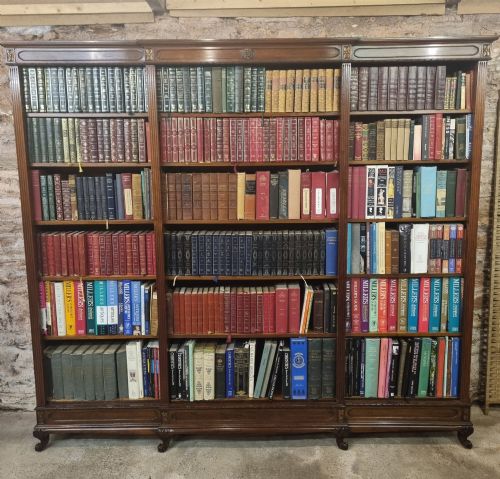
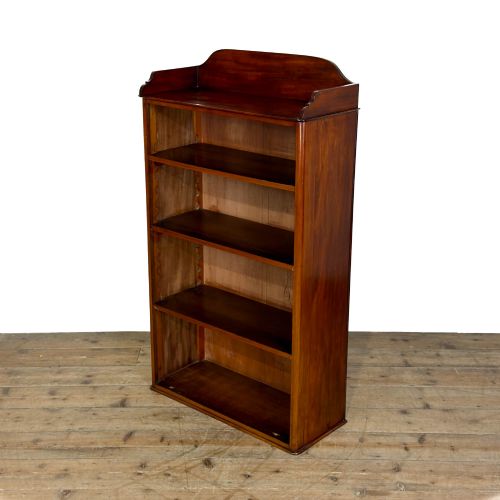
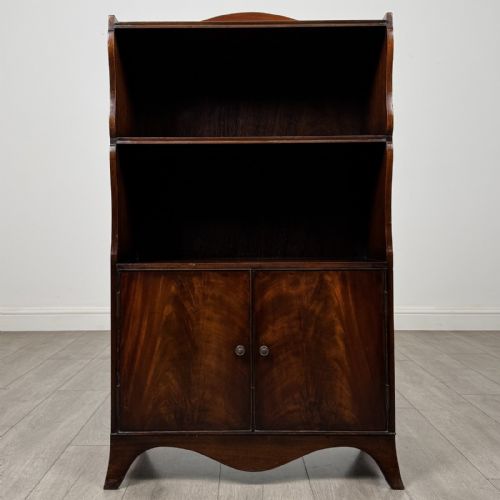
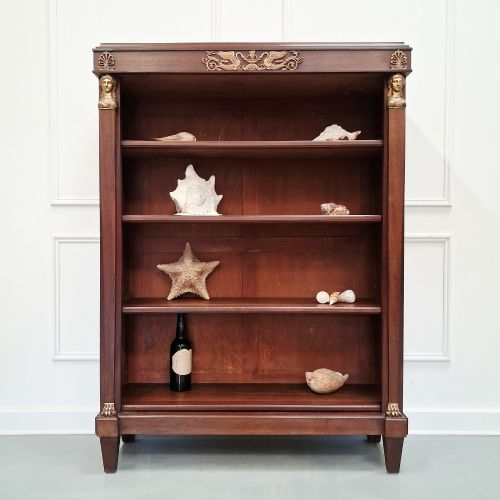
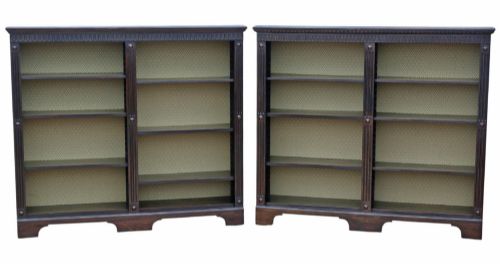
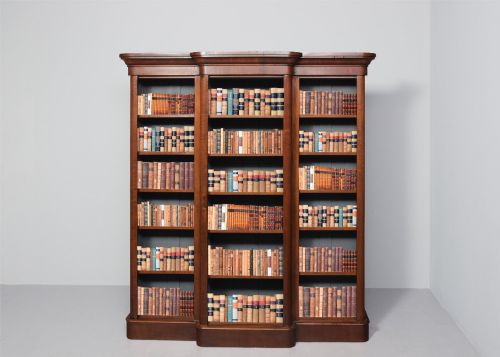
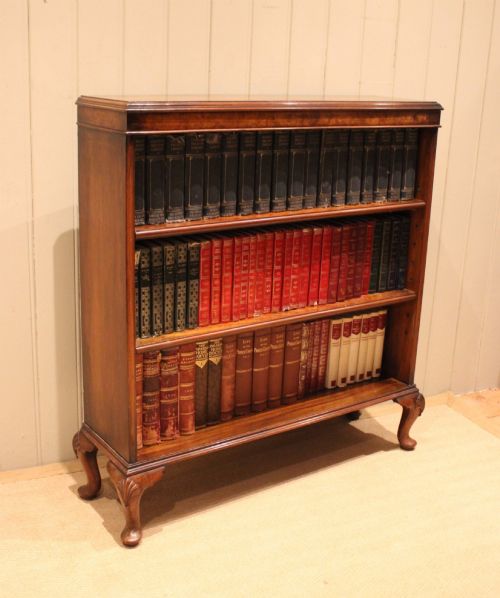
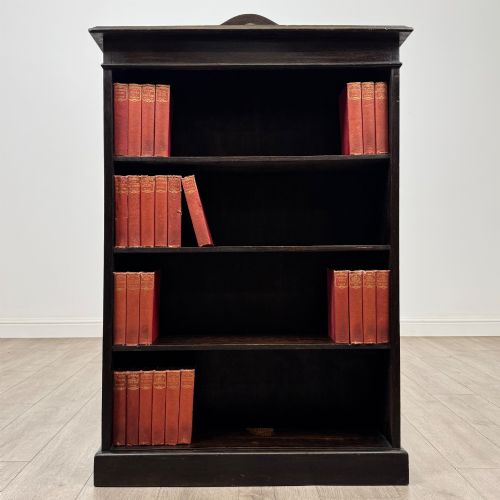
The common form on this page is the open bookcase, often constructed in mahogany, oak, or walnut with adjustable shelves to accommodate books of varying heights. These pieces range from compact revolving tables to tall, breakfront library cabinets designed for domestic studies and institutional rooms.
Examples from the Edwardian period and the late Victorian era frequently utilise golden oak or inlaid mahogany, reflecting domestic tastes for lighter timbers and adaptable furniture. Earlier Regency and William IV pieces bring darker rosewood and structured proportions into the room.
How they were made
Cabinet makers utilised dense hardwoods such as mahogany, oak, walnut, and rosewood, often applying burr walnut veneers or satinwood details to prominent surfaces. Pine frequently served as a secondary timber for internal linings and shelf construction.
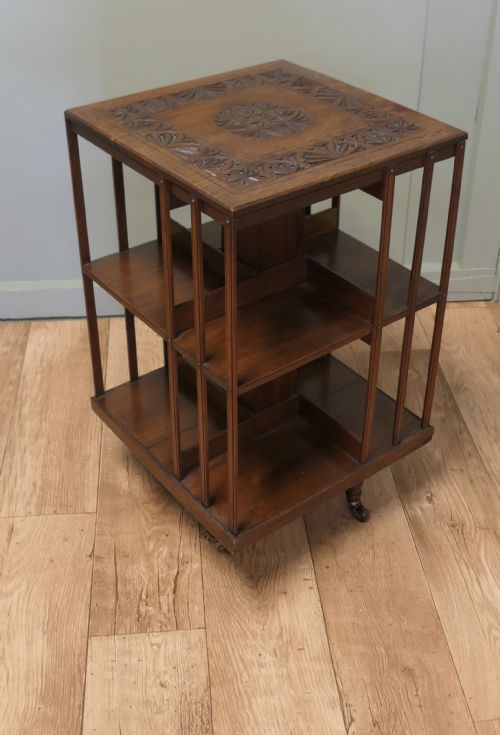
Joinery techniques included adjustable shelf mechanisms using brass fittings or wooden ratchets, allowing owners to alter tier heights for different volumes. Revolving bookcases incorporated internal cruciform pivots and ball bearings to support heavy book loads smoothly.
Surface treatments ranged from French polishing on fine mahogany and walnut to carved ornamentation on Victorian oak and inlaid motifs on Edwardian pieces.
Revolving bookcases let readers spin their entire library around with a single gentle push.
What varies in quality
The calibre of timber selection and veneer matching defines the upper tier of these pieces, particularly in burr walnut and figured mahogany where grain patterns flow across the facade. Finer examples display meticulous attention to internal secondary woods and precise joint construction.
The sophistication of the shelving mechanism alters the utility and standing of a bookcase, with smooth brass ratchets or well-engineered revolving pivots separating superior items from basic utility pieces. Carved details and subtle inlay work indicate workshops that invested greater labour in individual items.
Gillows
The Library Book Shelves Glossary
- Open bookcase
- A piece of furniture designed for book storage featuring unobstructed front access rather than glazed or solid doors. These items often include adjustable internal tiers.
- Revolving bookcase
- A low or table-height storage unit mounted on a central rotating pivot that allows users to access volumes from all sides. They appear frequently in late Victorian and Edwardian forms.
- Breakfront
- A cabinet design where the central section projects forward from the flanking wings. This configuration adds architectural depth to large library furniture.
- Adjustable shelves
- Internal boards that can be repositioned at different heights using vertical slots, pins, or racks. This feature accommodates varying book dimensions.
- Burr walnut
- Timber harvested from walnut tree growths that produces intricate, swirling grain patterns. Cabinet makers prized it for decorative veneering on high-status Victorian pieces.
Library Book Shelves: Frequently Asked Questions
What are library book shelves?
Library book shelves are dedicated storage furniture designed to hold substantial collections of books within domestic or institutional spaces. They typically feature open fronts or rotating tiers to provide immediate access to frequently used volumes.
Historically constructed by cabinet makers from durable hardwoods, these pieces range from compact revolving stands to tall breakfront bookcases with adjustable shelves. Their primary function remains the orderly housing and display of bound literature.
How were revolving bookcases used?
Revolving bookcases were placed beside armchairs, desks, or in the centre of rooms to keep reference books and current reading within arm's reach. Their rotating mechanism allowed users to access multiple shelves without changing position.
These pieces became particularly popular during the late Victorian and Edwardian periods when smaller domestic libraries required flexible storage solutions. The smooth rotation relied on clever internal pivot engineering hidden beneath the timber structure.
How do I adjust the shelves?
Adjustment mechanisms depend on the period and construction of the bookcase, frequently involving brass pins, wooden ratchets, or vertical tracks. Shelves lift out of their supports and relocate into alternative notches or holes within the interior panels.
This adaptability allowed nineteenth-century owners to reconfigure cases for large folios or small octavo volumes as their collections changed. Care must be taken with older timber racks to avoid binding the shelf edges against the interior walls.
How can I tell Victorian from Edwardian pieces?
Victorian bookcases generally display darker timbers such as rich mahogany and heavy walnut, often accompanied by carved mouldings and denser, formal proportions. Edwardian examples tend to feature lighter golden oak, satinwood, or inlaid mahogany with simpler lines reflecting changing domestic fashions.
Arts and Crafts influences also emerge around the turn of the twentieth century, emphasising visible construction and honest materials over heavy ornamentation. Examining the secondary timbers and hardware helps confirm the manufacturing era.