


Leather Travel Luggage
Leather travel luggage brings together sturdy trunks, Gladstone bags and fitted vanity cases built to endure journeys from the eighteenth century onwards.
Leather Travel Luggage
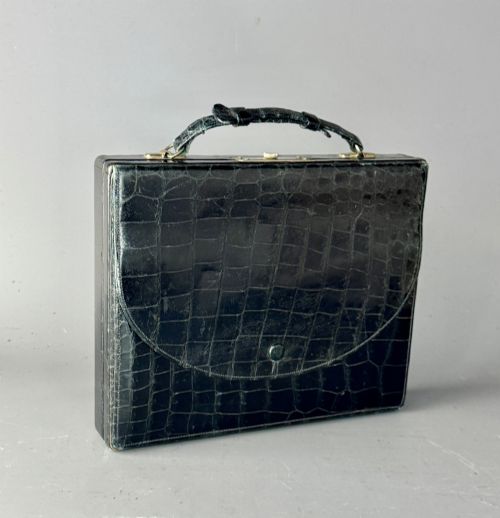
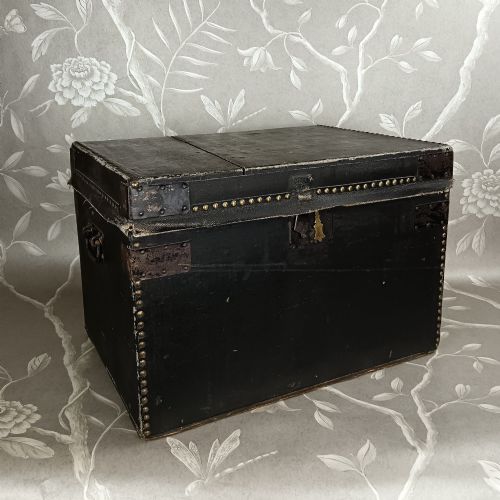
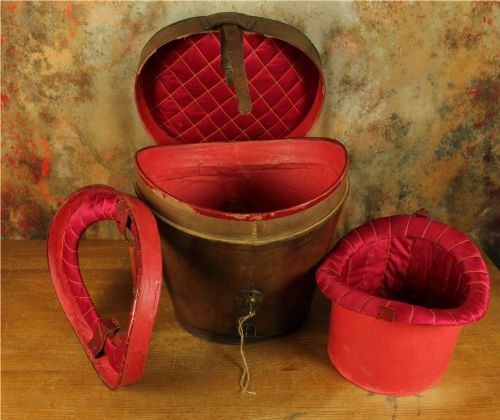
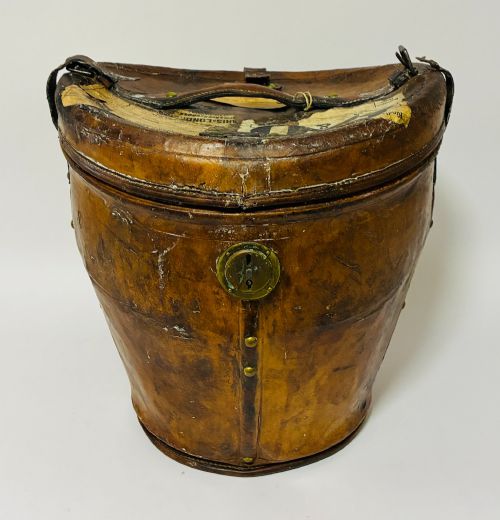
Leather travel luggage encompasses a broad range of utilitarian forms designed for transit, from massive nineteenth-century coaching trunks and steamer trunks to compact top hat boxes and weekend suitcases. Buyers seeking authentic period items will encounter pieces spanning the Georgian, Victorian, Edwardian and Art Deco eras, constructed for both domestic carriage and international voyages.
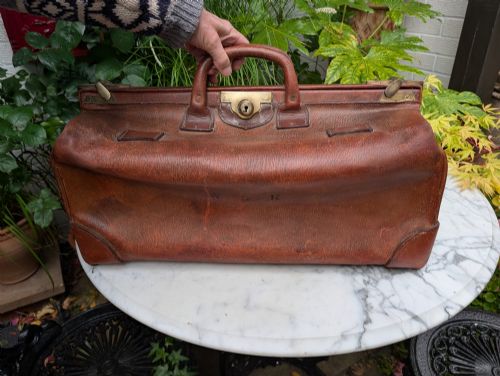
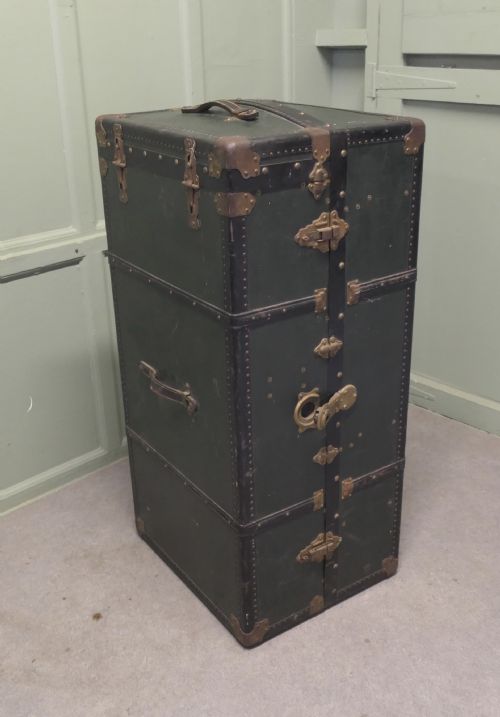
The selection on offer leans heavily toward robust trunks, chests and valises, often combining dense hides with wooden carcases and metal reinforcements. Pieces range from grand travel wardrobes intended for state cabins to modest attache cases and Gladstone bags utilised for overnight business.
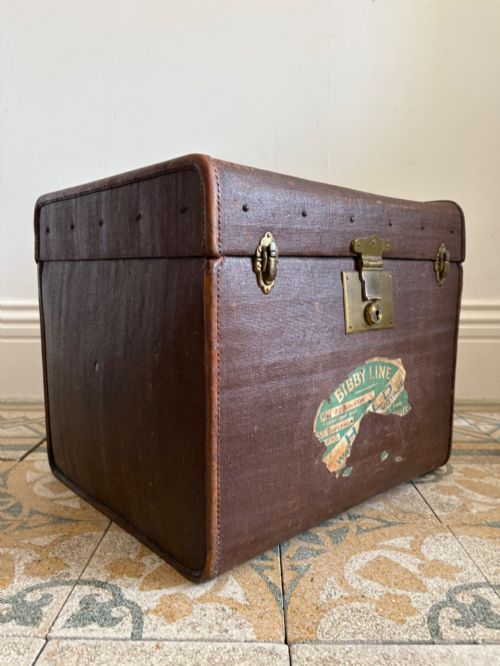
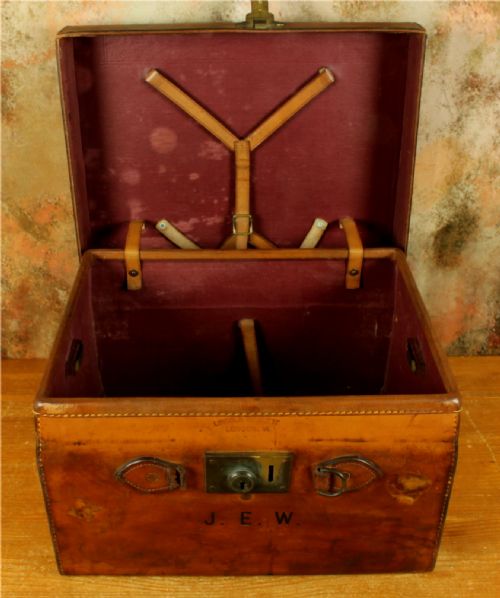
Origins vary widely across these items, incorporating English workshops, French trunk makers and specialised makers from London, Bristol and Manchester. Many examples bear original maker stamps, brass owner initials and travel labels that record past itineraries across land and sea.
Materials and construction
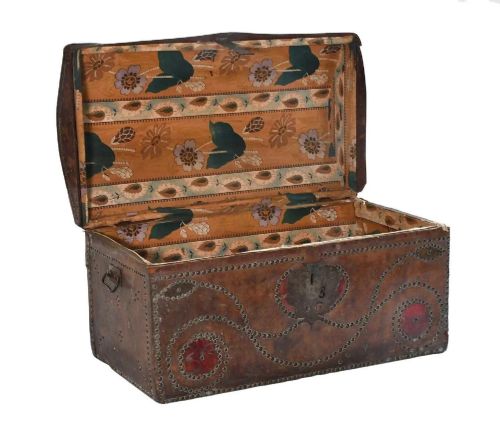
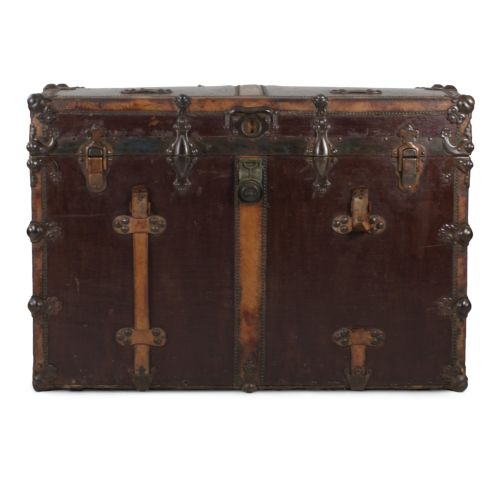
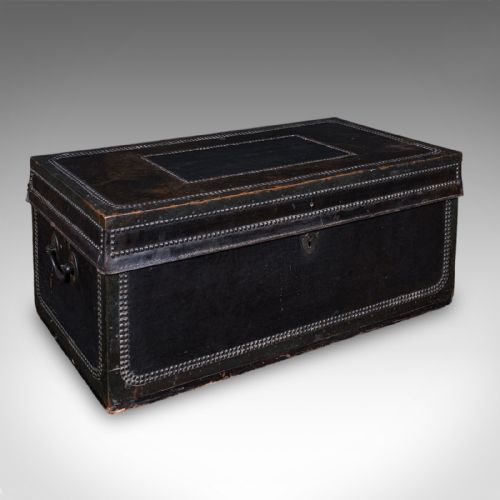
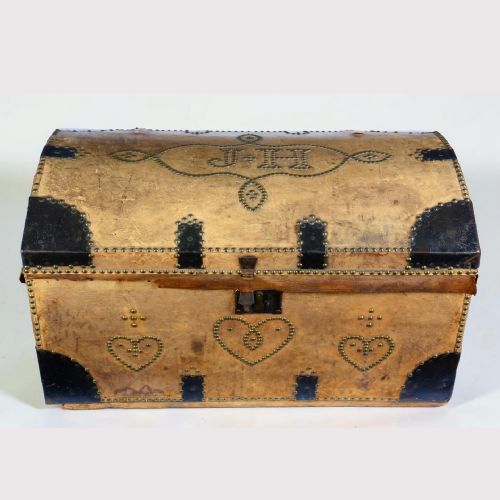
Makers built these pieces around internal wooden frames of oak, camphorwood or pine, which provided structural rigidity for heavy transit. Over these carcases they stretched thick cowhide, hide, vellum or treated canvas, securing the exterior with iron nails, brass studwork and protective metal corner brackets.
Hardware played a crucial structural role, incorporating heavy brass locks, iron straps and reinforced carrying handles designed to withstand rough handling by railway porters and steamship crews. Interior compartments frequently utilised linen, paper linings or fitted leather trays to secure hats, garments and vanity accessories.
Leather Travel Luggage Retail Price Guide 2026
Typical asking prices for leather travel luggage among the pieces listed under this phrase on Sellingantiques today, from the lower quarter to the upper quarter. They describe what is for sale here now, not the wider market.
Many trunks carry decades of international travel labels, proving they visited grand hotels long before modern aviation existed.
Quality and craftsmanship
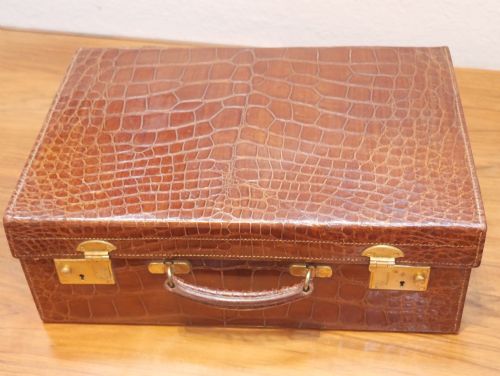
Superior examples distinguish themselves through the thickness and selection of the leather, ranging from standard cowhide to exotic crocodile leather and fine vellum. Exceptional pieces display hand-stitched seams, precise brass studwork patterns and robust internal frameworks that have maintained their shape over centuries.
The presence of original maker signatures, high-grade brass locks with functioning keys, and complete fitted interiors elevate a piece above standard utility items. Workshop provenance from established makers adds notable distinction to the construction and finish.
Wm. Insall of Bristol·Arthur Wannop·Lincoln Bennett·Pioneer·Chapple & Sons·Finnigan's Manchester·Seabrook of St.Pauls·Aux Etats Unis·Louis Vuitton
The Leather Travel Luggage Glossary
- Steamer trunk
- A lower-profile travel trunk specifically designed to fit beneath the cabin berth of an ocean liner. These items date predominantly from the late nineteenth and early twentieth centuries.
- Portmanteau
- A large travelling bag or trunk that opens into two equal compartments. This form served travellers well during the Victorian and Edwardian periods.
- Vellum
- Calfskin or other skin prepared for writing or bookbinding, utilised here as a durable exterior covering on luxury luggage. It offers a pale, smooth surface that ages distinctively.
- Campaign case
- Portable furniture and luggage made for military officers or travellers on active service abroad. These sturdy pieces often incorporate brass reinforcement and recessed carrying handles.
Leather Travel Luggage: Frequently Asked Questions
How do I identify a period leather trunk?
Examine the construction methods, materials and hardware used in the carcase. Eighteenth-century and Regency pieces often feature heavy studwork on oak or pine, while Victorian examples introduce domed lids and robust brass locks.
Maker stamps, internal paper labels and the style of the locking mechanisms further help pinpoint the era of manufacture.
Can I use antique trunks for modern storage?
These sturdy chests and cases provide practical storage solutions for blankets, seasonal clothing and household items. Their solid internal frames easily support everyday domestic organisation.
Ensure the interior linings are clean and dry before storing delicate fabrics inside historical leather containers.
What is the difference between a steamer trunk and a coaching trunk?
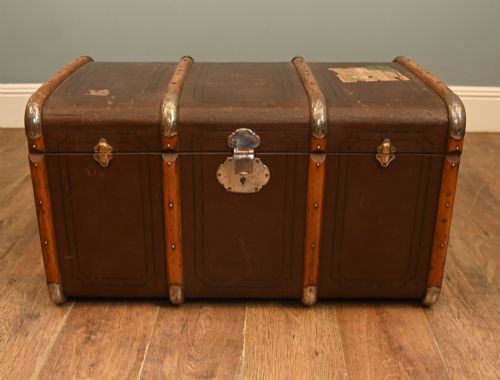
Coaching trunks were built heavy and flat-topped to be strapped to the roof of a stagecoach or carriage during the eighteenth and early nineteenth centuries. Steamer trunks emerged later with lower profiles to fit inside ocean liner cabins.
Both types utilise leather and metal reinforcement, but their proportions reflect the changing modes of transport.
How should I care for vintage leather luggage?
Keep historical leather away from direct sunlight and excessive humidity to prevent the hide from drying and cracking. Gentle cleaning with suitable conservation products maintains the surface integrity.
Allow the natural patina and historical travel labels to remain undisturbed, as these elements record the piece's journey through time.