
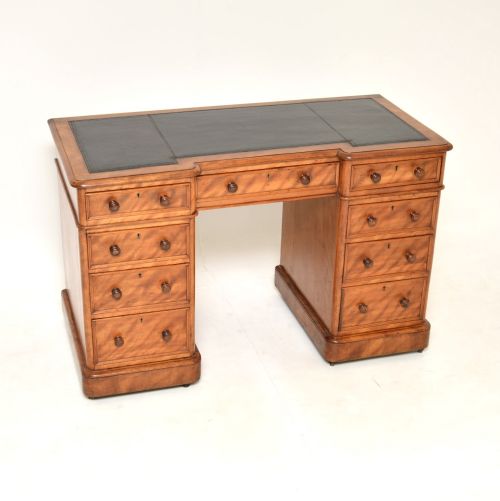
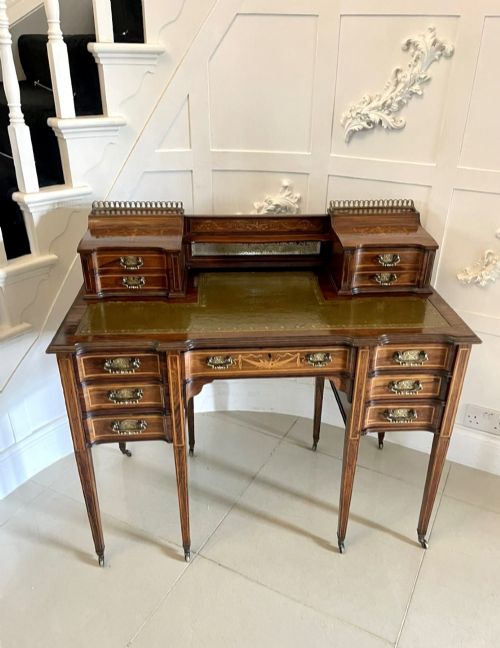
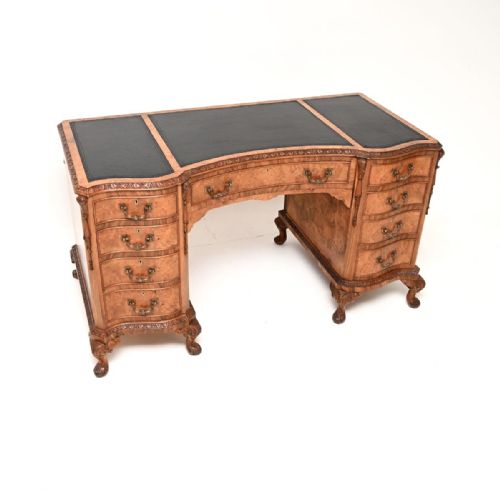
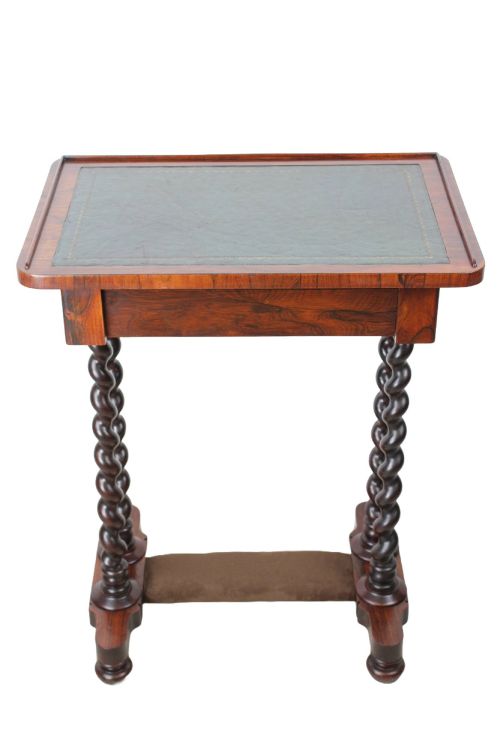
Leather Topped Table
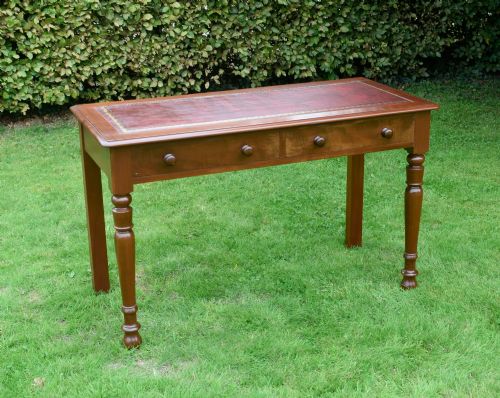
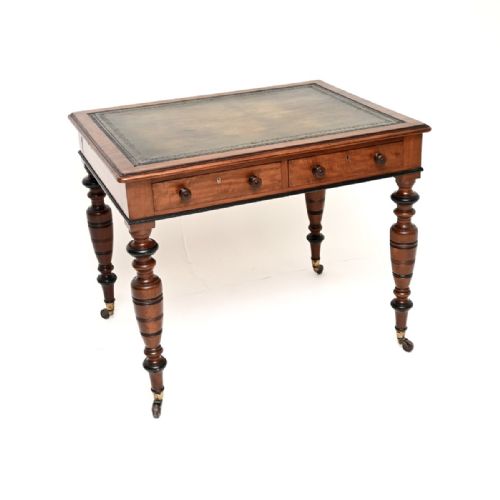
A leather topped table brings a traditional writing surface into a room, combining timber frames with soft leather skivers for daily writing and study.

Leather Topped Table
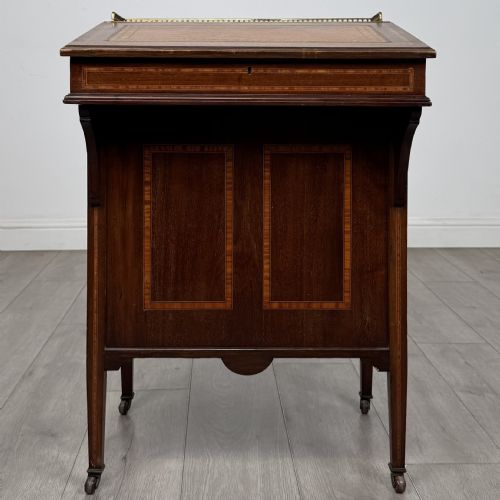
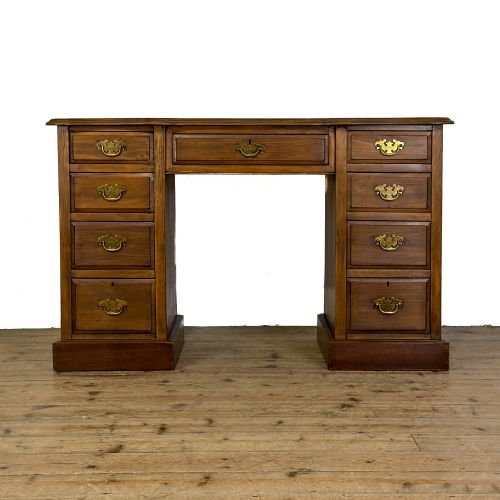
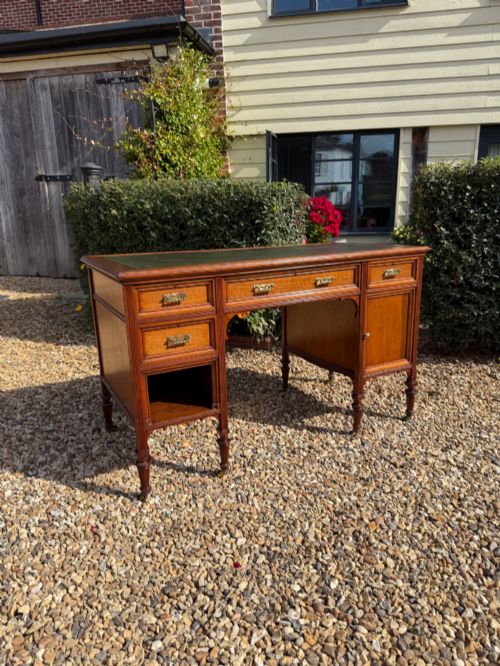
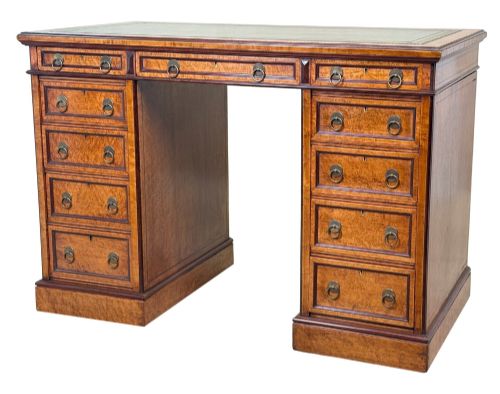
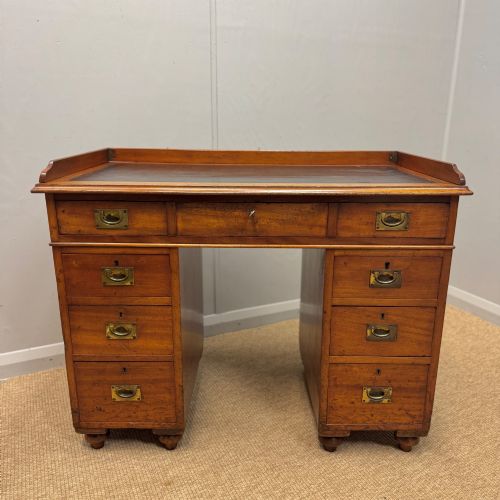
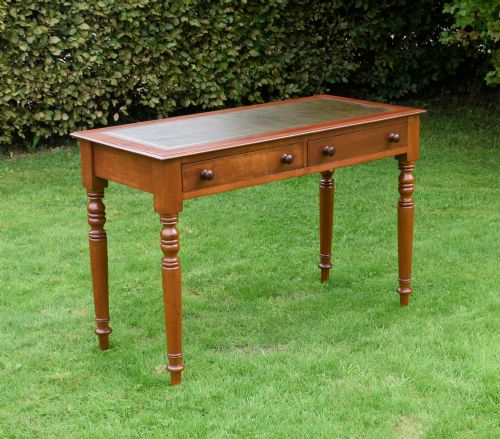
A leather topped table spans heavy pedestal desks, twin-pedestal partners desks, and lighter writing tables originating across the nineteenth and early twentieth centuries.
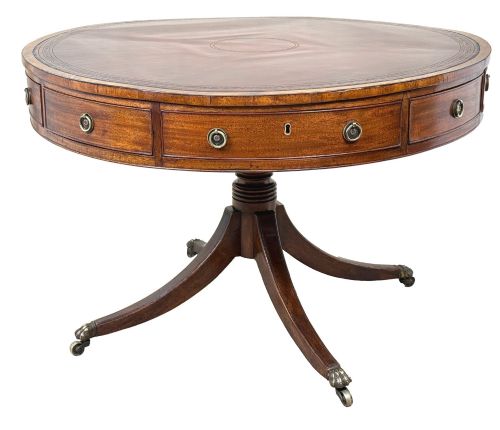
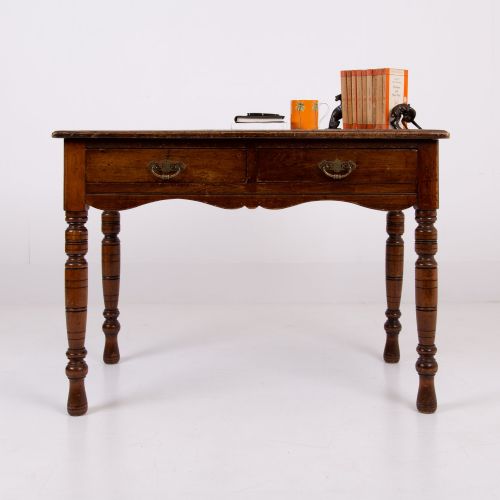
Buyers meet large mahogany library tables, compact Edwardian writing desks, and revolving drum tables alongside occasional side tables.
Victorian and Edwardian examples dominate the selection, frequently utilising walnut, mahogany, and oak across formal and domestic forms.
Materials and construction
Cabinetmakers constructed the structural carcasses from dense hardwoods like mahogany, walnut, and oak, often veneered with burr walnut, rosewood, or satin birch.
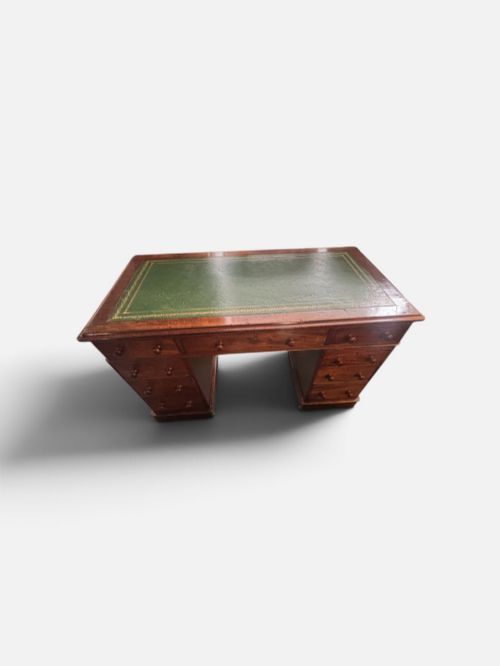
Writing surfaces employ inset leather skivers, frequently finished with hand-tooled gold leaf borders around the perimeter.
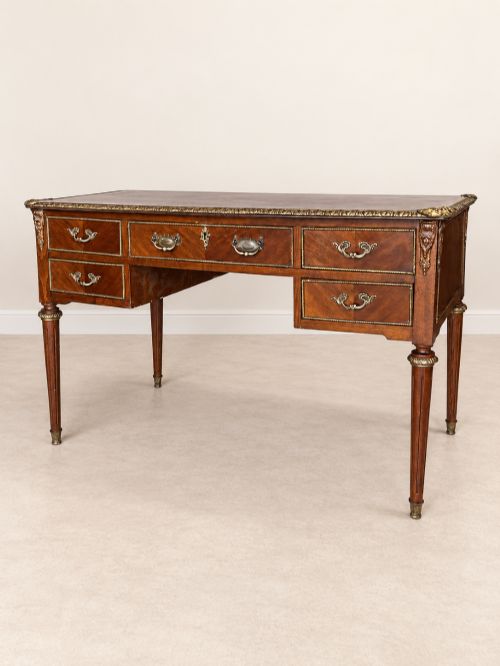
Brass mounts, handles, and castors accent many pieces, particularly on French bureau plat forms decorated with ormolu.
Craftsmanship and materials
Quality rests upon the selection of timber veneers and the crispness of the secondary joinery within drawer construction.
The integrity of the leather insert and the depth of the gold tooling determine whether a surface retains its original character or shows later restoration.
Substantial proportions, secondary timbers, and signed mounts separate standard commercial furniture from bespoke workshop production.
Trollope and sons·Maple and Co·François Linke·Edwards and Roberts·Johnstone and Jeanes·Charles Andrea Nosotti·Gillows
The Leather Topped Table Glossary
- Skiver
- A split sheepskin hide used as the writing surface on desks and tables. This leather insert is frequently tooled with gilt decoration.
- Partners desk
- A large double-sided desk designed for two people to sit opposite each other. These pieces feature drawers and cupboards on both sides.
- Drum table
- A circular library table containing drawers around the frieze. These tables often rotate upon a central pillar and platform base.
- Bureau plat
- A French freestanding writing table fitted with drawers across the frieze. These tables frequently display elaborate ormolu mounts and marquetry.
- Rent table
- A circular revolving table fitted with numbered drawers. Landlords historically used these compartments to collect tenants' rents.
Leather Topped Table: Frequently Asked Questions
How are leather topped tables cleaned?
Maintenance requires gentle dusting with a soft cloth and occasional treatment with appropriate leather balms to prevent drying. Excess moisture and abrasive cleaners damage both the leather hide and the surrounding wood polish.
Preserving the original surface involves avoiding harsh chemical solvents near the gilt tooling. Regular care keeps the leather supple without lifting the gold leaf borders.
Can I use a writing table daily?
These tables function well for daily writing and computer work when protected from sharp objects and ink spills. Placing a blotter on the leather surface prevents accidental scratches and staining.
Modern use does not harm sturdy nineteenth-century frames if heavy loads remain distributed evenly. Care must be taken with hot cups and moisture directly on antique timber.
How do I date a pedestal desk?
Dating relies on examining construction methods, drawer linings, and timber choices across the piece. Hand-cut dovetails, secondary pine or oak carcases, and specific hardware styles indicate particular Victorian or Edwardian decades.
Styles shifted from heavy mahogany proportions in the early nineteenth century to lighter inlaid satin birch and walnut in the Edwardian era. Maker stamps inside drawer rails provide definitive manufacturing periods.
What is a partners desk?
A partners desk provides equal workspace on opposing sides with duplicated banks of drawers and cupboards. These large library tables allowed two individuals to work simultaneously face-to-face.
Cabinetmakers built these substantial pieces using premium mahogany or oak to withstand heavy institutional or domestic use. Their freestanding nature meant both sides received finished panel work.