

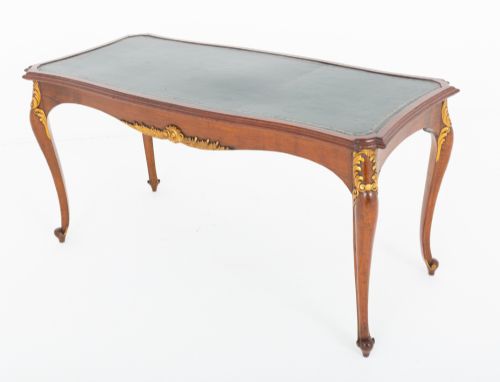
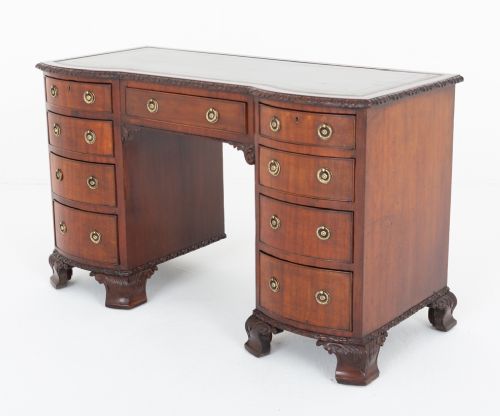
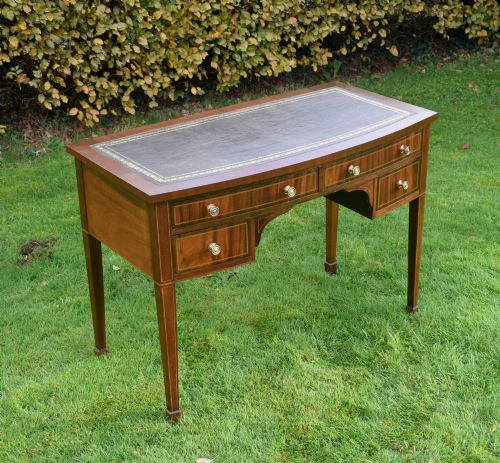
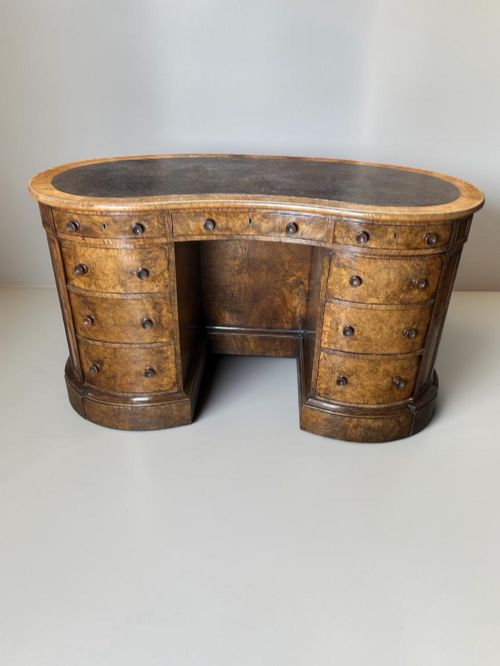
Leather Topped Desk
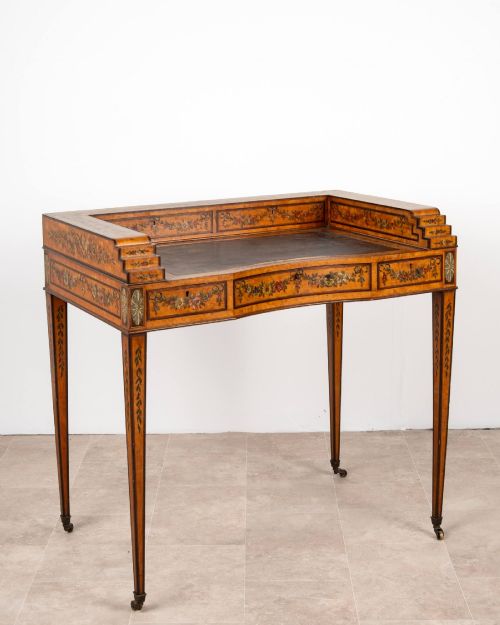
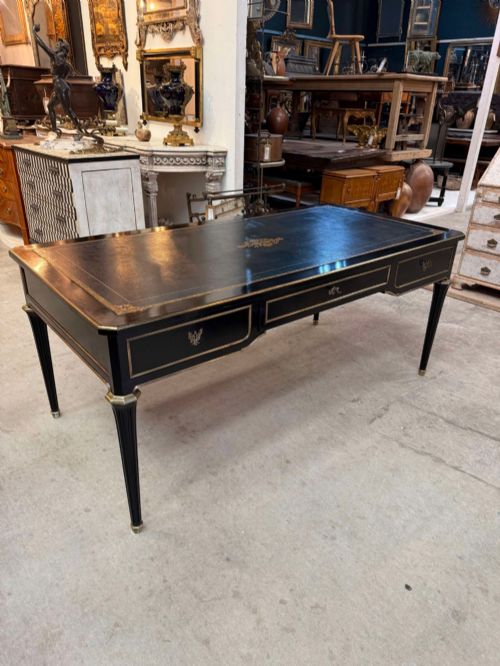
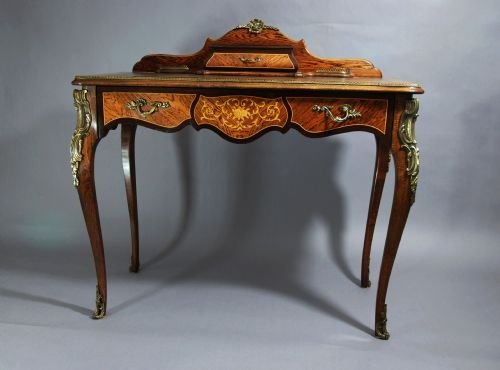
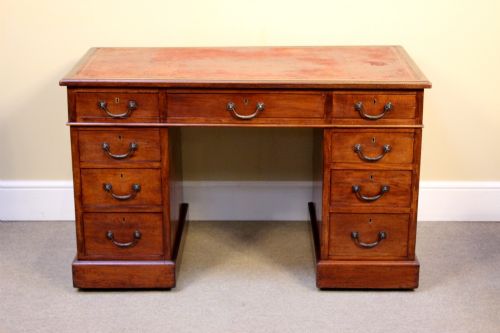
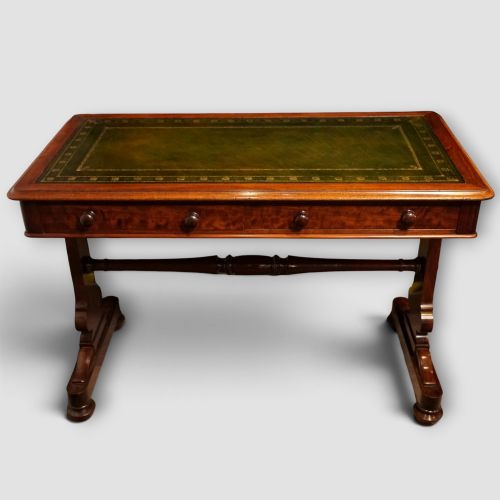
A leather topped desk offers a classic writing surface set into rich timber, bringing traditional character to a study.
Leather Topped Desk
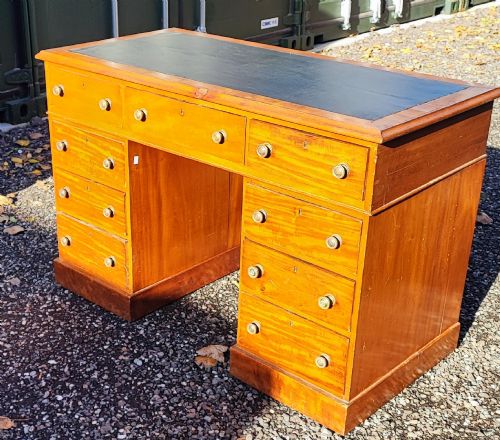
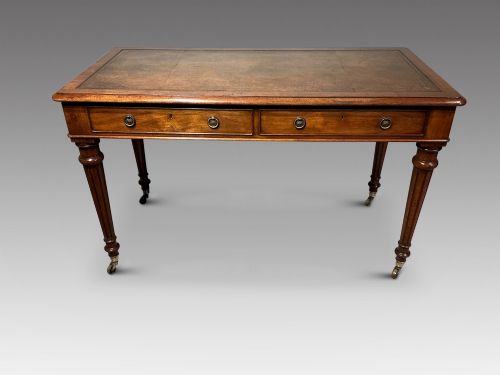
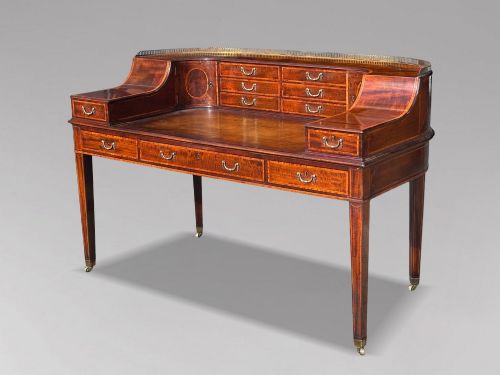
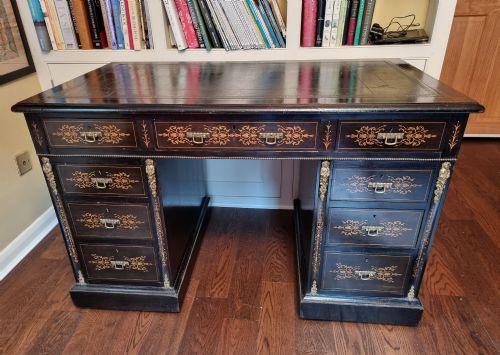
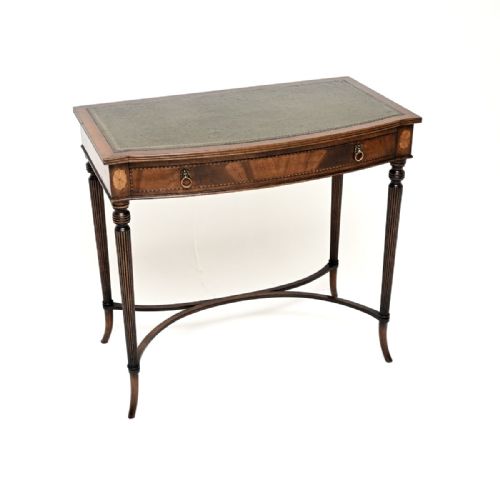
A leather topped desk encompasses a variety of writing tables, pedestal desks, and partners desks designed for administrative work and correspondence. When exploring this selection, buyers frequently encounter 19th-century Victorian and Regency examples alongside Edwardian and later interpretations.
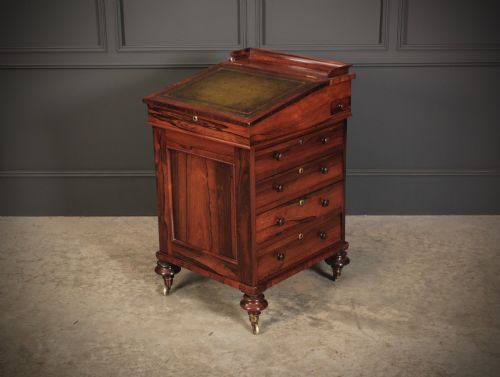
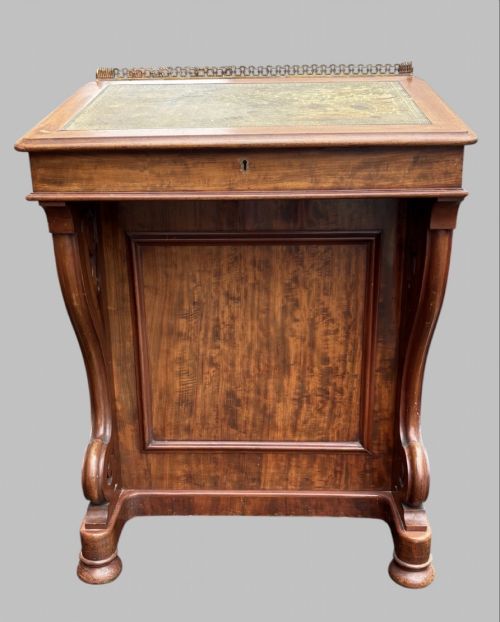
The forms range from compact kneehole desks and Davenport desks to grand freestanding partners tables and revolving library pieces. Oak, mahogany, and walnut dominate the offerings, often complemented by specialised variations like drum tables and kidney-shaped writing tables.
Originating across English and French workshops, these pieces bridge practical utility and formal reception rooms. The integration of a leather writing insert defines the functional surface across diverse revival styles, from Georgian influences to Arts and Crafts simplicity.
How They Were Made
Cabinet makers constructed the foundational carcass using dense hardwoods such as mahogany, oak, and burr walnut, frequently embellished with satinwood or marquetry details. Structural frames supported heavy timber tops designed to receive inset writing surfaces.
Writing surfaces were traditionally finished with sheepskin or cowhide leather, often tooled with blind or gilt borders to frame the working area. Brass handles, ormolu mounts, and gilt bronze fixtures added hardware accents to drawers and pedestals.
Leather Topped Desk Retail Price Guide 2026
Typical asking prices for leather topped desk among the pieces listed under this phrase on Sellingantiques today, from the lower quarter to the upper quarter. They describe what is for sale here now, not the wider market.
Listings feature 19th-century Victorian, Regency, and Edwardian examples utilising mahogany, oak, burr walnut, and leather.
What Varies in Quality
Superior execution relies on the selection of richly figured timber veneers, such as burr walnut or flame mahogany, matched carefully across drawer fronts and top panels. Finer examples display robust secondary framing woods and precise dovetail joints within the drawer construction.
The refinement of the leather insert and the crispness of the gilt tooling distinguish exceptional pieces from standard utility furniture. Original hardware, intact stationery fittings, and sophisticated pedestal arrangements elevate the overall execution of the desk.
Gillow·Maple and Co
The Leather Topped Desk Glossary
- Partners Desk
- A large double-sided desk designed for two people to work opposite one another, featuring drawers on both faces. These pieces were traditionally utilised in libraries and boardrooms.
- Pedestal Desk
- A freestanding desk comprising a top surface supported by two vertical banks of drawers. They provide substantial storage capacity and a finished rear facade for placement in the centre of a room.
- Drum Table
- A circular table with a rotating or stationary top surrounded by drawers, frequently fitted with a leather writing surface. These were popular centre tables in 19th-century libraries.
- Ormolu
- Gilded bronze ornamentation applied to furniture, commonly seen on French revival and Neoclassical pieces. This decorative technique added metallic highlights to exotic wood surfaces.
Leather Topped Desk: Frequently Asked Questions
What is a partners desk?
A partners desk is a large double-sided workspace built with drawers and cupboards accessible from both the front and the back. This configuration allowed two individuals to sit opposite each other in a study or library.
Such desks stand out for their finished appearance on all four sides, making them suitable for placement in the middle of a room rather than against a wall.
How do I care for leather?
Leather writing surfaces require gentle cleaning with a soft, dry cloth and occasional treatment with specialist leather balms to prevent drying and cracking. Avoid using harsh chemical cleaners or excessive moisture on the hide.
Keeping the leather away from direct sunlight helps preserve the colour and the delicate gilt tooling applied around the borders of the writing panel.
Are these desks good for daily work?
Many period desks offer generous surface areas and functional drawer layouts suited for modern writing and computer tasks. Their sturdy timber construction provides a stable platform for daily administrative duties.
Kneehole and pedestal variants include multiple drawers for organising stationery and documents, combining historical character with practical storage for a home office.
How do I identify a Victorian desk?
Victorian desks often display rich mahogany or walnut timbers, robust proportions, and styles ranging from plain utilitarian forms to ornate Jacobean or French revivals. Drawer construction typically employs hand-cut dovetails and solid secondary woods.
interior fittings like secret drawers, stationery compartments, and stamped brass locks provide further clues to the mid-to-late 19th-century manufacturing period.