


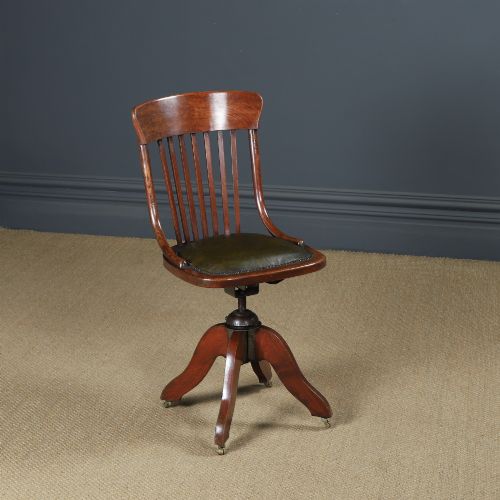


Leather Swivel Office Chair
When you search for a leather swivel office chair, you are seeking a functional antique seating piece designed for working at a desk with rotating movement.
Leather Swivel Office Chair
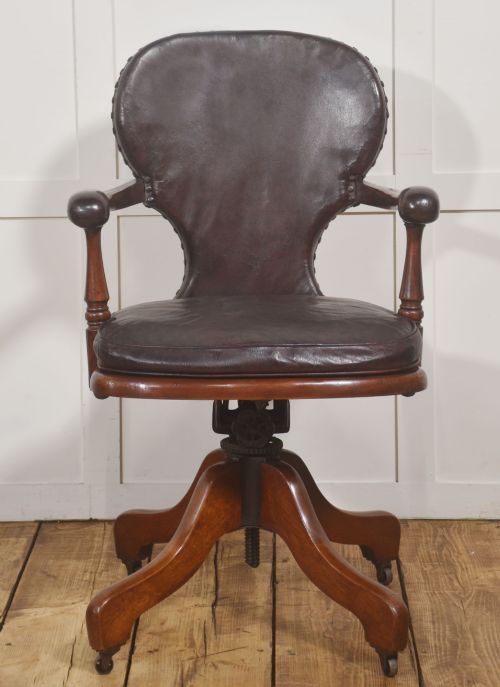
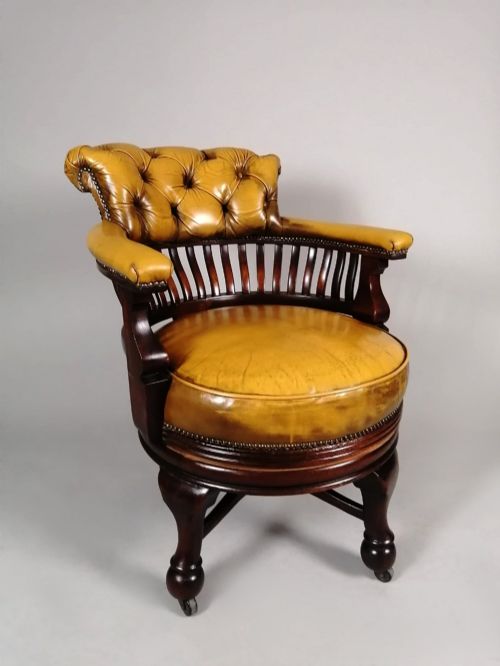
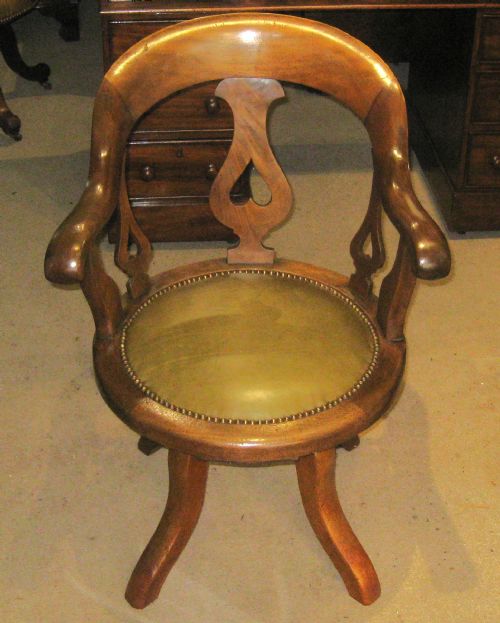
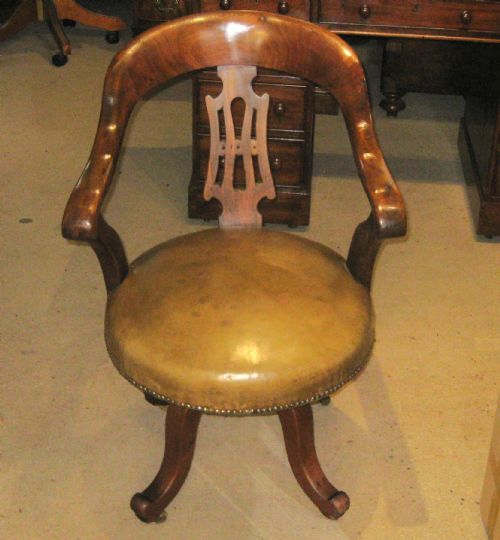
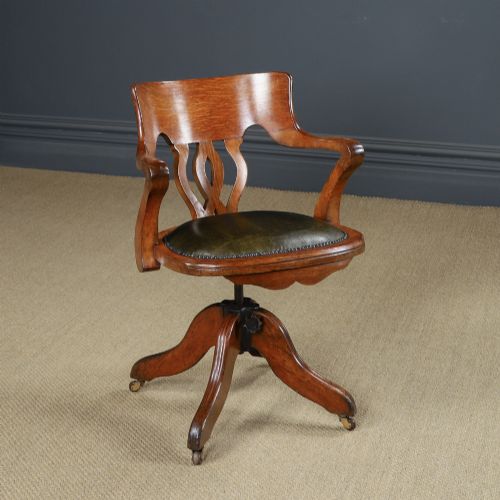
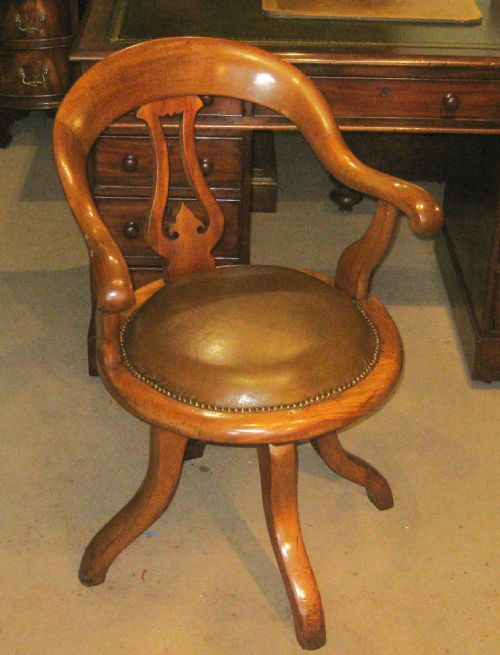
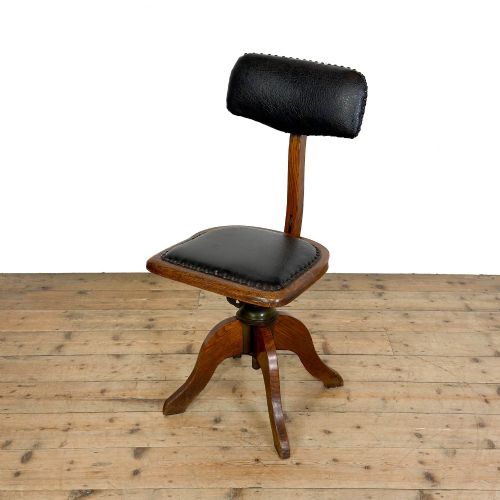
A leather swivel office chair combines traditional desk seating with a rotating mechanism, designed primarily for the workspace. When you examine this selection, you encounter forms ranging from late nineteenth-century Victorian pieces to Edwardian and early twentieth-century examples.
The most common models met here are constructed from oak or mahogany, frequently featuring upholstered leather seats or backrests. These items originate from periods spanning the late 19th Century through to the George V era, including specific variations like ships chairs and captain's chairs.
How they were made
The framework relies heavily on timbers such as oak, mahogany, beech, and walnut, often shaped into sturdy desk armchairs and revolving seats. Joinery techniques from the Victorian and Edwardian eras ensure structural endurance through decades of daily office use.
Leather provides the primary upholstery material for seats and backrests, complemented by brass and cast iron components within the swivel and tilt mechanisms. Metal mechanisms allow the chairs to rotate fully and adjust in height, combining timber framing with mechanical hardware.
Leather Swivel Office Chair Retail Price Guide 2026
Typical asking prices for leather swivel office chair among the pieces listed under this phrase on Sellingantiques today, from the lower quarter to the upper quarter. They describe what is for sale here now, not the wider market.
Machinists and captains shared the same taste for a sturdy spin while working.
What varies in quality
The refinement of the woodwork dictates much of the standard, separating simple utility seating from heavily carved or intricately inlaid examples. Finer pieces display superior timber selection, such as golden mahogany or polished oak, alongside detailed craftsmanship on the arms and backrests.
The integrity and smoothness of the revolving mechanism also separate standard models from superior examples. Original brass and cast iron hardware that operates cleanly adds notable value compared to replaced or stiff pivoting assemblies.
Kendrick and Jefferson·Maple and Co
The Leather Swivel Office Chair Glossary
- Revolving desk chair
- A seat fitted with a mechanical pivot allowing 360-degree rotation while remaining stationary at a desk. These items were essential for nineteenth-century office environments.
- Captain's chair
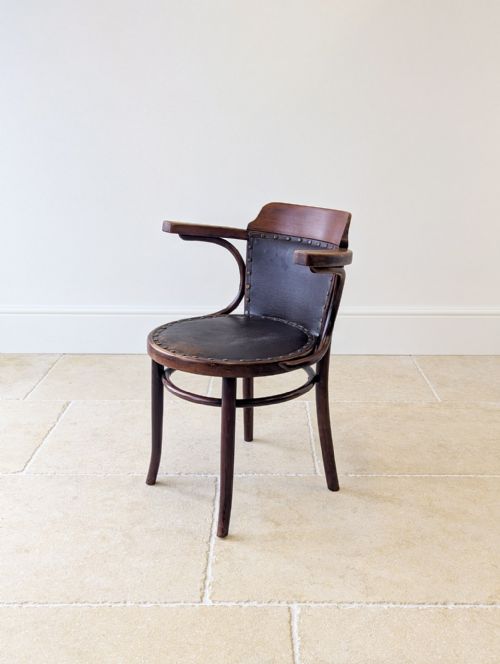
- A sturdy wooden armchair, often featuring a rounded steam-bent back rail supported by spindles. Versions adapted for offices include a swivel base and leather upholstery.
- Tilt mechanism
- An adjustable hardware assembly beneath the seat allowing the user to lean backward safely. This feature became common in early twentieth-century office furniture.
- Bentwood
- Wood shaped by applying steam to soften the fibres before bending them into curved forms. Thonet manufacturing popularised this technique for resilient chair frames.
- Hide
- Strong, thick animal leather used for durable upholstery on office seating. It ages with a distinctive patina over decades of use.
Leather Swivel Office Chair: Frequently Asked Questions
How do I identify a Victorian swivel chair?
Victorian examples typically feature rich timbers like mahogany or walnut paired with heavy cast iron and brass revolving mechanisms. They often display darker finishes and traditional joinery consistent with the late nineteenth century.
Later Edwardian models frequently utilise oak or beech with brighter leather shades. Examining the timber grain and the casting of the metal undercarriage helps confirm the nineteenth-century origin.
Were these chairs used in ships?
Certain heavy oak models found in offices derive from marine seating designs meant to withstand movement. These pieces feature heavily carved wooden frames and robust iron structures.
Their sturdy build made them popular for both maritime and terrestrial desk use. Today they are commonly grouped with standard office armchairs due to their similar rotating functions.
Can I adjust the height of these antique chairs?
Many Edwardian and late Victorian swivel chairs include a threaded spindle mechanism beneath the seat. Turning the seat allows the user to raise or lower the height.
Operation requires care to avoid straining the historic wooden threads and metal screws. Once set, the mechanism provides stable positioning for modern desk use.
How do I care for the leather upholstery?
Antique leather requires gentle cleaning using specialised conditioners to maintain suppleness and prevent cracking. Avoiding direct sunlight preserves the original tone of the hide.
Natural wear and minor scuffs form part of the patina acquired over a century of use. Regular light dusting keeps the surface stable without disturbing the historic finish.