


Leather Reclining Armchair
A leather reclining armchair offers the kind of mechanical comfort and solid timber construction that nineteenth-century designers perfected for long hours of reading or convalescence.
Leather Reclining Armchair
A leather reclining armchair brings together period mechanical innovation and traditional upholstery, offering adjustable seating designed for libraries, studies, and drawing rooms. Buyers seeking this phrase encounter sturdy frames built during the Regency, William IV, and Victorian eras, alongside later Arts and Crafts interpretations.
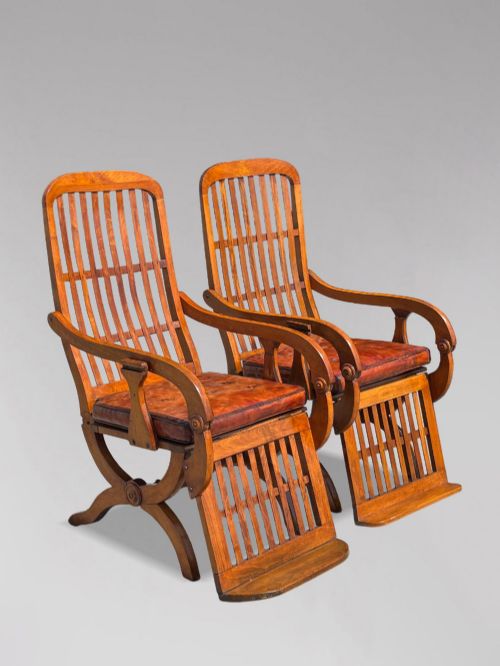
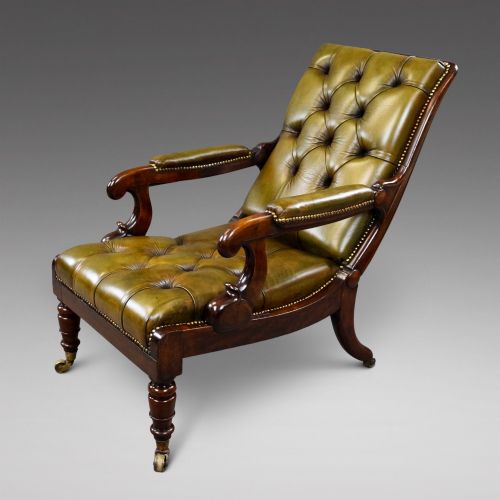
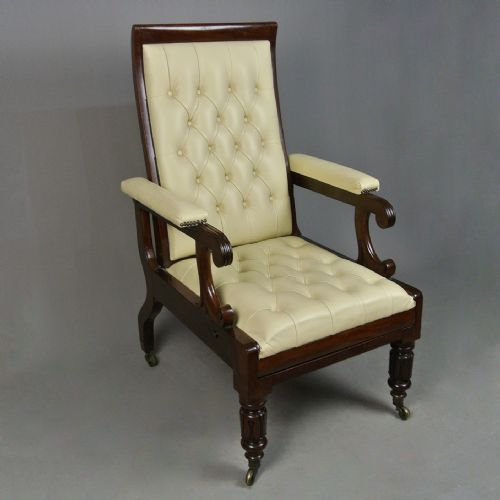
The most common examples on this page are mid-nineteenth-century library and campaign chairs, often framed in mahogany, walnut, or teak. These pieces combine buttoned leather upholstery with adjustable mechanisms that allow the sitter to alter the back angle for rest or reading.
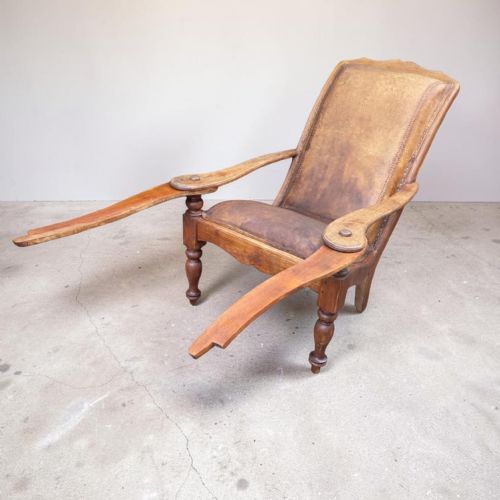
Beyond standard library forms, the selection encompasses specialised variants such as planter's chairs with extending arms, metamorphic chairs, and invalid wheeled designs by makers like John Ward and J Foot & Son. Each variation reflects the period's preoccupation with ergonomic comfort and clever mechanical adjustments.
Materials and construction
Cabinetmakers built the foundational frames of these chairs using dense hardwoods like mahogany, oak, teak, walnut, and rosewood, ensuring structural stability for moving mechanical parts. Brass fittings, hinges, and ratchets were integrated into the woodwork to control the reclining action.
Upholsterers finished the seats and backs in durable leather, frequently using buttoning techniques to secure the padding. Frames often incorporated secondary elements such as iron mechanisms and extending footrests to support the adjustable reclining function.
A few chairs include concealed writing slopes or pull-out footstools for nineteenth-century multitasking.
Factors that distinguish examples
The distinction between standard production and the top of the range rests on the sophistication of the mechanical patent and the prestige of the maker. Pieces bearing attribution to established innovators like Robert Daws, J Foot & Son, or John Ward display superior engineering in their adjustable ratchets and movement.
Material selection and carving detail also set examples apart, with dense figured mahogany, rosewood, or finely turned teak frames indicating higher status. Original leather upholstery and intact, functioning patented mechanisms elevate an armchair far above those with later replacements or simplified construction.
Robert Daws·J Foot & Son·John Ward·Morris and Co
The Leather Reclining Armchair Glossary
- Metamorphic chair
- A piece of furniture designed to transform into another form, such as a chair converting into a chaise longue or incorporating a writing slope. These items utilise hidden hinges and folding sections.
- Button leather
- Upholstery characterised by deep tufting secured with leather-covered buttons, creating distinct diamond patterns across the backrest and seat. This technique keeps the interior stuffing evenly distributed during adjustment.
- Planter's chair
- A nineteenth-century seating form featuring extended flat arms designed for resting legs, commonly produced in teak or hardwood for colonial use. They provide an open frame suited to warmer climates.
- Campaign chair
- Portable furniture constructed for travel, typically featuring folding or disassemblable hardwood frames and robust leather upholstery. They were built to withstand frequent transport.
- Patent chair
- Seating incorporating a registered mechanical design by specific makers to alter the user's reclining angle. These mechanisms often bear stamps or brass plaques identifying the inventor.
Leather Reclining Armchair: Frequently Asked Questions
How do the reclining mechanisms work on these chairs?
Most period chairs use internal ratchets, brass hinges, or weighted pivoting systems operated by side levers or arm adjustments. Sitters lean back against the sprung or pivoted frame to lock the backrest into the desired position.
Patented designs by makers such as Robert Daws or J Foot and Son often feature more complex linkages that simultaneously extend a footrest as the back reclines.
Were these chairs used only in libraries?
While frequently termed library chairs, these seats were also placed in drawing rooms, studies, and colonial verandas. Invalid and convalescing variants served bedrooms and specialised recovery spaces.
The inclusion of reading desks, extending arms, or footstools allowed users to write, read, or rest for extended periods in various domestic rooms.
How can I tell a Victorian chair from a Regency one?
Regency and early nineteenth-century frames typically exhibit cleaner classical lines, lighter proportions, and rich mahogany or rosewood timbers. Details often reference earlier architectural styles.
Victorian examples tend to be heavier, incorporating deeper buttoned leather, more complex mechanical patents, and darker woods or walnut frames reflecting industrial manufacturing advances.
How do I care for antique leather upholstery?
Period leather benefits from gentle cleaning using specialist conservation waxes or saddle soap to prevent the hide from drying out. Avoid harsh chemical cleaners and modern synthetic conditioners.
Keeping the chairs away from direct sunlight and heat sources helps preserve the original suppleness and colour of the leather.