







Leather Piano Stool
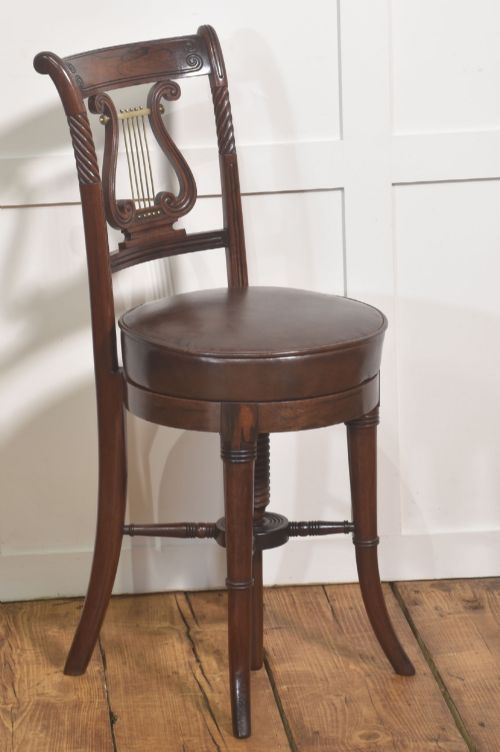
These leather piano stool pieces bring period character and adjustable function to a music room, combining sturdy timber frames with practical upholstered seats.
Leather Piano Stool
A leather piano stool is a functional seat designed for musicians, appearing in forms such as revolving stools, adjustable benches, and music chairs. The selection spans periods from the Georgian and Regency eras through to Victorian, Edwardian, and Art Deco designs.
These pieces serve dual purposes as piano stools, dressing table stools, and window benches. Their origins cross multiple centuries, offering distinct stylistic markers from each period.
How they were made
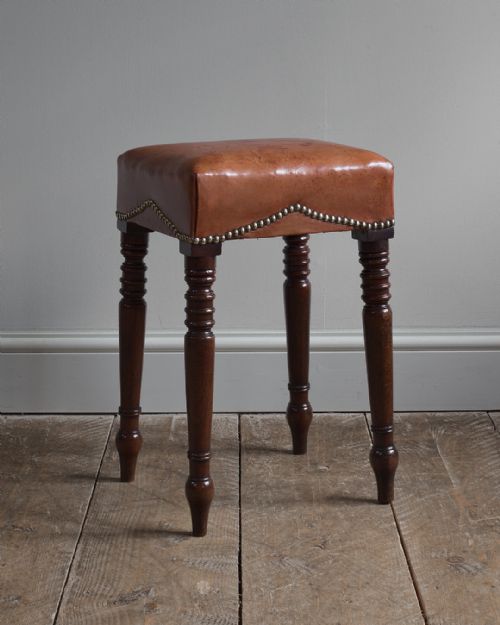
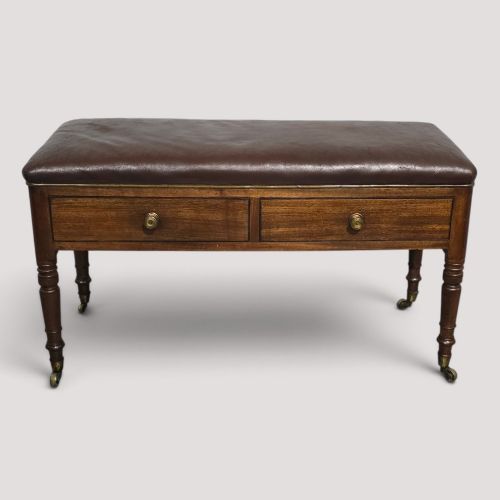
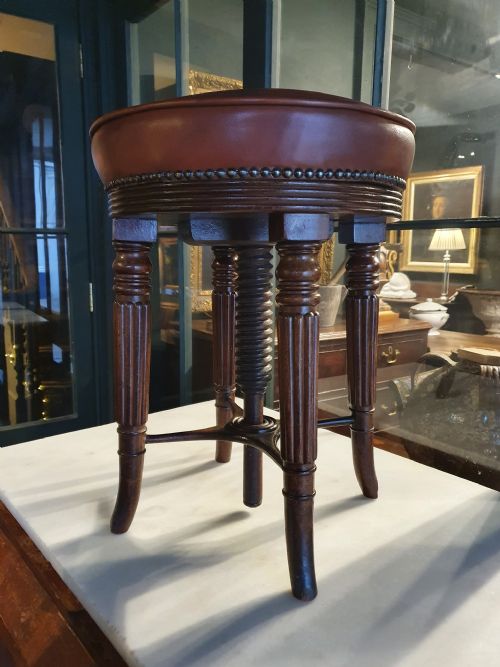
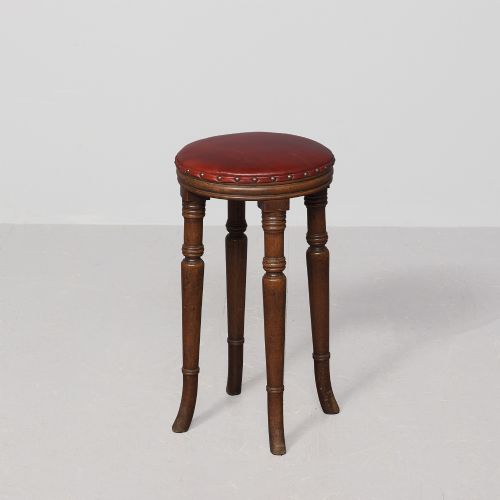
Makers utilised solid timbers including mahogany, walnut, and oak to construct the structural frames and legs. These woods were carved, turned, or veneered depending on the prevailing style of the period.
Leather upholstery was secured to padded seats, frequently incorporating mechanical adjustments using brass screws and metal components. Patent mechanisms allowed for height alteration and revolving movement.
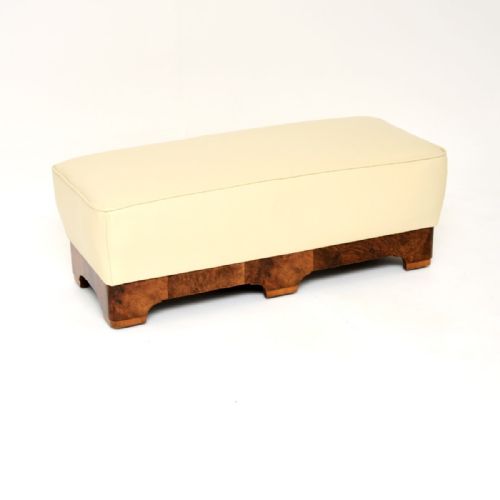
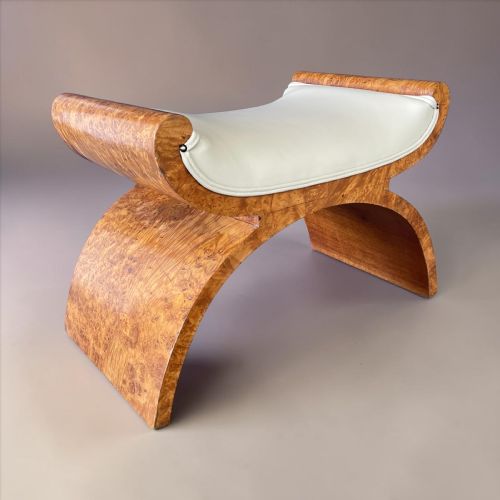
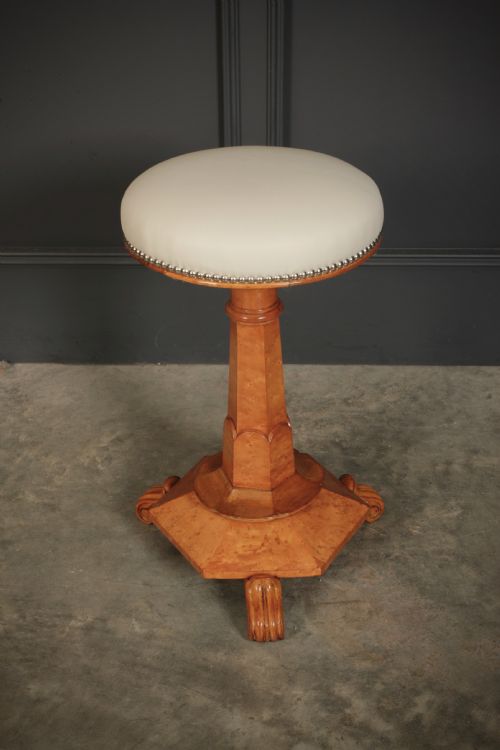
Specialist touches such as burr walnut and birds-eye maple veneers appeared on later Art Deco pieces, contrasting with the simpler turned legs of Victorian and Edwardian examples.
Leather Piano Stool Retail Price Guide 2026
Typical asking prices for leather piano stool among the pieces listed under this phrase on Sellingantiques today, from the lower quarter to the upper quarter. They describe what is for sale here now, not the wider market.
Some Victorian and Edwardian musicians evidently required spinning seats to reach distant notes with maximum agility.
What varies in quality
The sophistication of the mechanical adjustment mechanism dictates much of the utility and refinement in these pieces. Smoothly operating revolving screws and sturdy patent height adjusters represent higher execution.
The selection of timber grain and veneer quality marks the distinction between standard production and finer pieces. Figures in mahogany, burr walnut, and birds-eye maple elevate the visual weight of the furniture.
The integration of the leather upholstery with the wooden frame, including neat tacking and durable padding, separates robust examples from simpler utilitarian seating.
Harry and Lou Epstein
The Leather Piano Stool Glossary
- Revolving stool
- A seat featuring a mechanism that allows the top to spin circularly for height adjustment or pivoting. This design is common in 19th-century music seating.
- Patent music chair
- An adjustable seating form incorporating mechanical innovation for musicians. These often include specialised backrests or swivel actions.
- Burr walnut
- A prized timber veneer showing swirling knot formations. It appears on Art Deco examples for decorative effect.
- Duet stool
- An extended bench designed to accommodate two players simultaneously. These longer forms provide wider upholstered seating.
- Adjustment mechanism
- The internal or exposed hardware allowing the seat height to change. This often involves a threaded metal screw or patent lever system.
Leather Piano Stool: Frequently Asked Questions
How do I adjust the height?
Many examples feature a revolving top that winds up or down on a central wooden or metal screw. Turning the seat clockwise or anti-clockwise alters the height.
Other designs utilise patent mechanical levers or side handles to raise and lower the platform. Checking the under-seat mechanism reveals the specific method of operation.
Can I use it as a dressing stool?
These pieces share a history with dressing table seats due to their compact proportions and adjustable heights. Many period examples served dual functions in bedrooms and music rooms alike.
The upholstered leather top provides comfortable seating at standard vanity heights. Their diverse stylistic periods ensure they complement various interior dressing areas.
How do I identify the period?
Makers' stylistic clues point towards specific eras, such as clean geometric lines in Art Deco pieces from the 1930s. Heavier turned mahogany and walnut frames typically indicate Victorian or 19th-century manufacture.
Georgian and Regency designs often showcase refined proportions and classical leg turnings. Edwardian and later 19th-century pieces introduce varied brass hardware and lighter timbers.
What maintenance does the leather need?
Leather upholstery benefits from occasional conditioning to maintain suppleness and prevent drying out over time. Gentle cleaning with a damp cloth removes dust without harming the material.
Avoiding direct sunlight helps preserve the colour and tone of the hide. Natural wear on older leather adds to the character of the piece.