





Leather Ottoman Seat
A leather ottoman seat brings tactile comfort and sturdy historic character to a room, ranging from plush Edwardian footstools to sleek Art Deco benches.
Leather Ottoman Seat
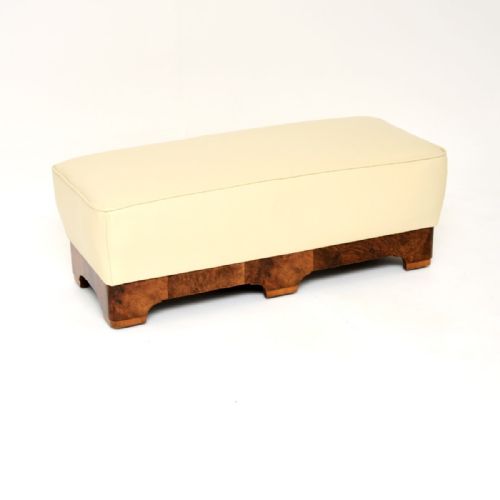
A leather ottoman seat encompasses low seating forms such as footstools, dressing stools, window benches and ottoman boxes spanning the nineteenth and early twentieth centuries. These items serve multiple domestic roles, functioning as foot rests, low seats or storage boxes within traditional and revival interiors.
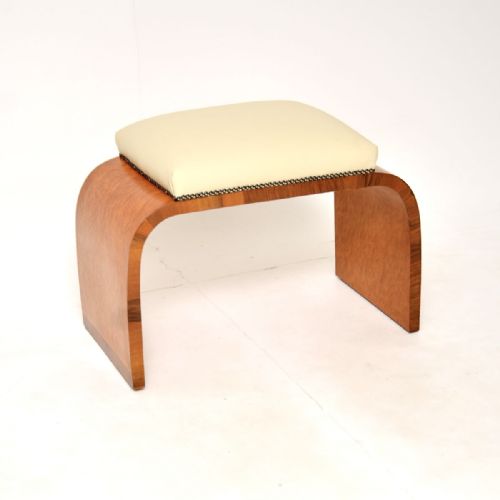
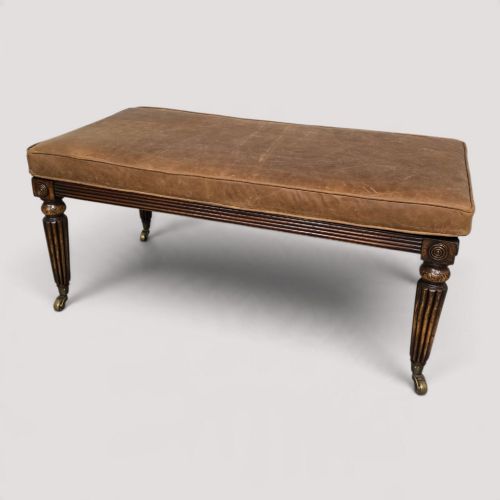
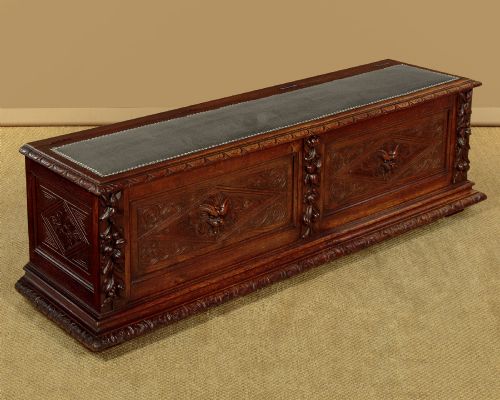
The versions most commonly met on this page range from Victorian mahogany frames and Edwardian carved oak designs to Art Deco burr walnut pieces. They utilise sturdy wooden structures upholstered in leather, combining practical utility with period craftsmanship.
How they were made
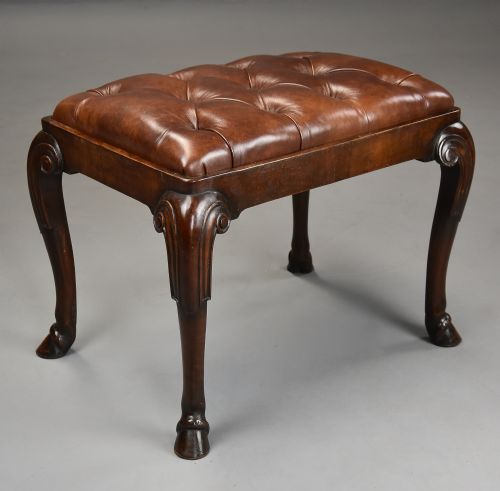
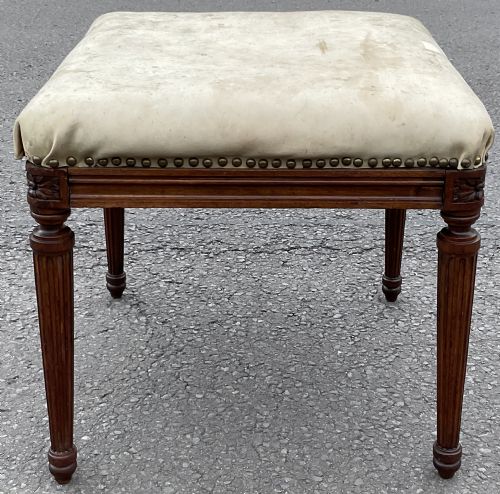
Makers constructed the frames using solid timbers including mahogany, oak, walnut, rosewood and burr walnut, frequently shaping the wood into cabriole or fluted legs. Carved details and applied brass elements appear across various nineteenth-century and revival pieces.
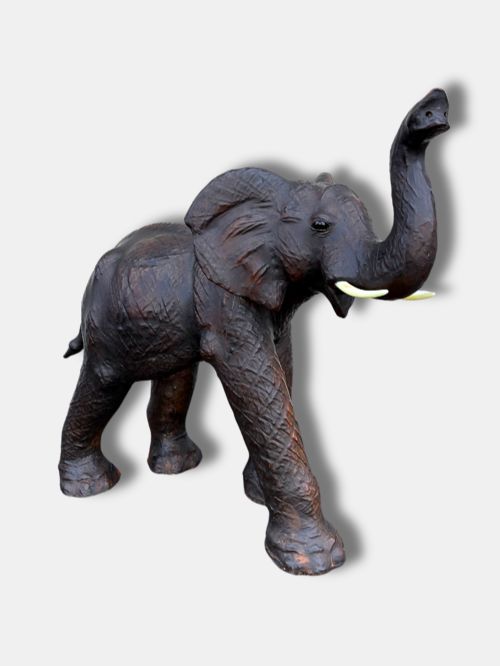
Upholstery relies on traditional leather work fixed to firm seating bases, sometimes accompanied by carved wooden box compartments or specialised animal forms like elephant benches.
Leather Ottoman Seat Retail Price Guide 2026
Typical asking prices for leather ottoman seat among the pieces listed under this phrase on Sellingantiques today, from the lower quarter to the upper quarter. They describe what is for sale here now, not the wider market.
Listings feature oak, mahogany, walnut, burr walnut, rosewood, brass, and glass alongside leather upholstery across multiple centuries.
What varies in quality
The distinction between standard production items and finer examples rests on the calibre of the timber frame and the depth of hand-carving. Dense woods like burr walnut, mahogany and rosewood indicate superior cabinet work compared to simpler painted or plain oak constructions.
Execution of the upholstery and integrated details like brass mounts or lions head carvings elevate a piece. Refined proportions and distinct stylistic revivals, such as Queen Anne or Chippendale influences, separate ordinary stools from distinguished workshops.
Liberty·Harry and Lou Epstein·James Shoolbred
The Leather Ottoman Seat Glossary
- Cabriole leg
- A furniture leg that curves outward at the knee and tapers inward toward the foot, commonly seen on Queen Anne and Georgian style seating. This form imitates the shape of an animal's curving leg.
- Bergere
- An enclosed upholstered armchair or stool featuring wooden frames and woven cane or padded panels. The style originated in France and influenced later British seating designs.
- Ottoman
- A low upholstered seat or bench without a back or arms, often incorporating internal storage space. These pieces function as footstools or casual seating.
- Burr walnut
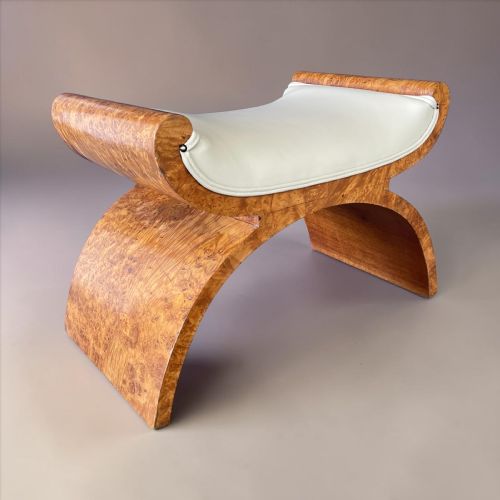
- A prized wood veneer harvested from walnut tree growths, notable for its swirling, highly figured grain patterns. Cabinet makers utilised it on high-end Art Deco and period furniture.
- Chippendale style
- A furniture design style drawing on the eighteenth-century patterns of Thomas Chippendale, characterised by intricate carving and substantial timber construction.
Leather Ottoman Seat: Frequently Asked Questions
What is a leather ottoman seat used for?
These versatile pieces serve as footrests, dressing stools, low hall seats or window benches depending on their height and length. Some variations also incorporate hinged lids for hidden storage.
Their sturdy wooden frames and durable leather surfaces allow them to withstand daily domestic use while anchoring traditional or eclectic room schemes.
How do I date a leather ottoman seat?
Dating relies on examining the timber species, structural joinery, and stylistic details such as cabriole legs, carved motifs or upholstery methods. Victorian pieces often use heavy mahogany, while Edwardian examples frequently feature carved oak.
Art Deco items display distinctive veneers like burr walnut and birds eye maple paired with streamlined forms. Comparing these physical traits to known period characteristics provides an accurate age.
Are these seats comfortable for everyday use?
Most pieces provide firm, supportive seating rather than deep cushioning, designed originally for dressing rooms, hallways or as footstools. The leather top offers a durable surface that softens gracefully over time.
Placing them in low-traffic areas or utilising them primarily as foot rests preserves the historic upholstery and frame integrity.
What wood types appear most frequently?
Mahogany and oak dominate the nineteenth-century and Edwardian listings, providing robust structural foundations for carved stools and benches. Walnut and burr walnut emerge prominently in later Art Deco designs.
Alternative timbers like rosewood and maple also feature in specific Regency and modernist pieces, each contributing distinct colour and grain patterns.