

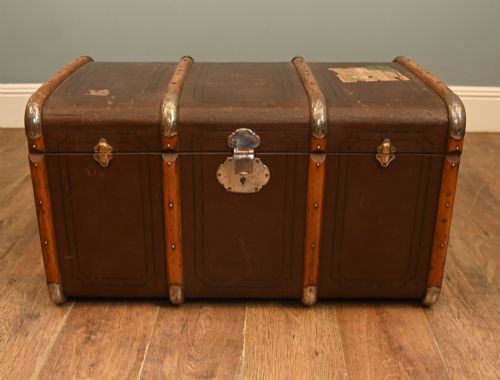
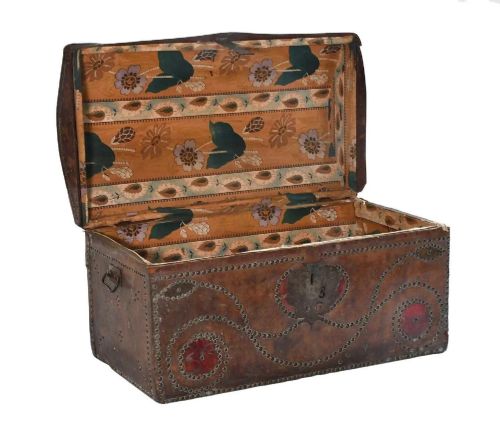
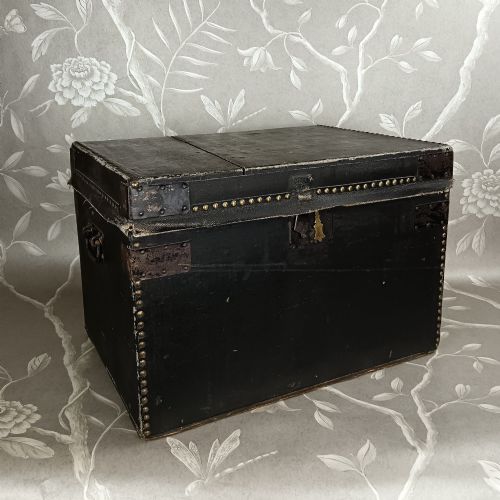
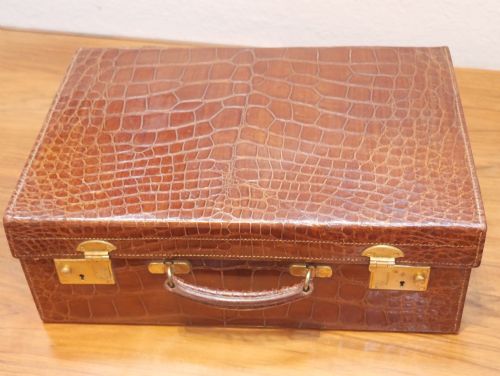


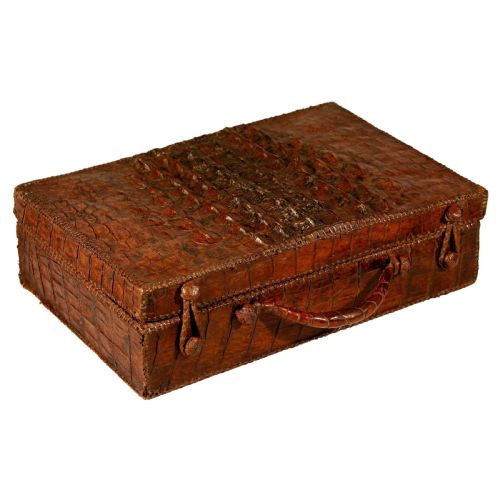

Leather Luggage Trunk
These leather luggage trunk pieces span Georgian, Victorian, and Edwardian periods, offering robust travel history and period storage for the home.
Leather Luggage Trunk
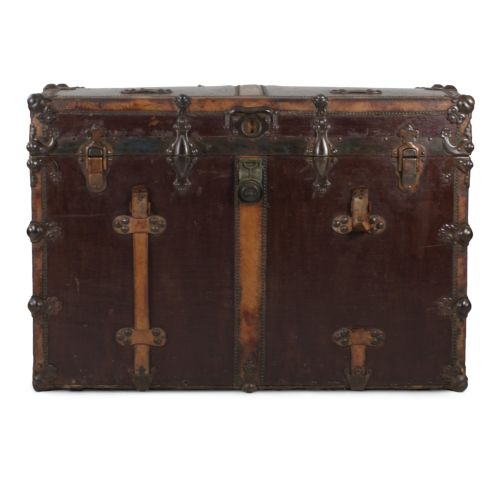
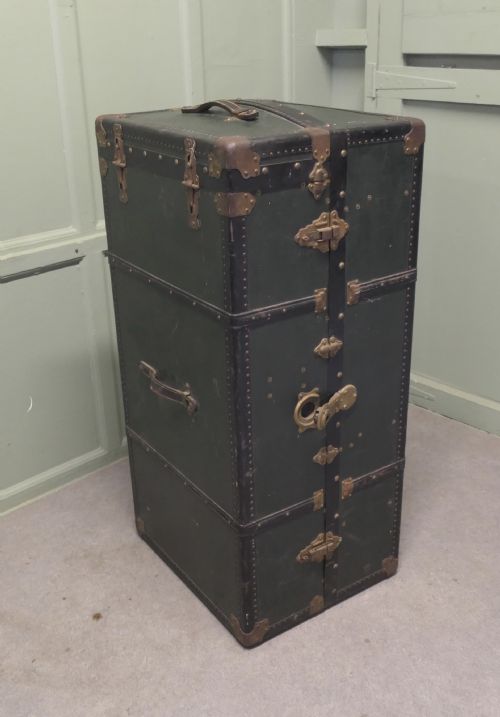
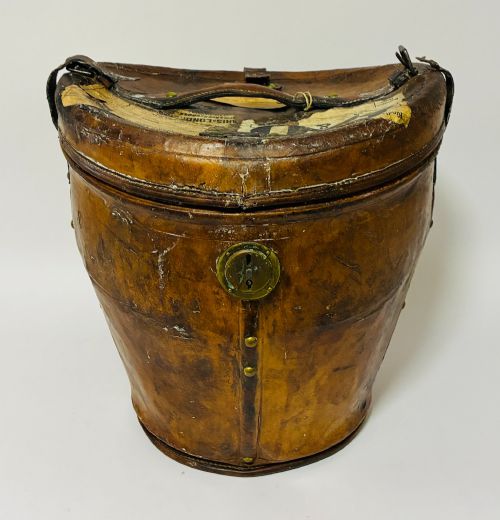
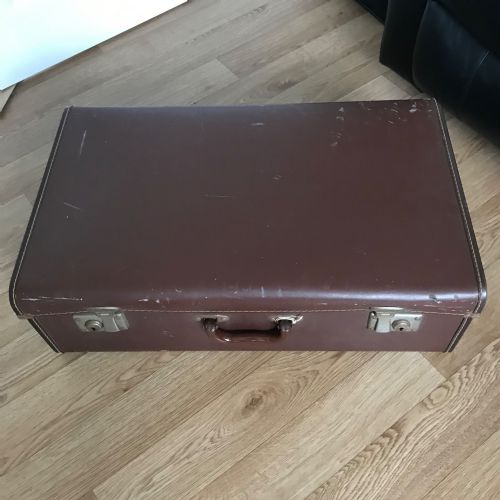
A leather luggage trunk serves as a tangible record of historical travel, encompassing items from small hat boxes and suitcases to large coaching trunks and fitted steamer wardrobes. These objects emerge from various eras, including the Georgian, Victorian, and Edwardian periods, alongside early twentieth-century examples.
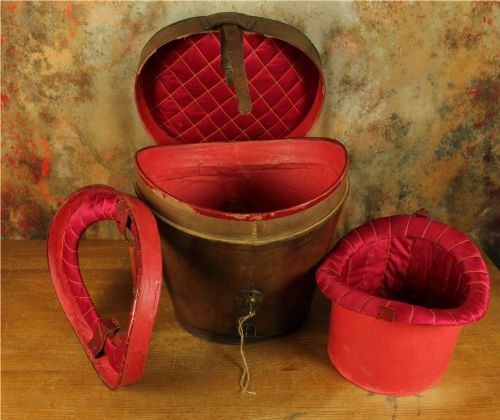
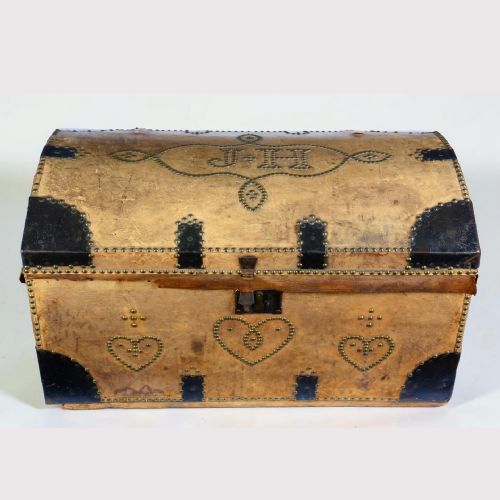
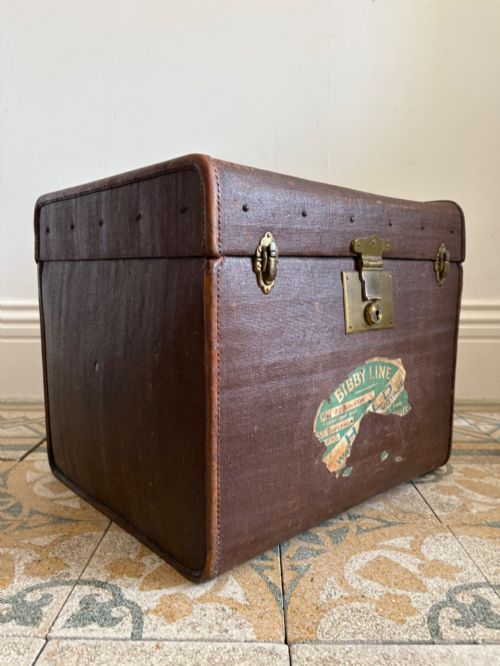
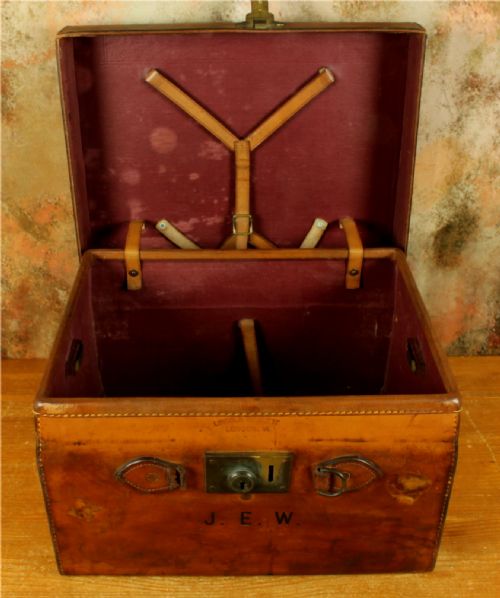
Buyers will encounter diverse forms on this page, ranging from dome-top chests and multi-hat cases to campaign trunks and picnic luggage. Many pieces display the functional wear of long journeys, including travel labels and monograms, while others retain fitted interiors designed for gentlemen's valets or officers.
Origins span English, French, Scottish, and Irish workshops, reflecting domestic coaching traditions as well as international maritime travel. The selection balances practical storage vessels with decorative display pieces suitable for contemporary interiors.
How they were made
Makers constructed these pieces using a foundation of wood, pine, or camphorwood, overlaid with tough hides, leather, vellum, or canvas. Artisans reinforced the structural integrity with iron, metal, or brass banding, applying brass studwork along the edges for added durability during transit.
Fittings included brass locks, keys, and internal compartments lined for specific items such as hats, double guns, or wardrobe garments. Hand-stitched seams and purpose-built carrying handles completed the construction required to withstand heavy shipping and coaching use.
Leather Luggage Trunk Retail Price Guide 2026
Typical asking prices for leather luggage trunk among the pieces listed under this phrase on Sellingantiques today, from the lower quarter to the upper quarter. They describe what is for sale here now, not the wider market.
Several trunks preserve original travel labels from distant journeys, proving they saw the world long before arriving in your hallway.
What varies in quality
The distinction between standard utility luggage and superior pieces lies in the complexity of internal fittings and the caliber of the maker. Work by notable firms demonstrates finer joinery, specialised compartments, and robust brass hardware designed for extended travel.
Materials also dictate the grade, with select hides, vellum, or crocodile leather representing higher-tier commissions. The presence of original travel history, identifiable maker labels, and intact internal linings elevates the standing of individual trunks.
Wm. Insall of Bristol·Arthur Wannop·Lincoln Bennett·Pioneer·Army and Navy·Chapple & Sons·Seabrook of St.Pauls·Drew & Sons·Aux Etats Unis·Louis Vuitton·John Pound·Harrods·JW Allen
The Leather Luggage Trunk Glossary
- Portmanteau
- A large trunk or suitcase, typically made of leather and opening into two equal parts. These were standard for extended journeys before the prevalence of modern luggage.
- Steamer trunk
- A lower-profile trunk designed to fit beneath the cabin berths of ocean liners. They emerged strongly during the Edwardian period and the early twentieth century.
- Campaign case
- Portable furniture and storage used by military officers and travellers on the move. They typically feature recessed brass handles and reinforced corners.
- Vellum
- Fine parchment prepared from calfskin, used to cover high-end luggage trunks for a smooth and durable exterior finish. It often ages to a warm tone.
- Dome top
- A rounded lid configuration on a trunk or chest designed to shed water during coaching or shipping. This form frequently appears on nineteenth-century examples.
Leather Luggage Trunk: Frequently Asked Questions
What were leather luggage trunks used for?
These trunks transported clothing, hats, and personal belongings during coaching, rail, and steamship travel. Wealthy travellers utilised fitted variants for gentleman's valets or military campaigns.
At home, owners repurposed them for domestic storage, placing them at the foot of beds or utilising them as display cases.
How do I date a leather trunk?
Dating relies on structural clues, materials, and hardware styles across periods from the Georgian era to the 1930s. Brass studwork, pine carcases, and domed lids typically indicate nineteenth-century or Victorian origins.
Maker labels, canvas coverings, and lighter internal compartments often point toward later Edwardian or 1920s manufacturing.
How should I clean antique leather luggage?
Preservation requires gentle dusting and the application of suitable leather balms to maintain flexibility without darkening the surface. Avoid harsh chemical cleaners that might strip historical patina or travel labels.
Keeping the trunk away from direct heat sources and strong sunlight prevents the wood and hide from warping or cracking over time.
Are travel labels on trunks desirable?
Travel labels and shipping stamps document the actual journeys and geographical history of individual pieces. Collectors often prize these original markers for the narrative depth they add to the object.
Preserving these paper fragments intact contributes to the character and historical record of the trunk.