


Leather Library Steps
Leather library steps provide safe access to high shelves while bringing rich timber and supple hide to a traditional study.
Leather Library Steps
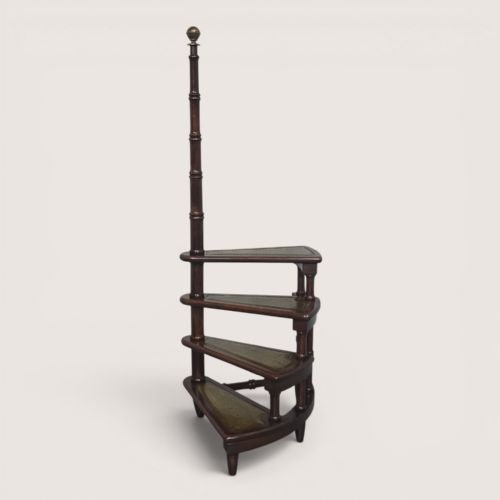
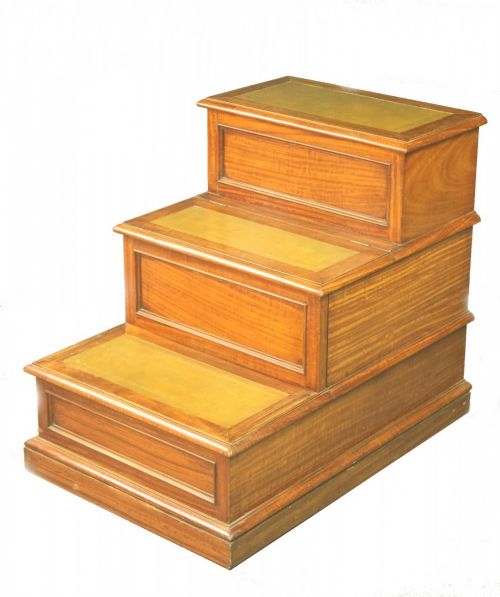
Leather library steps are functional ascents designed for scholarly rooms, combining sturdy timber frames with inset writing hide upon the treads. You will frequently encounter mahogany and oak constructions dating from the nineteenth century, often arranged in set tiers or folding formats. Some examples double as armchairs or commodes through clever metamorphic mechanisms.
The selection ranges from Regency and Victorian periods up through the nineteen-twenties and nineteen-thirties, showing Gothic revival touches alongside simpler classical forms. Alongside standard library steps, the record includes bed steps, side tables, and dual-purpose seating units that transform into multiple treads.
What varies in quality
The distinction in quality lies in the execution of the timber work and the sophistication of any metamorphic mechanism. Tighter joinery and finer wood selection, such as figured mahogany or decorative satinwood, elevate a piece above simpler utility items.
The integration of the leather treads and the precision of the hardware also set examples apart. Smooth transitions in convertible armchairs demonstrate superior workmanship by the original maker.
Listings feature periods from the Regency and Victorian eras through nineteen-thirty, utilising mahogany, oak, satinwood, and yew wood.
J.Jarvis·Morgan and Sanders·Richard Hicks Bridgens
The Leather Library Steps Glossary
- Metamorphic
- Furniture designed to transform from one object into another, such as an armchair converting into library steps. This clever engineering allowed nineteenth-century rooms to serve multiple functions.
- Tread
- The horizontal flat surface of a step upon which the foot rests. On these pieces, treads are typically inset with leather.
- Gothic Revival
- An architectural and decorative style drawing inspiration from medieval design. It appears in pointed arches and decorative motifs on nineteenth-century examples.
- Commode
- A piece of furniture containing a concealed chamber pot, occasionally disguised within a set of steps. These multifunctional items were common in Regency bedchambers.
- Instepped
- A description referring to panels fitted flush within a wooden frame, such as leather sections bound into wooden step edges.
Leather Library Steps: Frequently Asked Questions
How do metamorphic library steps work?
Metamorphic library steps utilise hinged frames and pivoting timber sections that unfold from the body of an armchair or side table. This allows the seating unit to transform securely into a multi-tiered staircase.
Once returned to its primary configuration, the hardware conceals itself within the frame to maintain the appearance of standard furniture.
What woods were used for library steps?
Makers relied primarily on mahogany, oak, satinwood, and yew wood for the main structural frames. These dense hardwoods provided the necessary strength to support an adult climbing to high shelves.
Mahogany remains the most common timber seen across nineteenth-century examples, complemented by brass fittings and leather treads.
How do I care for the leather treads?
The leather inset treads require gentle dusting and occasional conditioning with suitable leather balms to prevent drying and cracking. Avoid using harsh chemical cleaners that might damage the surface tooling.
Keep the timber frames polished with traditional beeswax to preserve the grain and finish of the mahogany or oak.
Are these steps safe to use?
Most antique library steps remain structurally sound for climbing, provided the joints and folding mechanisms are secure. The solid timber construction and wide bases offered stable support for historical scholars.
Checking the stability of the hinges and turned supports ensures the piece remains reliable for daily domestic use.
How do I distinguish Regency from Victorian steps?
Regency pieces often display cleaner classical lines, restraint in ornament, and specific brass detailing characteristic of the early nineteenth century. Victorian examples frequently incorporate heavier proportions and Gothic revival influences.
Examining the construction methods and timber ageing helps clarify the specific period of manufacture.