
Leather Inlay Writing Table
A leather inlay writing table brings a fitted surface and polished timber into a study, holding centuries of correspondence.
Leather Inlay Writing Table
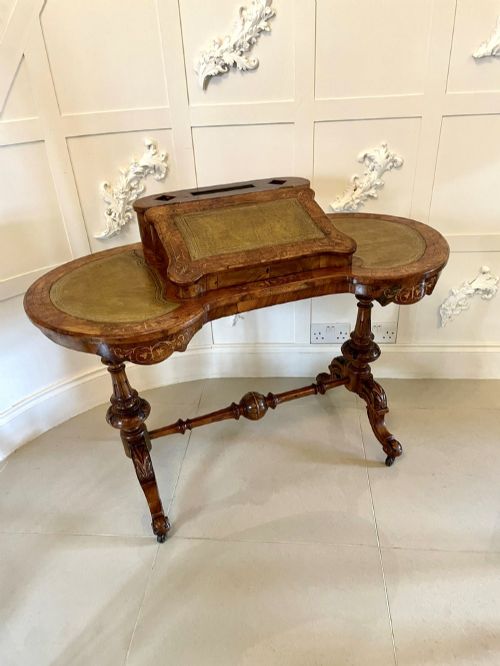
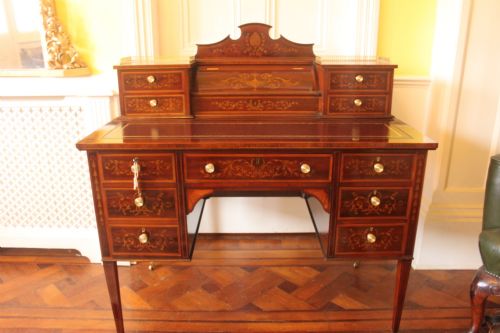
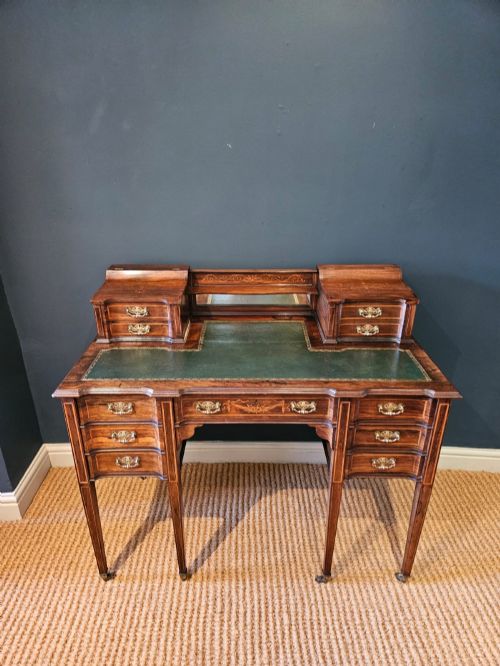
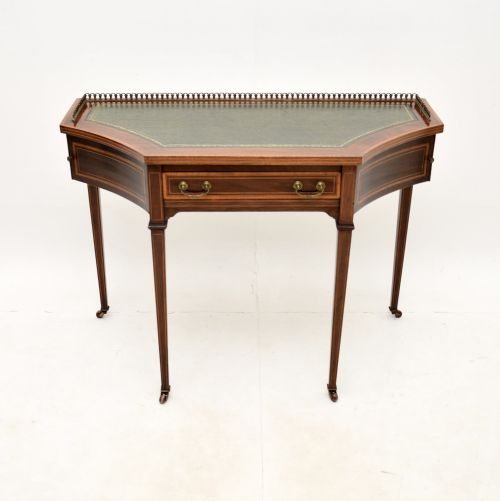
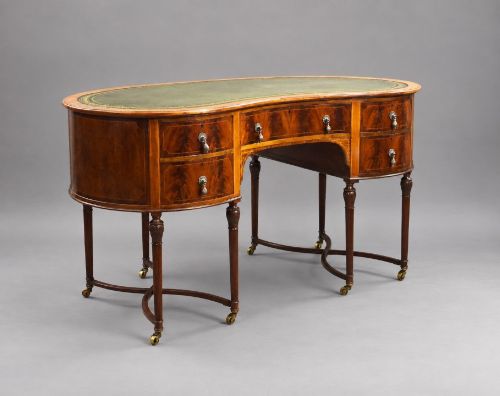
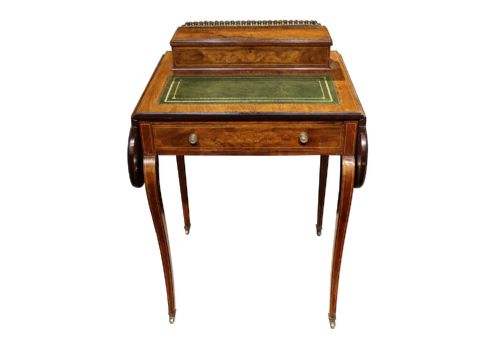
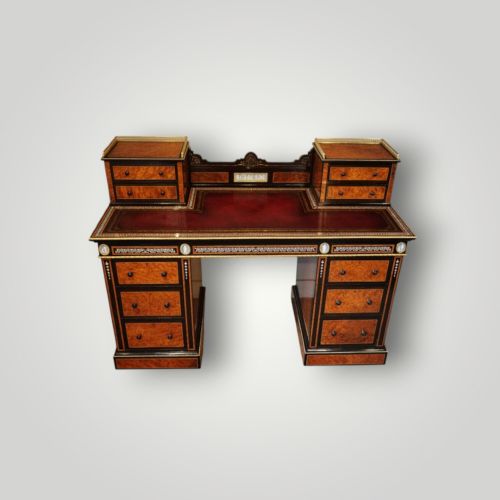
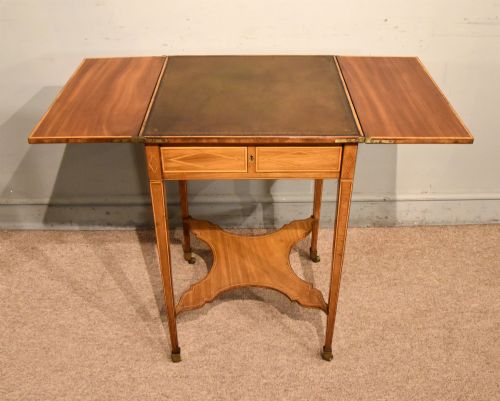
A leather inlay writing table serves as a functional workspace, combining a smooth hide writing surface with timber construction across various periods. These pieces appear frequently in Victorian and Edwardian iterations, spanning freestanding library tables to compact kidney-shaped desks.
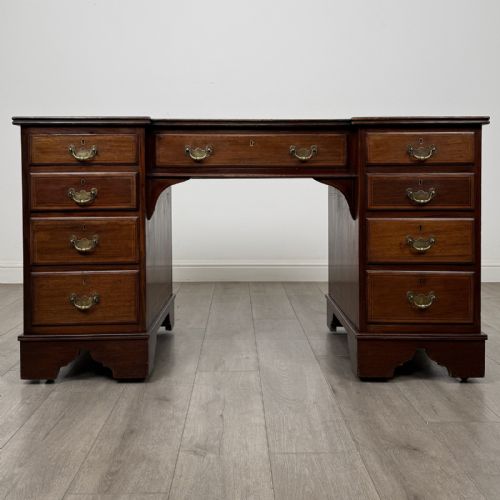
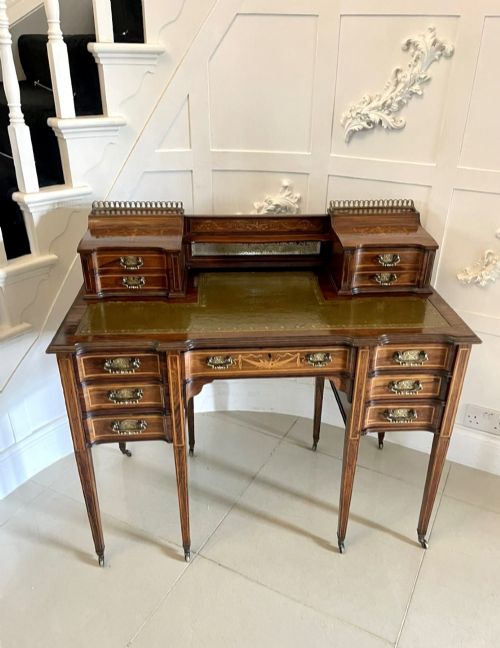
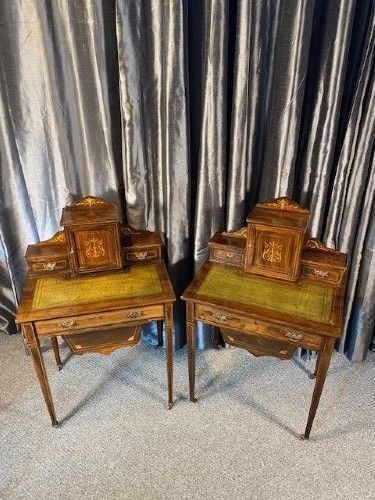
Makers designed these items for domestic studies and drawing rooms, incorporating fitted interiors, drawers, and sometimes superstructure elements like the Carlton House desk format. Proportions range from small kneehole desks to broad pedestal forms.
The selection on this page draws heavily from late nineteenth and early twentieth-century workshops, alongside occasional Regency and Georgian influences. Buyers encounter mahogany, satinwood, and rosewood surfaces paired with distinct tooling on the leather panels.
Materials and Construction
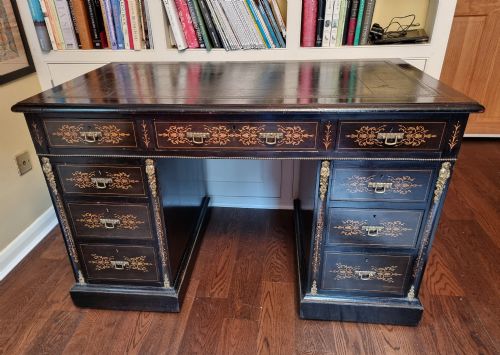
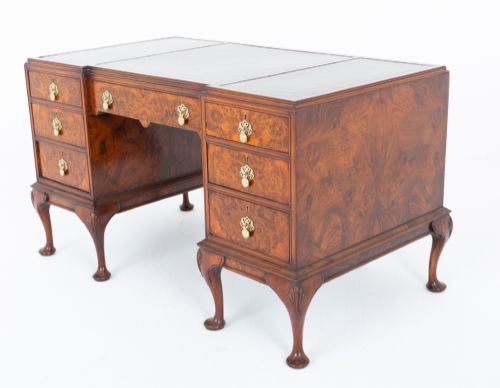
Craftsmen built these tables using solid foundational timbers like mahogany, oak, or walnut, applied with veneers of satinwood, rosewood, and burr walnut. Marquetry and string inlay decorate many of the surfaces, alongside brass banding and hardware.
The defining leather panel is typically inset into the wooden top, often bordered by gilt tooling. Joinery techniques from the Victorian and Edwardian eras ensure sturdy drawer construction and stable framing.
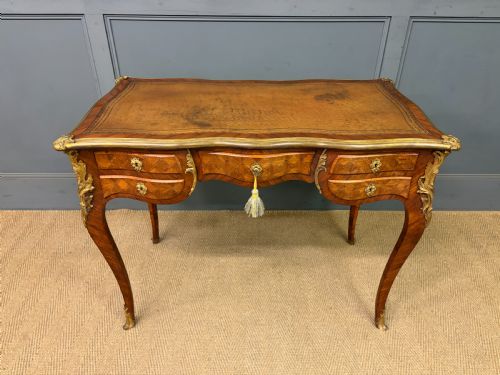
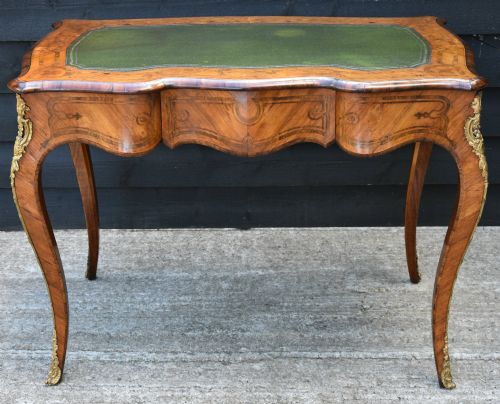
Form variations range from compact kidney-shaped desks to pedestal desks and freestanding bureau plat examples.
Distinctions in Quality
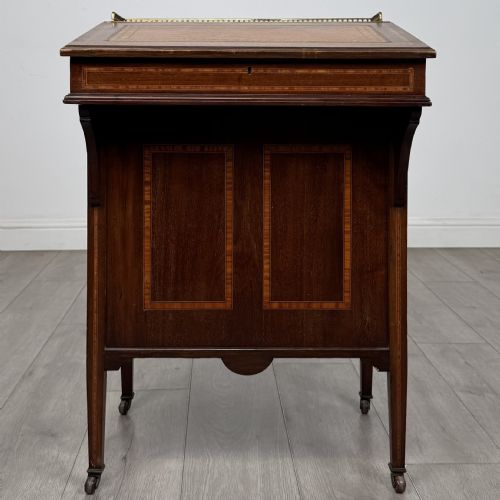
Quality rests in the precision of the timber veneers, the crispness of the marquetry inlay, and the structural integrity of the carcase. Desks bearing maker stamps from prominent London firms display superior interior fitting and cabinet work.
The choice of secondary woods, the depth of the mahogany or satinwood grain, and the execution of brass mounts separate standard commercial output from workshop pieces intended for prominent clients.
Maple and Co·Edwards and Roberts·Jackson and Graham·Wolfe and Hollander·Gill and Reigate
The Leather Inlay Writing Table Glossary
- Carlton House desk
- A form of writing table featuring a curved superstructure of small drawers and pigeonholes above the main writing surface. This layout gained popularity during the late eighteenth century and saw revival periods later.
- Kidney-shaped desk
- A writing table designed with a concave curve at the front to accommodate the user. Makers frequently produced these in satinwood and mahogany during the Edwardian era.
- Bureau plat
- A freestanding French writing table with a rectangular top and drawers in the frieze. These pieces often feature leather writing surfaces and brass or bronze mounts.
- Marquetry
- The art of applying decorative veneer pieces in geometric or pictorial patterns to a wooden structure. Craftsmen used various contrasting timbers to achieve these designs on writing surfaces.
- Pedestal desk
- A heavy form comprising two supporting columns of drawers beneath a large rectangular top. They provide substantial storage and a large leather writing area.
Leather Inlay Writing Table: Frequently Asked Questions
What is a leather inlay writing table used for?
These tables provide a dedicated surface for writing letters, managing household accounts, and placing tabletop accessories in a study or library.
The leather insert offers a smooth, cushioned texture that traditionally prevented pen nibs from catching while protecting the timber underneath.
How do I identify an Edwardian writing table?
Edwardian examples often utilise lighter timbers such as satinwood or feature mahogany with delicate string inlay and Sheraton revival motifs.
Construction details and lighter proportions separate these twentieth-century pieces from heavier Victorian equivalents.
Where were pedestal desks placed?
Pedestal desks usually stood freestanding in the centre of a room rather than against a wall, requiring finished panelling on all sides.
This placement allowed access to drawers from the front while presenting a polished timber exterior to visitors.
What is a Carlton House desk?
A Carlton House desk incorporates a curved bank of small drawers and compartments wrapping around the rear and sides of the writing surface.
This specific form kept stationery organised within arm's reach of the main leather inlay writing area.