






Leather Fireside Seat
A leather fireside seat brings comfort and character to a room, offering sturdy seating framed in timber or brass.
Leather Fireside Seat
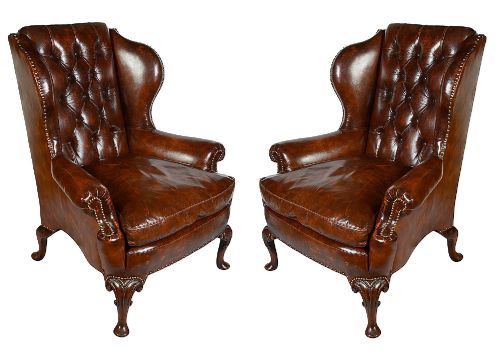
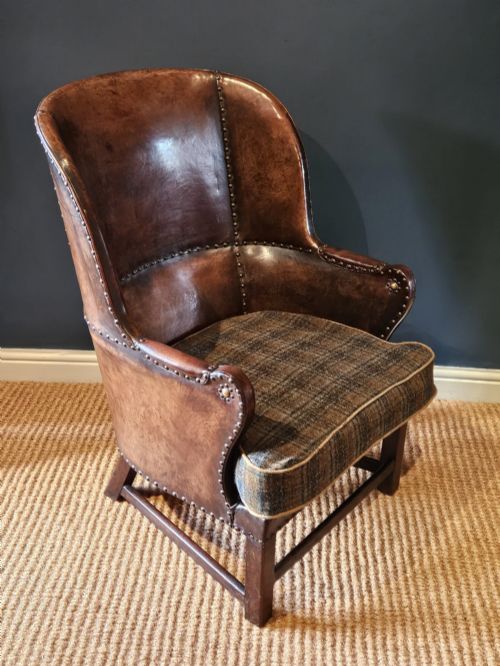
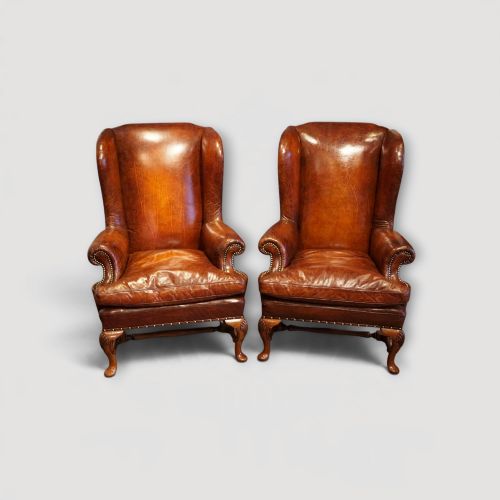
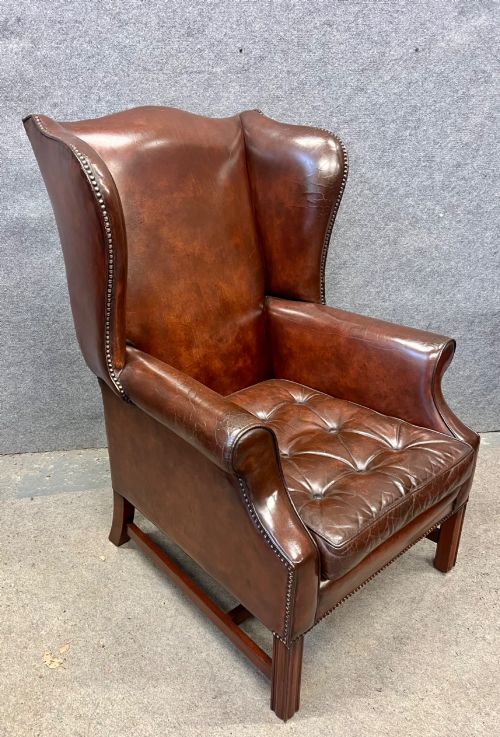
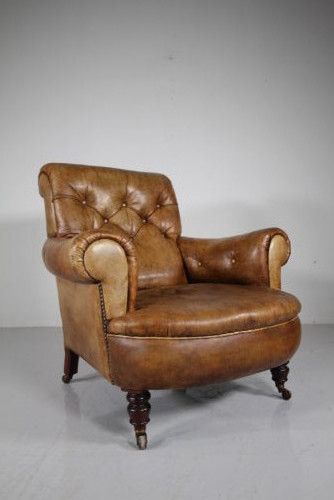
A leather fireside seat encompasses several distinct forms designed for warmth and utility near the hearth, including club armchairs, club fenders, nursing chairs, stools, and wingback chairs. These pieces originate from the nineteenth and early twentieth centuries, spanning Victorian, Edwardian, and Art Deco periods.
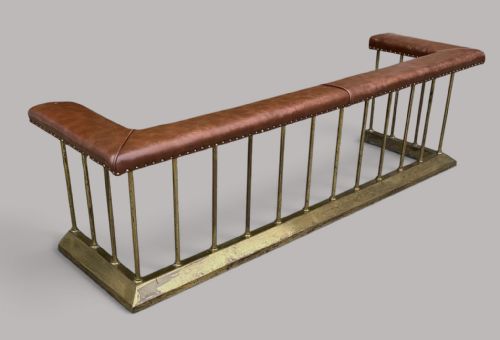
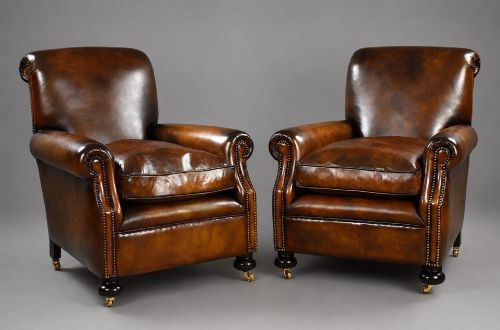
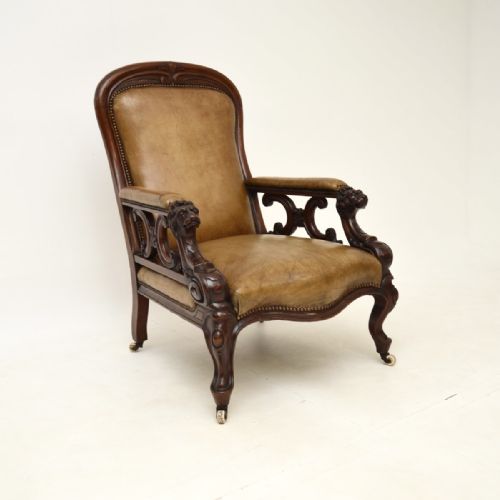
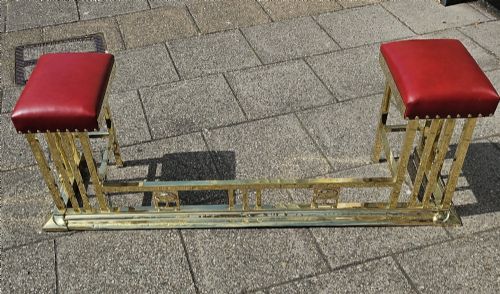
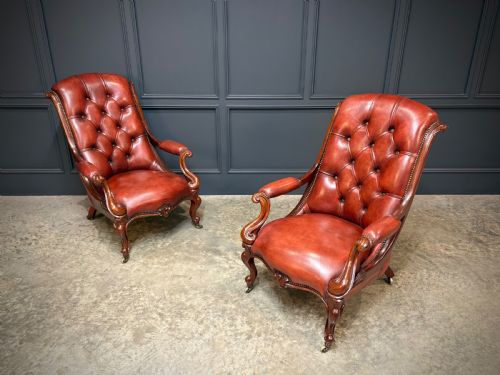
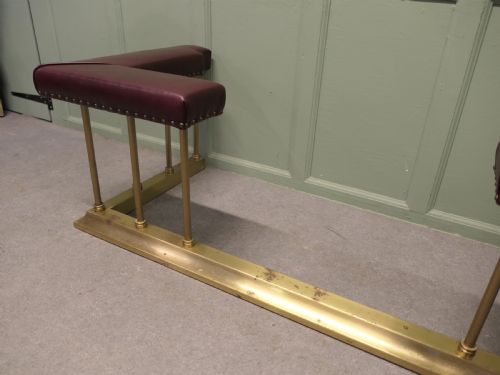
The most common variations on this page are low club armchairs upholstered in mature hide and brass-framed club fenders with leather top rails. Buyers also encounter walnut and mahogany armchairs alongside oak joint stools and rocking chairs originating from British, French, and Swedish workshops.
Makers and designers of the era utilised specific stylistic influences ranging from Scottish School craftsmanship to French Renaissance Revival and Georgian style proportions. Each piece reflects the domestic priorities of its period, prioritising durable materials suited for daily fireside use.
Materials and Construction Techniques
Frames are constructed from dense hardwoods including mahogany, walnut, oak, rosewood, and general timber, providing structural stability for seating and fenders alike. Metal elements such as brass and wrought iron appear in club fenders and structural mounts, often paired with metal studs.
Upholstery relies on thick leather hides secured over supportive padding, frequently featuring buttoned detailing or plain taut finishes. Joinery methods range from carved wooden frames to riveted and soldered metalwork on fenders designed to withstand hearthside heat.
Leather Fireside Seat Retail Price Guide 2026
Typical asking prices for leather fireside seat among the pieces listed under this phrase on Sellingantiques today, from the lower quarter to the upper quarter. They describe what is for sale here now, not the wider market.
Current listings feature nineteenth-century and early twentieth-century pieces utilising oak, mahogany, walnut, brass, and leather.
Evaluating Quality and Craftsmanship
The quality of a leather fireside seat rests on the integrity of its primary frame and the depth of patina upon the hide. Substantial timber framing and robust brass work indicate superior construction designed to endure decades of use.
Refinement shows in the hand-finishing of the leather, such as well-executed buttoning and secure metal studding, alongside balanced proportions that separate standard utilitarian items from finer workshop pieces.
Howard and Sons·William Birch
The Leather Fireside Seat Glossary
- Club Fender
- A low metal frame featuring upholstered leather seats on top, originally designed to allow people to sit close to an open hearth while protecting them from sparks and excessive heat.
- Wingback Armchair
- A large seating form with characteristic protective flaps or wings attached to the arms and back to shield the sitter from draughts near a fireplace.
- Joint Stool
- A sturdy wooden seat constructed with mortise and tenon joints, representing a traditional form predating more complex upholstered chairs.
- Hide
- The natural leather skin used for upholstery, valued when it exhibits a mature patina and supple texture from age and use.
- Buttoned Leather
- An upholstery technique where depressions are formed in the leather using buttons pulled tight to secure the internal stuffing and create a patterned surface.
Leather Fireside Seat: Frequently Asked Questions
What is a club fender?
A club fender is a low metal structure built around a fireplace with padded leather top rails for seating. It provides a warm vantage point close to the fire while keeping logs and stray embers contained.
These pieces combine brass or wrought iron frames with upholstered hide, serving a dual purpose as both physical hearth guard and extra living room seating.
How do I care for antique leather?
Antique leather requires gentle maintenance to preserve its natural oils and prevent the hide from drying or cracking over time. Regular dusting and occasional application of appropriate conservation leather dressings keep the surface supple.
Keep these seats away from direct heat sources and strong sunlight, which can fade the colour and dry out the historic material.
How do I identify a Victorian armchair?
Victorian armchairs often feature dense hardwood frames made of walnut or mahogany, frequently accompanied by deep buttoned leather upholstery and hand-carved details. Common styles range from low nursing chairs to substantial library armchairs.
Examining the construction methods underneath and the wear patterns on the timber helps confirm nineteenth-century origin.
Where should I place a fireside seat?
These seats suit living rooms, studies, or libraries, traditionally positioned near a fireplace or reading corner to make full use of their supportive proportions and comfortable design. Their compact height also allows them to sit well beneath windows or alongside larger sofas.
Ensure adequate clearance around metal club fenders so the surrounding floor space remains functional and safe.