



Leather Dining Room Chairs
Leather dining room chairs bring substance to a room, offering rich textures and sturdy frames built to last through generations of long meals.
Leather Dining Room Chairs
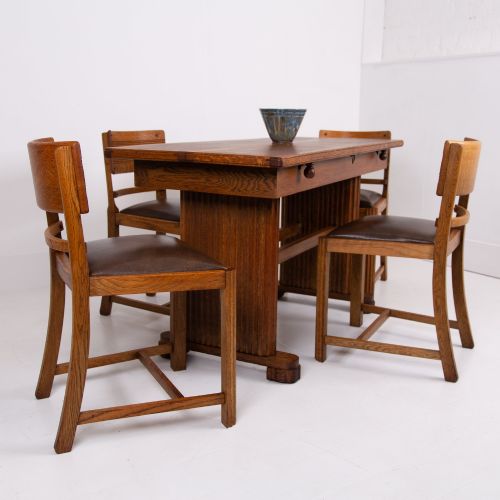
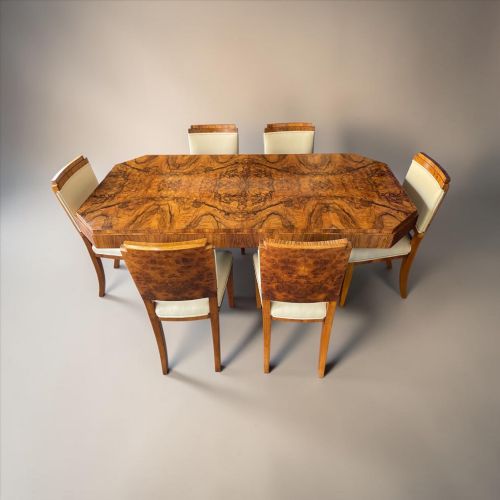
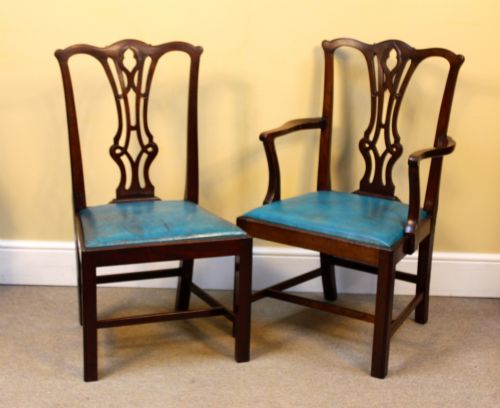
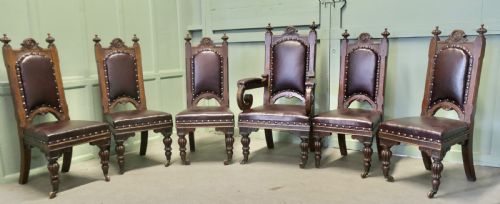
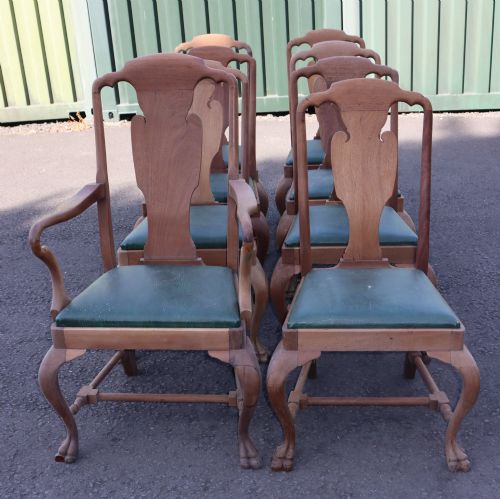
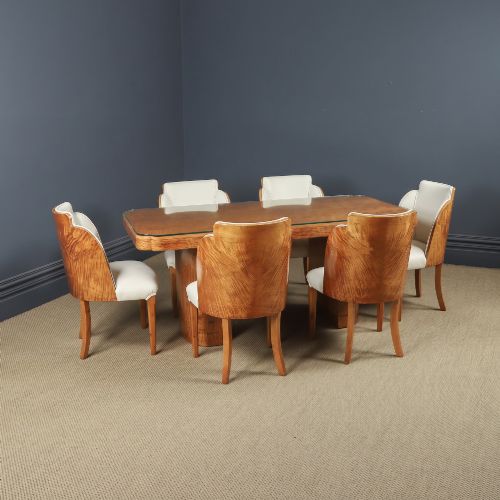
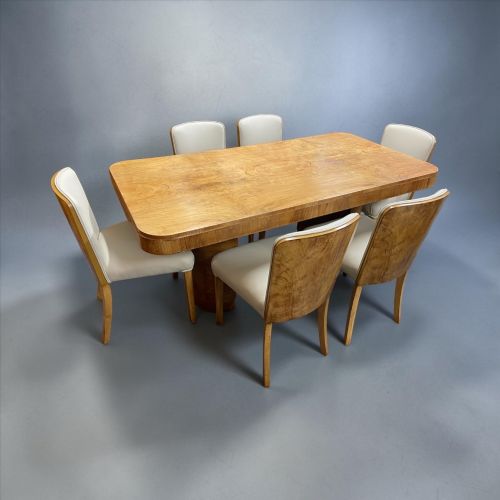
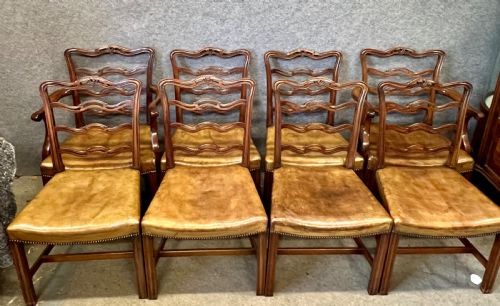
Leather dining room chairs span multiple centuries of craftsmanship, ranging from Georgian and Regency forms to Victorian, Edwardian, and Art Deco iterations. You will frequently encounter matching sets of six or eight, often including carvers with armrests alongside single side chairs.
The aesthetic vocabulary draws heavily on revival styles, with Chippendale, Queen Anne, Jacobean, and Louis XVI motifs appearing across mahogany, oak, and walnut frameworks. Many examples originate as part of larger dining suites complete with tables and sideboards.
Makers and workshops of note, such as Gillows, Holland & Son, and Harry and Lou Epstein, shaped the production of these seating groups. Whether built in modest oak or substantial mahogany, these pieces were designed for daily service around the dining table.
Materials and construction methods
Makers relied on dense hardwoods like mahogany, oak, walnut, and satinwood to construct robust frames capable of supporting constant use. These timbers were frequently carved with scrollwork, gadroon edges, or intricate splats depending on the prevailing style.
Upholstery centres on natural leather, sometimes hand-dyed in shades such as green and secured with brass tacking along the seat rails. Frames are joined using traditional cabinet-making techniques, ensuring stability across large sets of chairs.
Leather Dining Room Chairs Retail Price Guide 2026
Typical asking prices for leather dining room chairs among the pieces listed under this phrase on Sellingantiques today, from the lower quarter to the upper quarter. They describe what is for sale here now, not the wider market.
Listings feature woods including mahogany, oak, walnut, burr walnut, satinwood, maple, rosewood, and brass hardware.
Distinctions in craftsmanship and scale
Quality reveals itself in the timber selection and the depth of carving on the frame, where crisp lines and substantial proportions distinguish superior sets. Matching uniformity across large sets of eight, ten, or twelve chairs indicates workshop cohesion.
The integration of the leather upholstery and the integrity of the underlying joinery dictate the overall standard of the piece. Workshops known for documented cabinet-making demonstrate finer detailing in stretcher placement and back splat design.
Harry and Lou Epstein·William Walker And Sons·Gillows·Holland And Son·Shoolbred
The Leather Dining Room Chairs Glossary
- Carver
- An armchair designed to sit at the head of a dining table. These pieces often match the side chairs in a larger dining set.
- Splat
- The vertical central strip of wood in the back of a chair. It provides structural support and carries decorative carving in styles like Chippendale.
- Gadroon
- A decorative carved moulding consisting of convex curves, frequently found on the knees or rails of Georgian and Victorian chairs.
- Stretcher
- A horizontal wooden bar connecting the legs of a chair for added stability. Oak Jacobean and William IV examples make frequent use of them.
Leather Dining Room Chairs: Frequently Asked Questions
How do I clean antique leather dining room chairs?
Wipe the surface gently with a dry or barely damp cloth to remove dust without introducing excess moisture. Avoid harsh chemical cleaners that strip natural oils from old hides.
Feed the leather periodically with a suitable conservation wax or balm to maintain suppleness and prevent cracking over time.
Are larger sets harder to find?
Sets of eight, ten, or twelve matching chairs occur less frequently than standard sets of four or six. Many original dining suites were dispersed over the decades, making complete large sets notable.
When purchasing larger groups, check that the timber grain and carving details remain consistent across all pieces in the set.
Can I mix carvers with single chairs?
Pairing carvers at the head and foot of the table with side chairs along the flanks follows traditional dining arrangements. Many antique suites were originally sold in configurations like six single chairs and two carvers.
Ensure the seat heights align correctly so guests sit at a uniform level around the dining table.
How do I identify the period of a chair?
Examine the timber species, structural joinery, and stylistic revival motifs present in the back splat and legs. Mahogany and walnut dominate 18th and 19th-century designs, while oak appears across Jacobean and Edwardian pieces.
Consult maker stamps or attribution marks where present on the underside of the seat rails for further historical context.