




Leather Campaign Furniture
Leather campaign furniture brings rugged portability and rich wood tones into domestic spaces, offering sturdy desks, chests and chairs built for travel.
Leather Campaign Furniture
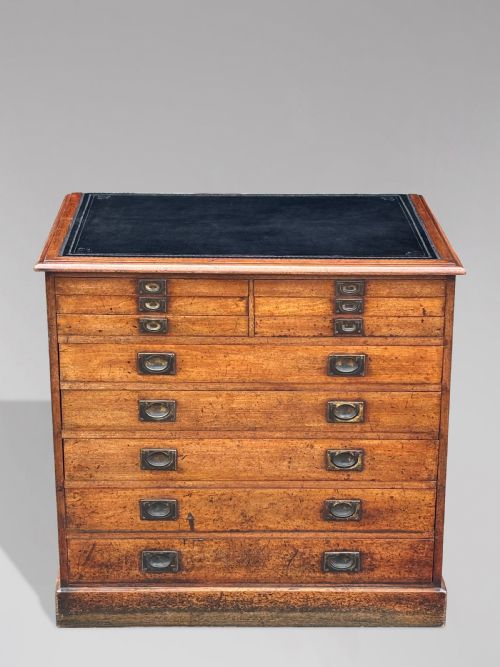
Leather campaign furniture comprises practical pieces designed for transport during military expeditions and colonial travel. Buyers searching this phrase encounter items spanning the nineteenth century through the early twentieth century, including desks, chests of drawers, armchairs, and filing cabinets.
Mahogany and teak dominate the forms seen here, frequently paired with leather writing surfaces and brass hardware. Pieces range from Victorian military desks to Edwardian folding tables and occasional items such as hat boxes and bed-side cabinets.
How they were made
Craftsmen built these items using dense timbers such as mahogany and teak to withstand frequent dismantling and transit. Surfaces often incorporate inset leather panels alongside brass corners, straps, and flush handles designed to prevent snagging during movement.
Folding mechanisms and sectional designs define the construction methods employed by makers. Iron and ebonised wood appear alongside textile and rubber elements in specific folding chairs, campaign bedsides, and strap accessories.
Leather Campaign Furniture Retail Price Guide 2026
Typical asking prices for leather campaign furniture among the pieces listed under this phrase on Sellingantiques today, from the lower quarter to the upper quarter. They describe what is for sale here now, not the wider market.
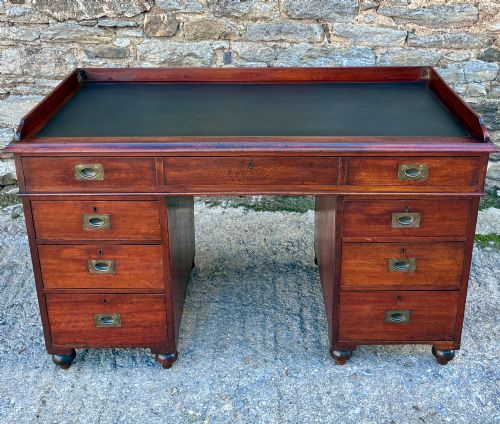
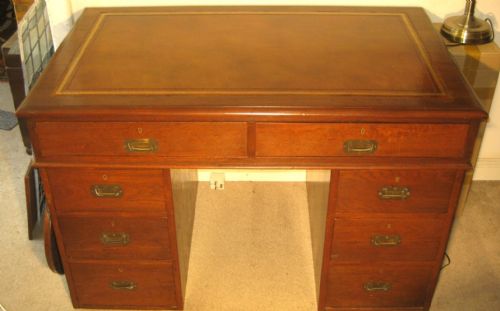
Major Whitmore's desk sits alongside strap accessories with hooks.
What varies in quality
The degree of original brass hardware integration and the choice of timber thickness distinguish different examples. Solid mahogany and teak constructions show greater durability than lighter styles, while fitted interiors with multiple compartments indicate higher-grade commission work.
Condition and completeness of folding mechanisms affect the integrity of chairs and desks. The quality of the leather top and the precision of joint work separate standard utility items from superior pieces.
JW Allen
The Leather Campaign Furniture Glossary
- Campaign chest
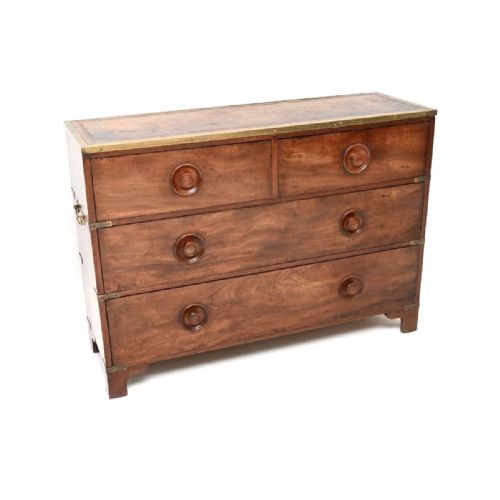
- A sectional chest of drawers built in multiple parts with brass corners and inset side carrying handles for easy stacking and transport.
- Flush handle
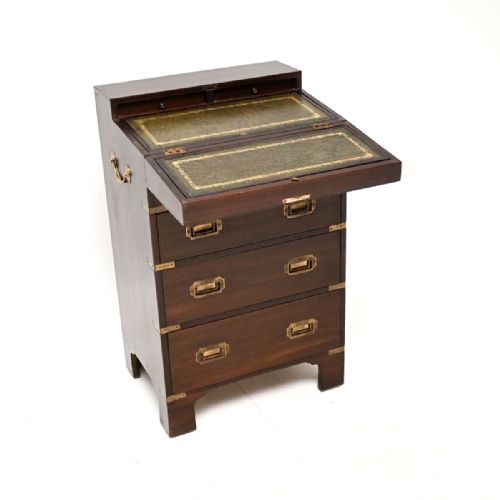
- A metal pull recessed into the surface of a drawer or door so that it does not project beyond the wood during transit.
- Pedestal desk
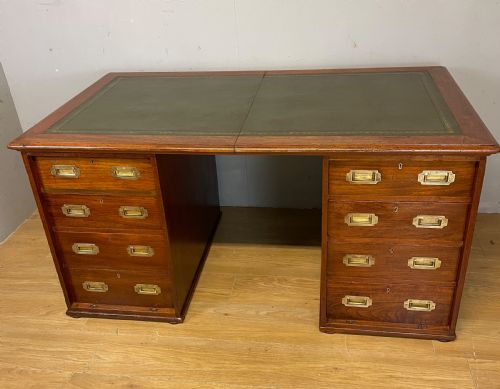
- A heavy writing table supported by two vertical banks of drawers, often constructed in solid mahogany or teak.
- Folding chair
- A collapsible seat utilising hinged wooden or iron X-frames paired with leather or textile slings for mobility.
Leather Campaign Furniture: Frequently Asked Questions
What is leather campaign furniture?
Leather campaign furniture includes portable desks, chests, and chairs constructed for military officers and travellers on the move. These items feature modular designs and protective brass fittings.
Such pieces combine utilitarian strength with rich cabinet timbers like mahogany and teak. They translate historical travel equipment into functional items for modern rooms.
How do I use a campaign desk?
A campaign desk serves as a sturdy writing surface with built-in storage compartments and drawers. Many examples feature inset leather tops suited for daily desk work.
Position the desk where its brass mounts and timber grain can catch natural light. The modular nature of these pieces allows them to fit comfortably into studies or living spaces.
Are campaign chairs comfortable?
Campaign chairs utilise folding frames and stretched leather or textile slings to provide flexible seating. Mid-nineteenth-century folding chairs offer surprisingly supportive angles for relaxing.
These chairs suit occasional seating needs in living rooms or studies. Their collapsible frames make them simple to move or store when floor space is required.
How do I date a campaign chest?
Dating relies on timber choice, brass hardware style, and construction methods visible within the sectional carcass. Nineteenth-century examples often display solid teak or mahogany with hand-cut dovetails and heavy brass strapping.
Later pieces from the Edwardian period or the early twentieth century may employ lighter frames or modified folding mechanisms. Examining internal drawer linings helps confirm the period of manufacture.