





Leather Bound Steamer Trunk
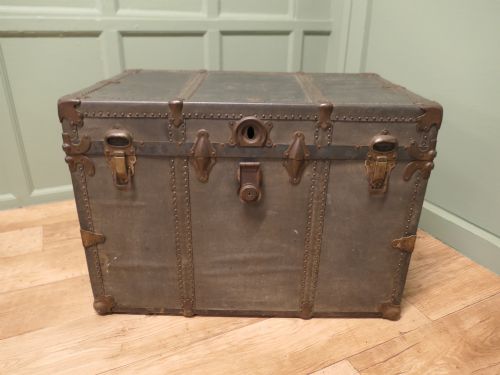
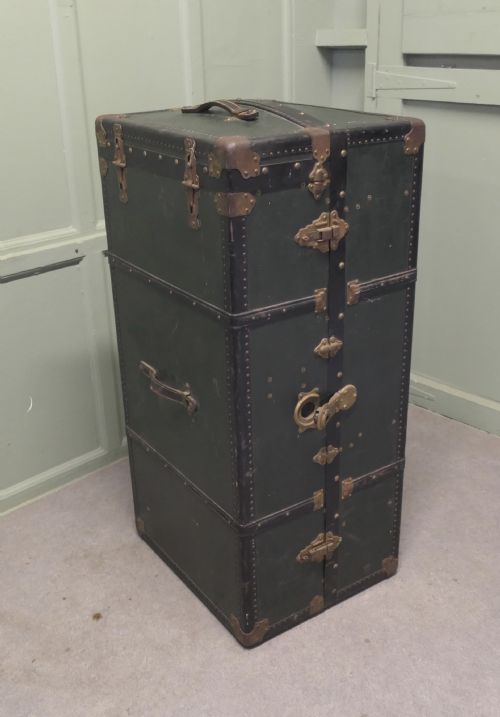
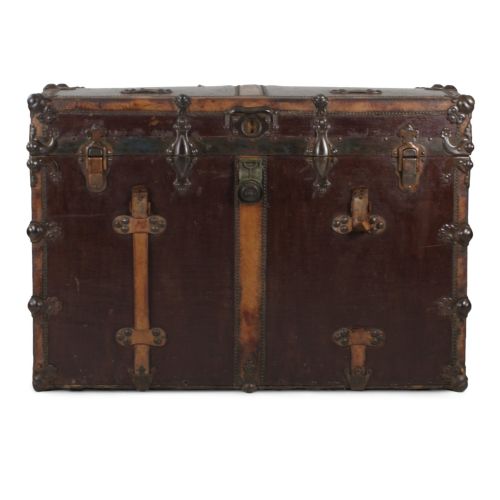
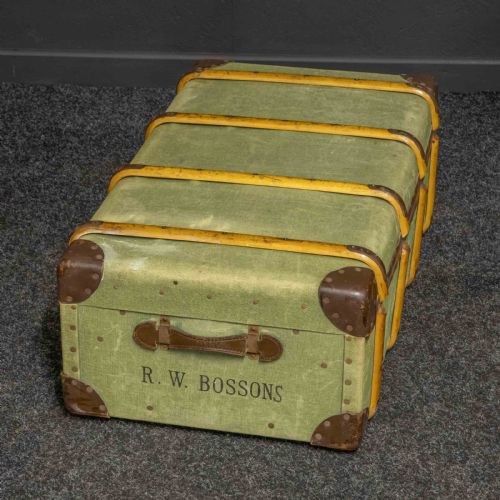
These leather bound steamer trunks are practical travel pieces built to hold belongings on long journeys, offering storage and sturdy utility.
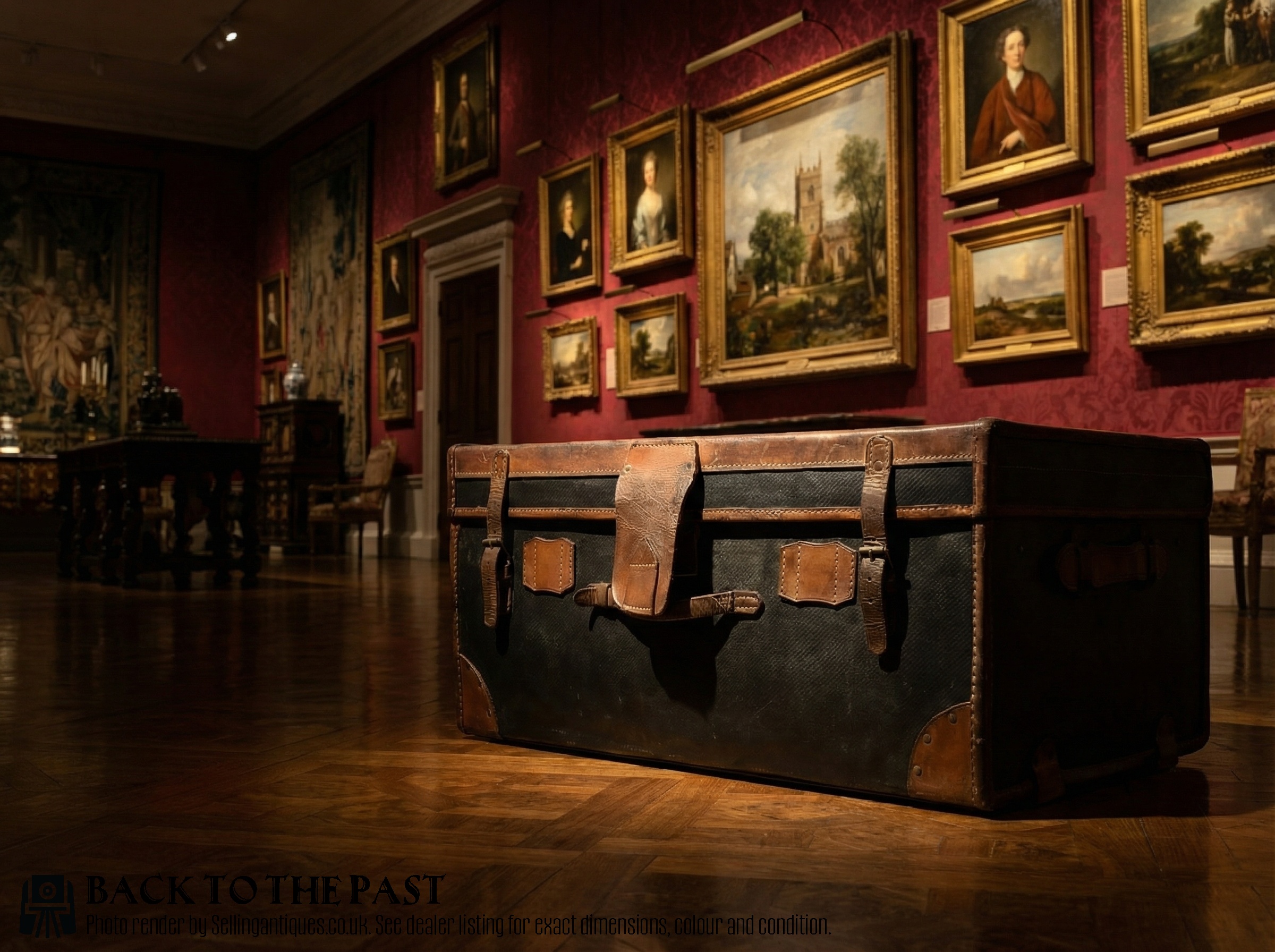
Leather Bound Steamer Trunk
When you search for a leather bound steamer trunk, you encounter robust travel cases designed for cabins and holds. The pieces on this page span the nineteenth century, Edwardian era, and the early twentieth century.
You see forms ranging from dome top chests and travelling campaign trunks to fitted cabin wardrobes and suitcases. Origins vary across English and French workshops, with materials such as pine, oak, and canvas frequently combined with leather.
How they were made
Maker construction relies on strong internal woods like pine or oak, reinforced externally with iron or brass brackets and protective battens. Leather bindings and canvas covers are secured with metal tacks and studs to withstand rough transit.
Hardware details such as brass locks, handles, and hinges provide structural integrity and secure closure for travel. Internal fittings often incorporate wooden compartments, trays, or hanging spaces tailored for garments.
Leather Bound Steamer Trunk Retail Price Guide 2026
Typical asking prices for leather bound steamer trunk among the pieces listed under this phrase on Sellingantiques today, from the lower quarter to the upper quarter. They describe what is for sale here now, not the wider market.
Listings feature pieces spanning the Victorian period, 1870, 1910, 1920, and 1930, utilising leather, wood, brass, canvas, iron, pine, and oak.
What varies in quality
Quality rests on the integrity of the core wooden structure, the resilience of the leather bindings, and the original state of the brass or iron hardware. Pieces retaining functional locks, sturdy handles, and intact internal trays command greater interest.
Provenance and maker signatures also distinguish examples, particularly verified pieces from notable Parisian luggage houses compared to standard utility trunks.
Aux Etats Unis·Louis Vuitton·W Insall·Moynat
The Leather Bound Steamer Trunk Glossary
- Steamer trunk
- A low-profile luggage chest designed to fit beneath a steamship cabin berth during ocean voyages. These pieces usually feature flat tops to allow stacking.
- Campaign trunk
- A portable storage chest built for military officers or travellers on the move. They typically incorporate recessed brass handles and reinforced corners for frequent transit.
- Dome top chest
- A storage trunk featuring a rounded lid designed to shed water during travel. This older form appears in nineteenth century listings alongside flat-topped variants.
- Portmanteau
- A large travelling case or suitcase that opens into two distinct compartments. It serves as an early form of wardrobe luggage.
- Malle penderie
- A French vertical wardrobe trunk designed to hang garments upright during travel. These sophisticated pieces often include internal drawers and hangers.
Leather Bound Steamer Trunk: Frequently Asked Questions
What fits inside a steamer trunk?
These trunks hold garments, personal belongings, and travel accessories within their main compartments and fitted trays. Many include specialised sections for specific items.
Larger cabin trunks and wardrobe pieces accommodate considerable quantities of clothing for extended journeys.
How do I clean the leather?
Careful dusting removes surface dirt from the old leather and canvas surfaces without damaging the material. Light conditioning preserves the hide without altering its historical appearance.
Harsh chemical cleaners should be avoided on nineteenth century and early twentieth century finishes.
Can I use one as a coffee table?
Flat top trunks provide stable surfaces suitable for use as living room tables or storage benches. Their sturdy wooden construction supports everyday items easily.
Placement should avoid direct sunlight to protect the original leather and brass work.
How do I date these trunks?
Dating relies on construction methods, materials, lock types, and maker signatures found on the pieces. Victorian and Edwardian examples often display distinct hardware and label styles.
Comparing structural details helps distinguish nineteenth century items from 1920s or 1930s productions.