
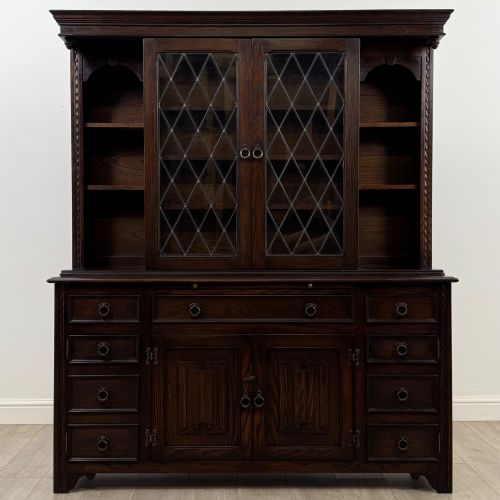
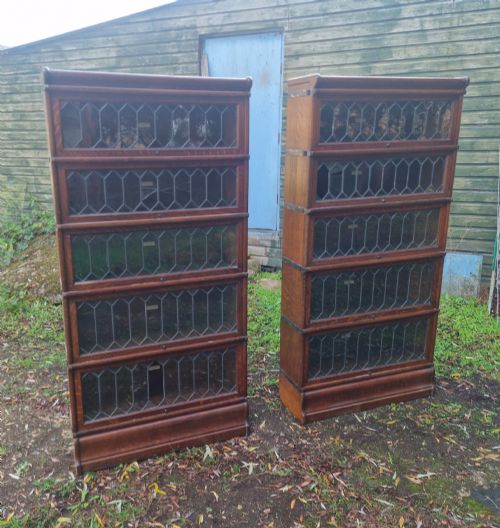
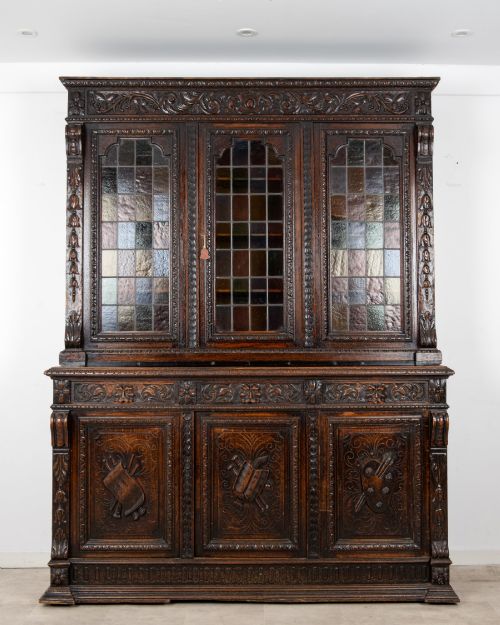
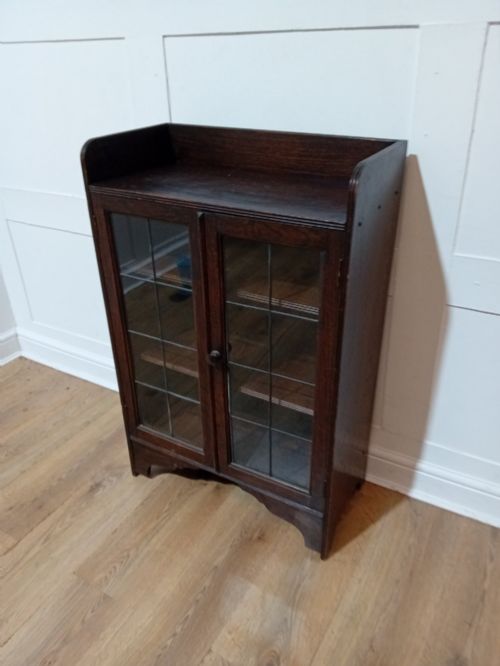
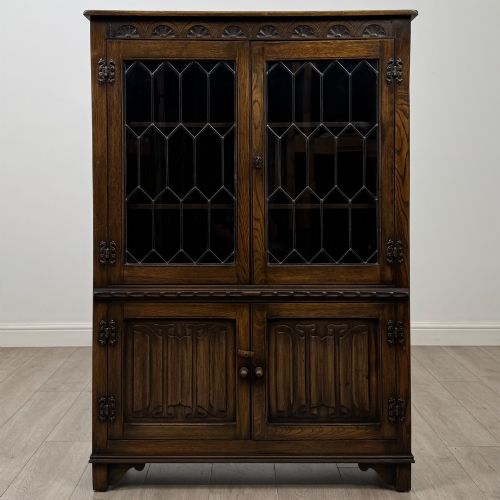
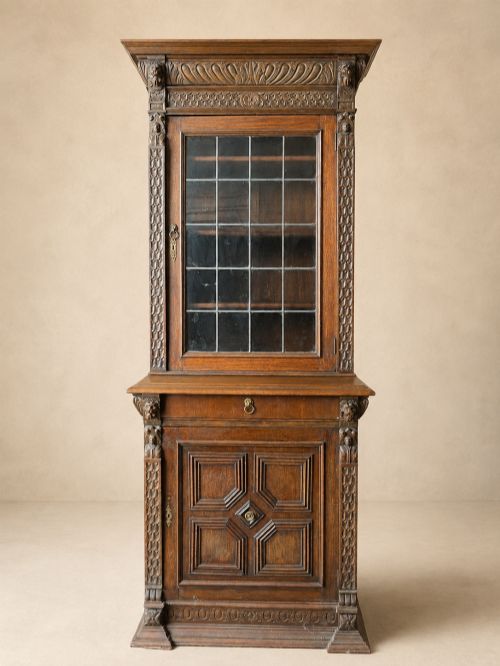
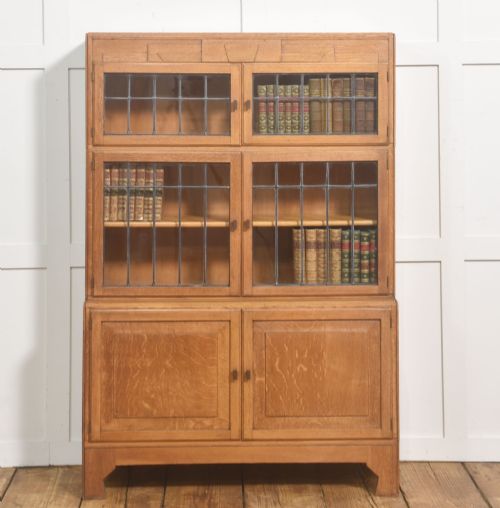
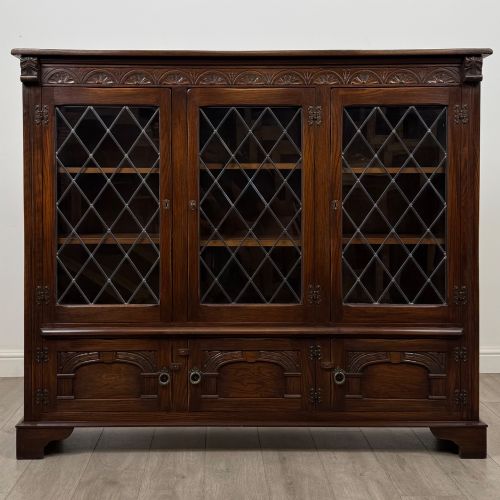
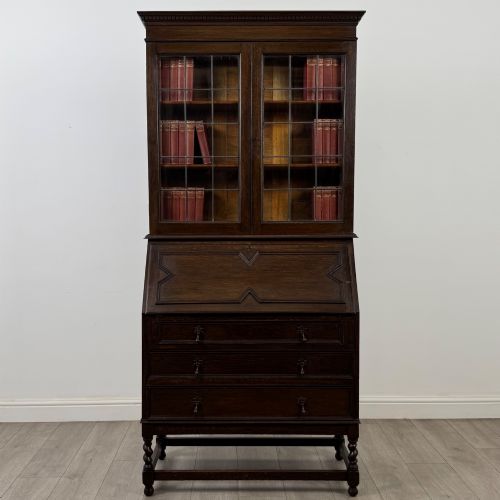
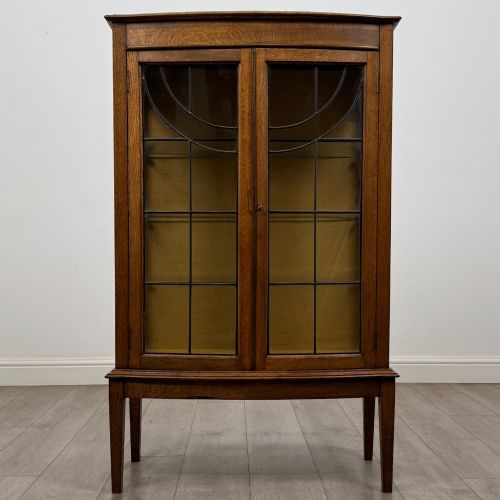

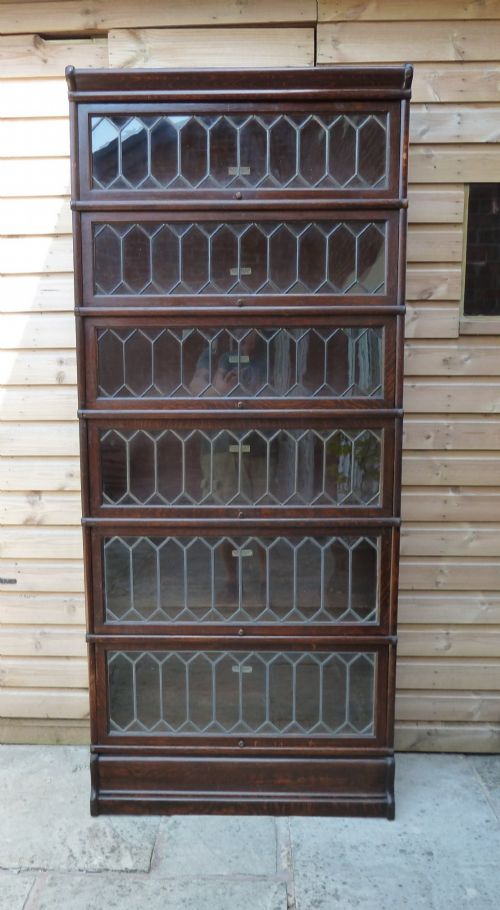
Leaded Glass Glazed Bookcase
These leaded glass glazed bookcase pieces bring architectural glasswork and timber storage together, offering a practical way to display and protect volumes.
Leaded Glass Glazed Bookcase
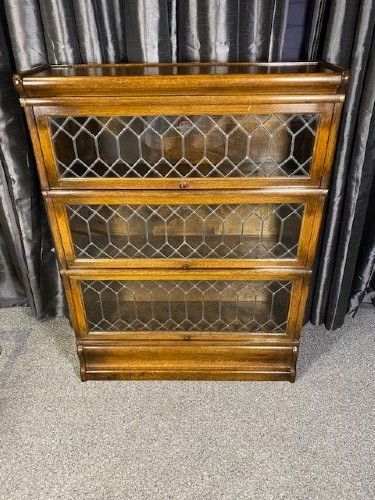
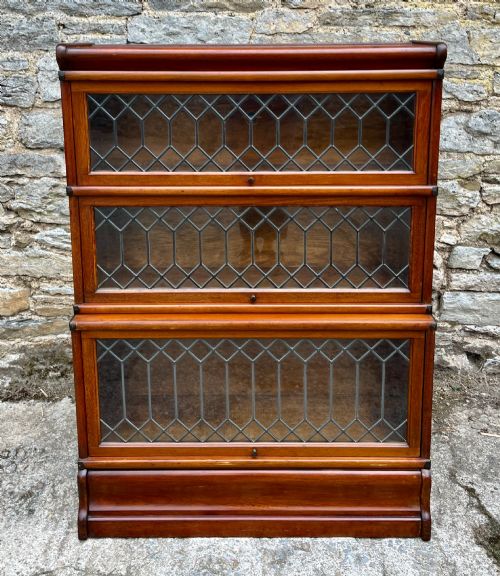
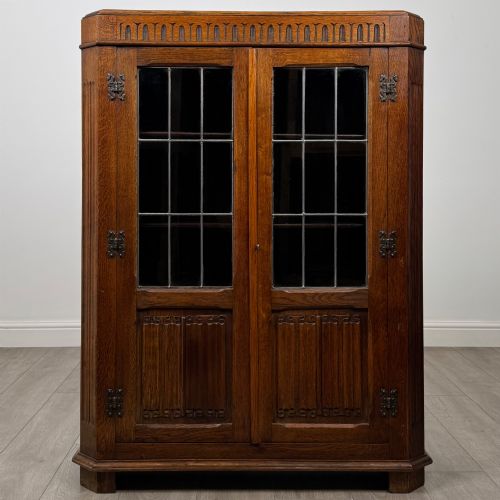
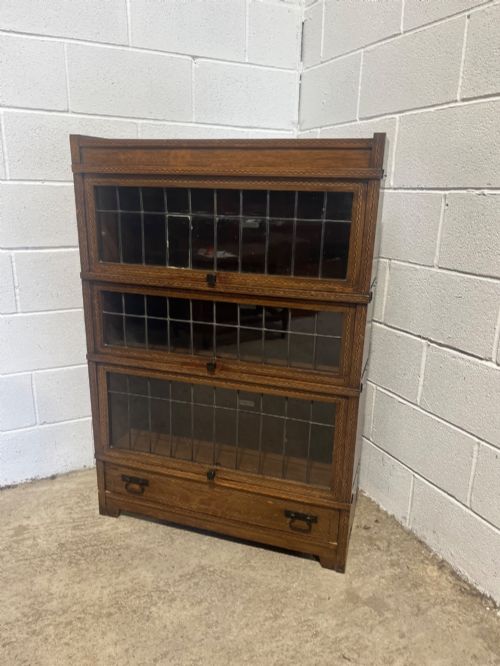
A leaded glass glazed bookcase combines timber shelving with individual panes of glass held together by lead cames, protecting books while keeping titles visible.
Most examples encountered here date from the Victorian, Edwardian, and 1920s periods, ranging from tall stacking units to bureau forms.
Makers such as Globe Wernicke, Minty, Liberty & Co., and Maple & Co. shaped the market for these cabinets, producing both modular and freestanding variants.
What varies in quality
Quality rests on the weight of the timber framing and the tightness of the lead cames holding the glass panes.
Better pieces display crisp carving, balanced proportions, and smooth mechanical action in modular stacking sections or drop-front desks.
Modular barrister bookcases were originally designed so lawyers could transport their entire library safely in separate glass-fronted boxes.
Globe Wernicke·Minty·Liberty & Co.·Maple & Co.·Lambs of Manchester
The Leaded Glass Glazed Bookcase Glossary
- Came
- A slender grooved strip of lead used to hold together pieces of glass in a leaded window or door. These strips form the rigid grid supporting the individual glass panes.
- Globe Wernicke
- A proprietary style of modular stacking barrister bookcase featuring upward-lifting glass doors. Each tier operates independently to protect the books stored inside.
- Secretaire
- A cabinet incorporating a pull-down writing flap that conceals small drawers and pigeonholes. This hybrid form combines a desk with upper bookshelf storage.
- Linenfold
- A style of wood carving that imitates folded linen cloth, frequently seen on cabinet panels from the Tudor Revival and later periods.
- Arts and Crafts
- A design movement valuing handcraftsmanship and simple structural honesty over machine-made ornamentation. Pieces from this tradition often feature exposed joinery and native hardwoods.
Leaded Glass Glazed Bookcase: Frequently Asked Questions
How do stacking bookcases work?
Stacking bookcases consist of separate modular sections that sit one upon another with a base and top cornice. The glass doors on each tier lift and slide inside the case above the books.
This modular design allows owners to separate the tiers for moving or to add new sections as a collection grows.
Can I adjust the shelves?
Many traditional barrister and sectional bookcases have fixed tier heights designed for standard octavo volumes. Freestanding variants from the Edwardian period sometimes incorporate adjustable rack-and-pinion shelf supports.
Check the internal clearance of specific tiers before planning to store oversized folios.
How do I care for leaded glass?
Clean the glass panes gently using a mild, non-ammonia cleaner applied to a cloth rather than sprayed directly onto the surface. Avoid pressing hard against the lead cames, as excessive pressure can weaken the soldered joints.
Regular dusting with a soft brush keeps the lead and timber surfaces stable over time.
Are these cabinets suitable for modern homes?
The compact footprints of narrow Edwardian and stacking units make them adaptable for studies, living rooms, and hallways. Their glazed doors keep dust away from paper while maintaining an open visual feel in a room.
Ensure the floor is level, particularly with multi-tier stacking formats, to keep the doors operating smoothly.