

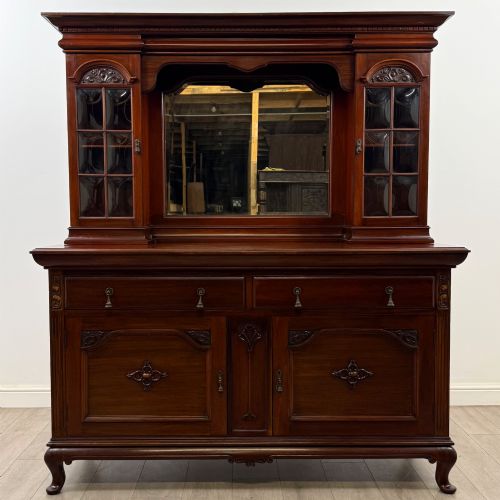


Leaded Glass Dresser
These leaded glass dresser pieces combine sturdy oak construction with decorative glazed doors, offering practical storage alongside distinctive period character for the home.
Leaded Glass Dresser
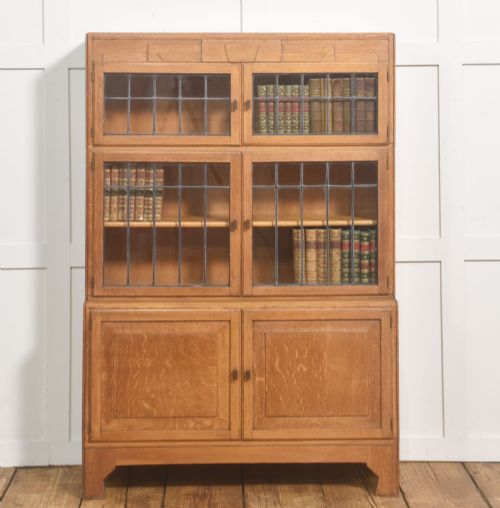
When you search for a leaded glass dresser, you encounter a robust variety of large storage furniture primarily spanning the Victorian, Edwardian, and Art Deco periods. These items encompass sideboards, display cabinets, bookcases, and kitchen cupboards that merge shelving with enclosed cabinet space.
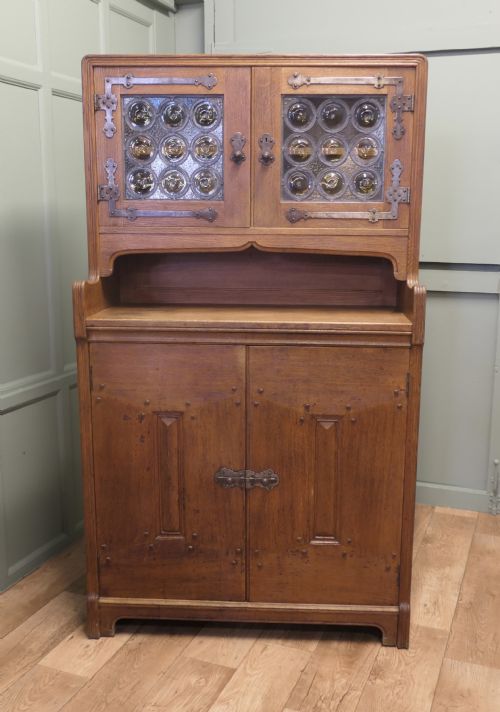
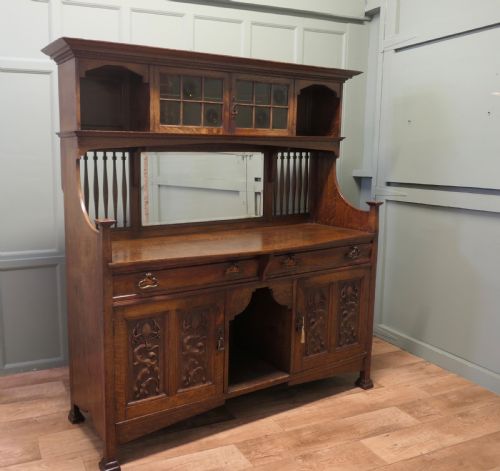
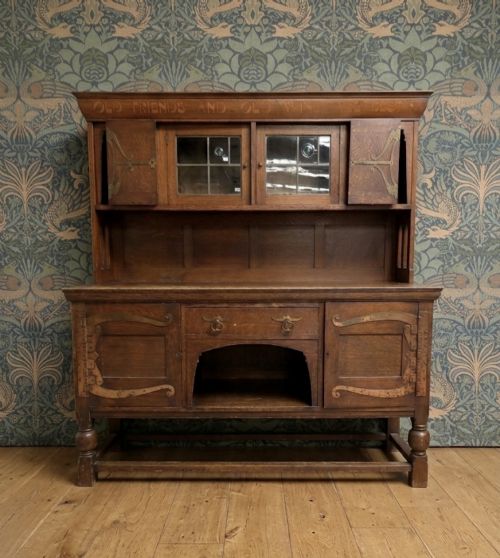
The version you are most likely to meet on this page is constructed from solid oak and dates from the Arts and Crafts era or the early twentieth century. Many examples integrate leaded or stained glass panels within the cabinet doors, revealing fitted shelving or mirrored backs behind the joinery.
Materials and construction methods
Makers predominantly utilised solid oak, supplemented by occasional instances of mahogany, framing individual panes of glass within strips of lead or metal. Brass hardware frequently secures the cabinet doors and drawers of these items.
Joinery techniques range from substantial carved ornamentation typical of Victorian Gothic Revival and Jacobean styles to the cleaner, linear emphasis characteristic of Arts and Crafts and Art Deco design.
Leaded Glass Dresser Retail Price Guide 2026
Typical asking prices for leaded glass dresser among the pieces listed under this phrase on Sellingantiques today, from the lower quarter to the upper quarter. They describe what is for sale here now, not the wider market.
Even the kitchen cupboards dressed for dinner.
Distinctions in craftsmanship
Quality in these pieces rests upon the integrity of the timber selection, the crispness of any carved detailing, and the structural soundness of the leaded glass assembly. Heavier, more substantial timber frames indicate a higher grade of manufacture.
Pieces bearing specific design attribution to notable firms or workshops display superior refinement in hardware execution and overall proportion compared to unbranded utilitarian equivalents.
Shapland and Petter·Liberty·Heal and Son·Liberty and Co.
The Leaded Glass Dresser Glossary
- Leaded glass
- Glass panes held together within a network of flexible lead cames. This technique allows for geometric or figurative patterns within cabinet doors.
- Arts and Crafts
- A design movement prioritising traditional craftsmanship and simple forms. It emerged in the late nineteenth century as a reaction against mass production.
- Jacobean Revival
- An architectural and furniture style popular during the nineteenth century. It reinterprets seventeenth-century English motifs including heavy carved oak panels.
- Sideboard
- A large piece of dining room furniture used for serving food and storing tableware. These items often incorporate upper display cabinets or mirrored backs.
Leaded Glass Dresser: Frequently Asked Questions
What is a leaded glass dresser?
A leaded glass dresser is a large storage unit, often combining a sideboard base with an upper glazed cabinet, featuring panes held by lead.
These pieces served to store and display dining ware in homes from the nineteenth and early twentieth centuries.
How do I date a leaded glass cabinet?
Dating relies on identifying stylistic markers such as heavy Victorian Gothic carving, clean Arts and Crafts lines, or geometric Art Deco forms.
Examining the underlying timber, hardware styles, and construction methods also helps narrow the period of manufacture.
Where were these pieces used?
They were principally utilised in dining rooms and living spaces to house ceramics, glassware, and books while keeping contents visible.
Kitchen cupboards and large bookcases fulfilled similar domestic storage functions in period interiors.
Are these pieces made of solid wood?
The listings on this page predominantly feature solid oak construction, alongside occasional examples rendered in mahogany.
Brass and iron fixtures typically accompany the primary timber framework.