



Lead Glass Wine Chalice
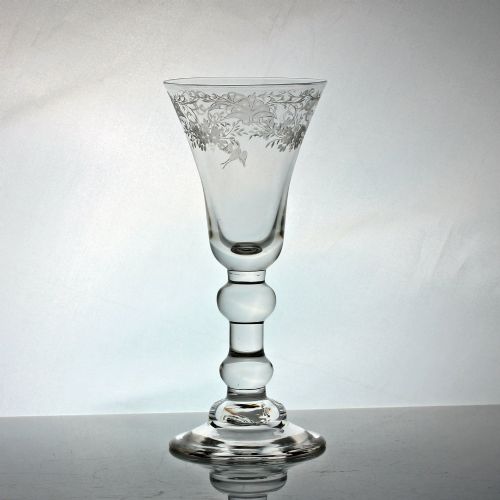
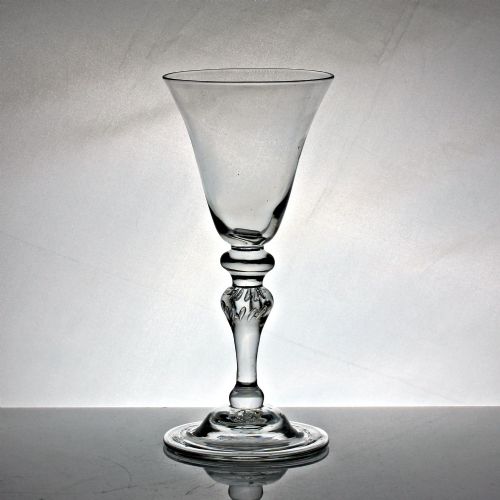
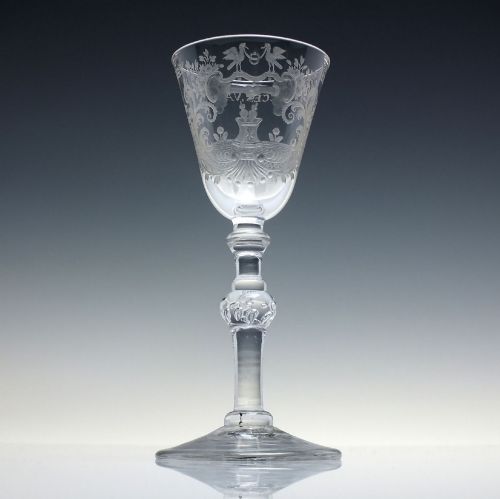
A lead glass wine chalice is a heavy drinking vessel carrying the crisp cut, twist stem or engraved detail of eighteenth and nineteenth century domestic drinking.
Lead Glass Wine Chalice
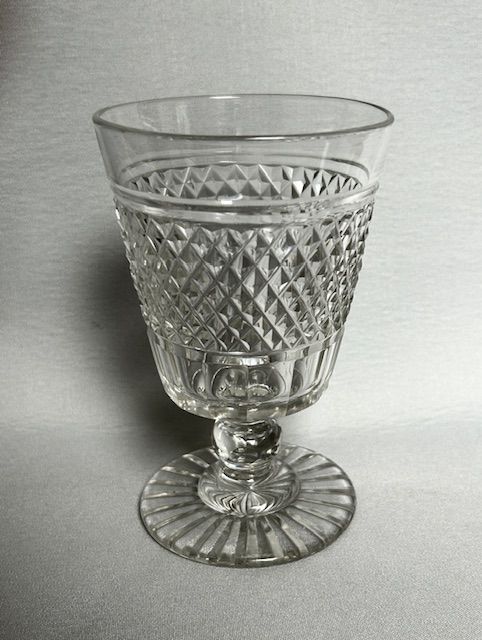
A lead glass wine chalice brings together the heavy metal content and deep ring of eighteenth and nineteenth century table glass. When buyers search for this phrase, they meet heavy drinking vessels, large rummers and tall goblets created across the Georgian and Regency periods. The forms range from plain stem wine glasses to wide-bowled rummers and marriage goblets.
The versions most frequently found on this page date from the eighteenth century into the early nineteenth century. Examples span balustroid English forms from mid century, plain stem engraved goblets from around seventeen fifty, and corkscrew twist stems from seventeen sixty. Makers shaped these vessels with ovoid bowls, wide bodies and thick feet suited for toast drinking and dining tables.
How they were made
Makers formed each lead glass wine chalice from molten lead glass or clear lead crystal, producing a heavy, dense metal capable of holding deep wheel engraving. Workers shaped bowls and stems by hand, sometimes incorporating two-ply twists or baluster formations into the supporting column. The resulting vessels combined substantial weight with brilliant clarity.
Decoration relied on skilled wheel engraving, hobnail cutting and enamel work applied directly to the surface of the clear or coloured glass. Craftsmen cut bucket rummers with geometric patterns and engraved monograms or floral motifs onto the bowls of eighteenth century goblets. Turquoise green glass variants show how workers introduced coloured glass alongside standard clear metal.
Lead Glass Wine Chalice Retail Price Guide 2026
Typical asking prices for lead glass wine chalice among the pieces listed under this phrase on Sellingantiques today, from the lower quarter to the upper quarter. They describe what is for sale here now, not the wider market.
Georgian toastmasters utilised heavy lead glass rummers so their enthusiastic slamming on the tavern table would not shatter the bowl.
What varies in quality
Quality in a lead glass wine chalice rests upon the crispness of the engraving and the balance of the metal form. Superior examples display deep, sharp wheel cuts and well-proportioned ovoid bowls that sit squarely on thick, heavy feet. The clarity of the lead crystal and the precision of a corkscrew twist stem separate the finer vessels from simpler production.
The sophistication of the decorative scheme dictates the standing of the piece within the period. Plain stem glasses rely entirely on the purity of the metal and the subtlety of an engraved monogram, whereas marriage goblets and hobnail cut rummers demand intricate hand labour across a larger surface. The presence of unusual colours like turquoise green further defines the distinction between standard and exceptional survivals.
The Lead Glass Wine Chalice Glossary
- Lead glass
- A heavy glass composition containing lead oxide, which increases brilliance, weight and the sonorous ring of the vessel. It forms the core material for eighteenth century drinking vessels.
- Baluster stem
- A thick, swelling stem form reminiscent of architectural pillars, frequently seen on mid eighteenth century drinking glasses. This shape added substantial weight to the lower portion of the chalice.
- Hobnail cut
- A raised geometric cutting pattern resembling the iron heads of rustic boot nails. This technique created rich tactile texture across the lower bowl of Regency rummers.
- Ovoid bowl
- An egg-shaped drinking vessel bowl common on Georgian goblets and wine glasses. The profile directed aromas upwards while maintaining structural strength.
- Two-ply twist stem
- A decorative stem enclosing spiral threads of opaque white or clear glass within the column. Workers created this effect by drawing and twisting canes of hot metal during formation.
Lead Glass Wine Chalice: Frequently Asked Questions
What is a lead glass wine chalice?
A lead glass wine chalice is a heavy drinking vessel produced during the Georgian and nineteenth century periods. These pieces include large rummers, marriage goblets and engraved wine glasses fashioned from dense lead crystal.
Craftsmen shaped these vessels by hand, often incorporating twist stems, cut facets and wheel-engraved monograms. They served as functional table glass for toasts and formal dining.
How do I date an antique wine glass?
Dating relies on observing the form of the bowl, the construction of the stem and the type of decorative cutting or engraving. Eighteenth century examples often feature plain stems, balustroid profiles or intricate air and glass twists.
Nineteenth century pieces tend towards heavier hobnail cutting, larger ovoid bowls and rummer shapes. Comparing the foot formation and metal weight against documented period styles provides further chronological clarity.
Were these chalices used for wine?
These vessels served for wine, punch, ale and spirits during formal meals and gatherings in the Georgian and Regency eras. Their generous bowl capacities suited the social drinking customs of the time.
Larger rummers and marriage goblets held substantial measures of liquor or celebratory brews. The dense lead glass construction ensured the vessels withstood frequent communal toasts.
How should I display my drinking glass?
Display these drinking vessels in stable cabinets away from direct sunlight and heavy foot traffic vibrations. Proper shelf space protects their heavy lead crystal feet and delicate engraved rims from accidental knocks.
Adequate spacing allows the cut facets and twist stems to catch natural light. Position them on level surfaces to distribute the weight of the heavy metal evenly.