



Lead Glass Spirit Decanters
Lead glass spirit decanters bring substance and sparkle to a sideboard, holding spirits in heavy-cut vessels shaped across two centuries.
Lead Glass Spirit Decanters
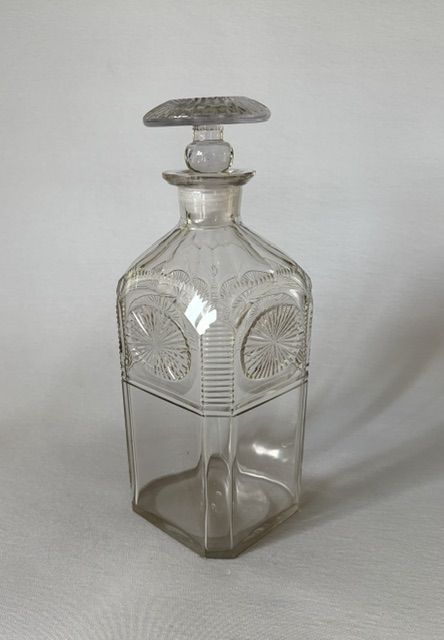
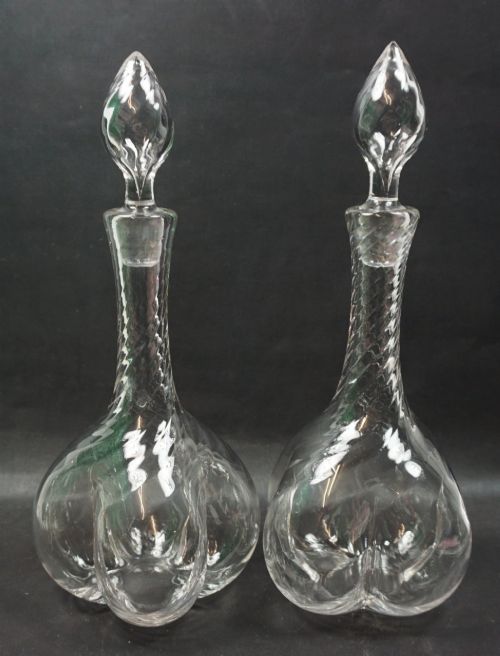
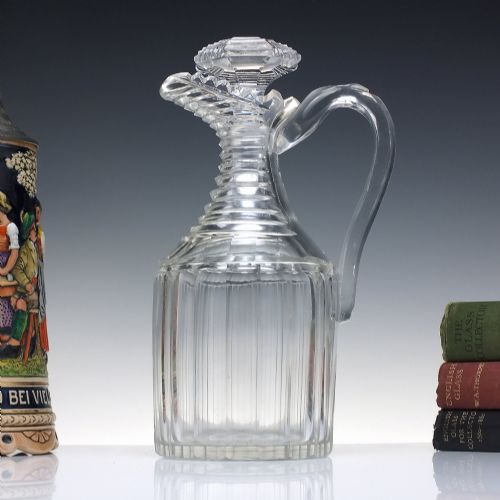
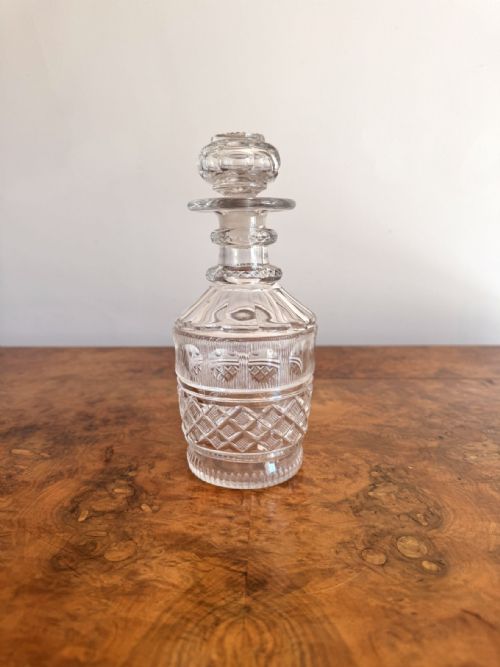
Lead glass spirit decanters are heavy table vessels designed for holding and pouring spirits like whisky, brandy, and Madeira. When buyers search for lead glass spirit decanters, they find serving vessels shaped from the eighteenth, nineteenth, and early twentieth centuries, spanning George III, Regency, Victorian, and Edwardian periods.
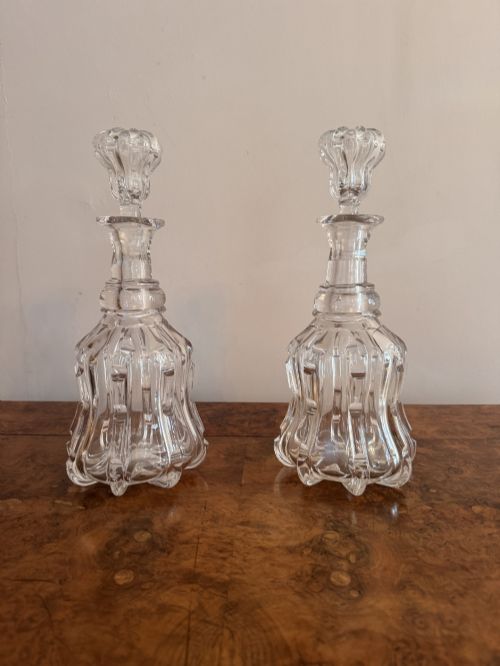
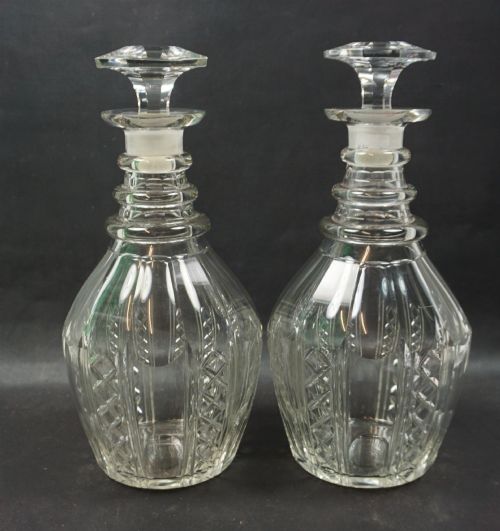
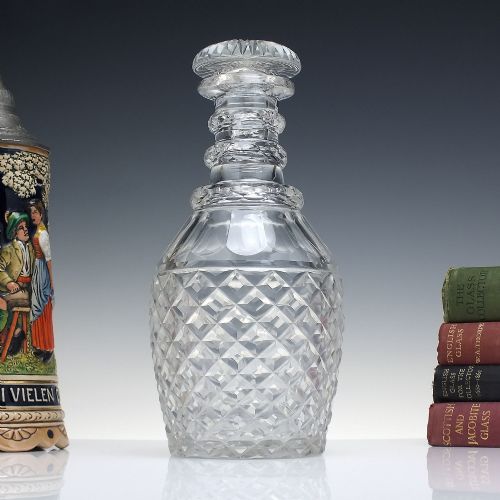
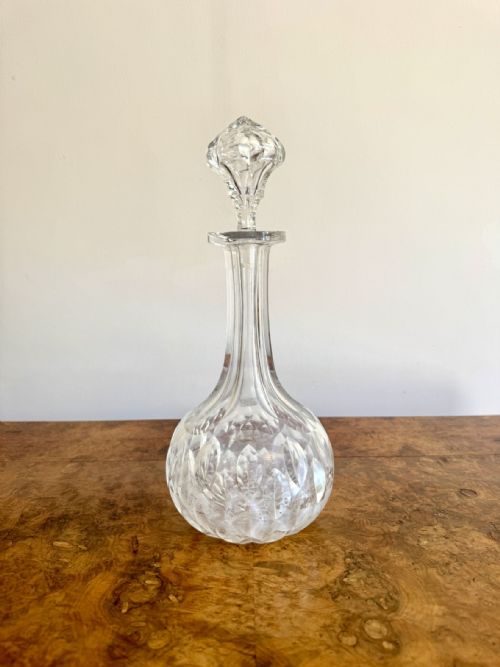
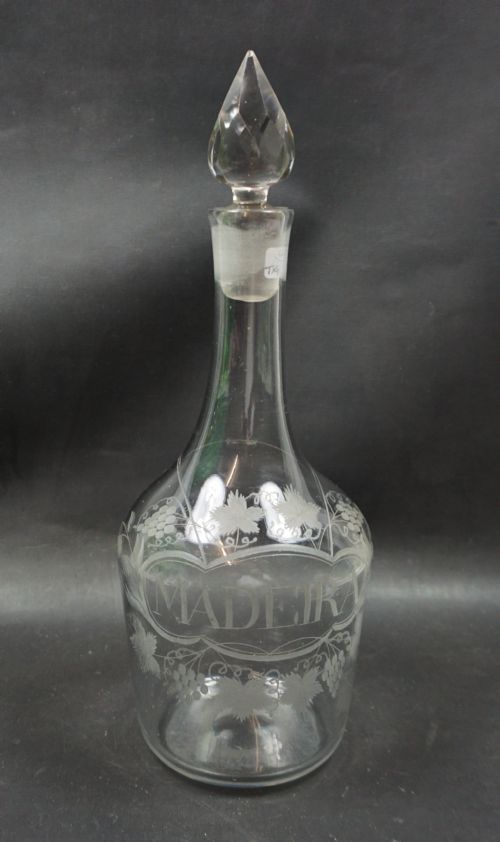
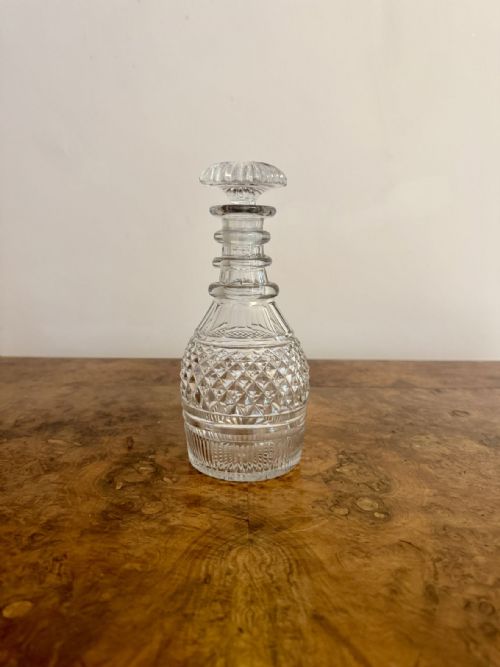
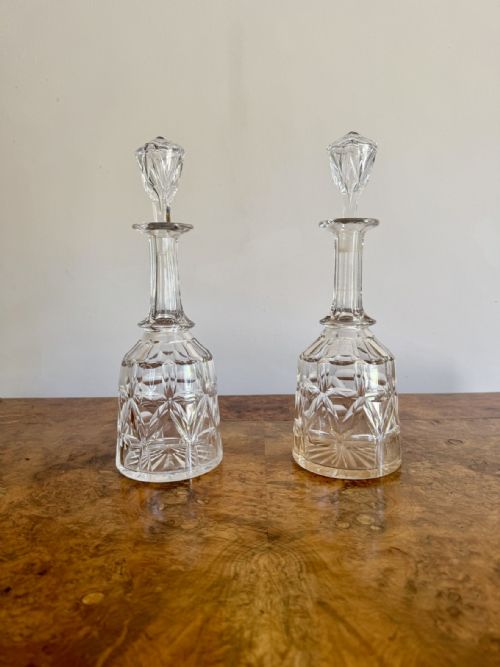
The most common examples on this page date from the Edwardian period and the Victorian era, alongside Georgian pieces such as shaft and globe, sugarloaf, and Prussian forms. These decanters appear as singles, pairs, and trios, often featuring engraved labels, prismatic rings, or pillar-cut bodies.
The spectrum of quality
Quality rests in the crispness of the cutting and the weight of the metal. Superior pieces display deep, sharp facets that catch the light cleanly, whereas lower tiers show softer, shallower grinding.
Proportion and clarity also separate grades. Finer examples maintain balanced walls and unclouded glass without grey striations, paired with matching stoppers that fit the neck correctly.
Lead Glass Spirit Decanters Retail Price Guide 2026
Typical asking prices for lead glass spirit decanters among the pieces listed under this phrase on Sellingantiques today, from the lower quarter to the upper quarter. They describe what is for sale here now, not the wider market.
Listings span the eighteenth, nineteenth, and early twentieth centuries, featuring lead crystal, cut glass, and clear glass in Georgian, Victorian, and Edwardian styles.
James Powell
The Lead Glass Spirit Decanters Glossary
- Lead crystal
- Glass containing a high proportion of lead oxide, which adds weight, softness for cutting, and high optical dispersion. This composition allows deep brilliance and light refraction.
- Prussian style
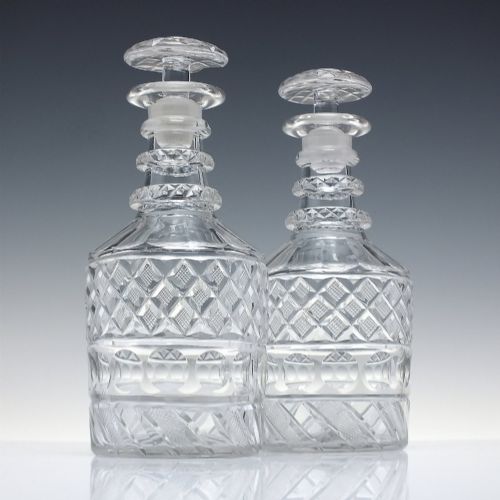
- A decanter shape featuring concentric horizontal neck rings and a cylindrical body. This form originated in the late eighteenth century and persisted through the Regency period.
- Shaft and globe
- An early decanter form characterised by a long, tapering neck above a rounded globular body. Pieces of this shape frequently date from the eighteenth century.
- Pillar cut
- A decorative cutting technique creating broad, vertical flutes along the body of the vessel. It produces strong vertical lines that reflect light across the room.
- Optically blown
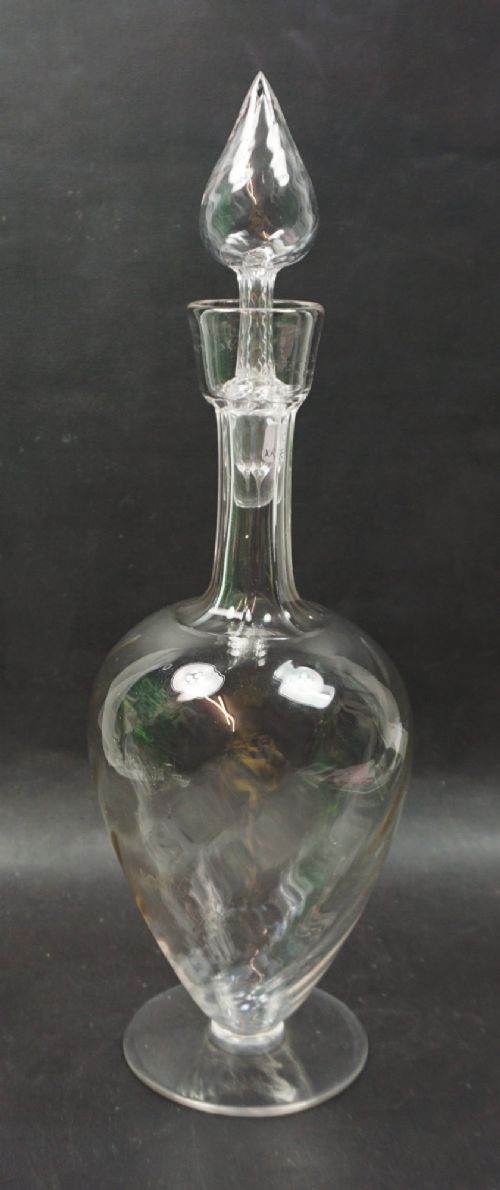
- A method where glass is blown into a ribbed or patterned mould to create a subtle optic effect in the walls before final shaping. This technique leaves internal ripples visible in the clear metal.
Lead Glass Spirit Decanters: Frequently Asked Questions
What is a ship's decanter?
A ship's decanter is a vessel with a wide, heavy base that prevented it from tipping over during motion at sea. The low centre of gravity made it practical on board sailing vessels.
These pieces retain the same traditional profile, combining stability with decorative cut glass patterns suitable for formal dining.
How do neck rings help date decanters?
Neck rings, sometimes called hoops, evolved in number and profile across different decades. Georgian and Regency makers often applied three distinct rings to the neck of Prussian style decanters.
Later Victorian and Edwardian examples modified these proportions, helping distinguish eighteenth-century forms from nineteenth-century productions.
Can I use antique decanters for daily serving?
These decanters were built for holding and pouring spirits at the table, using durable lead glass and heavy bases. They function effectively for serving modern spirits.
Hand washing in warm water keeps the material clear, avoiding thermal shock and protecting the cut surfaces.
Why are some decanters engraved with names?
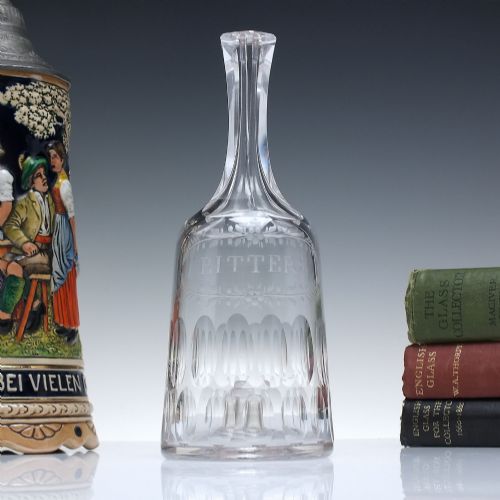
Engraved labels such as 'Brandy', 'Whisky', or 'Madeira' identified the specific contents before paper labels became common. Artisans cut these titles directly into the glass using wheels.
Such lettering indicates the intended use of the vessel and adds specific historical context to the piece.