
Lead Glass Drinking Glass
A lead glass drinking glass carries the weight of centuries in its resonant ring and heavy handle.
Lead Glass Drinking Glass
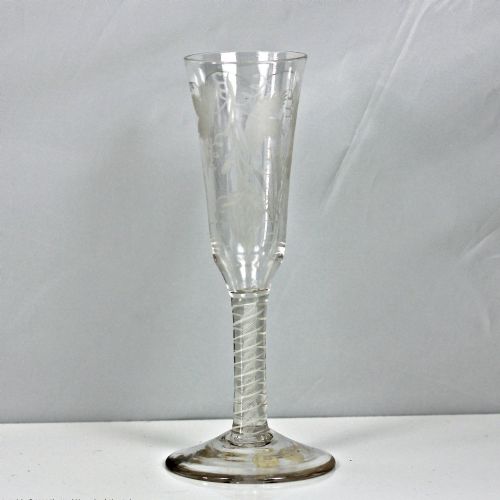
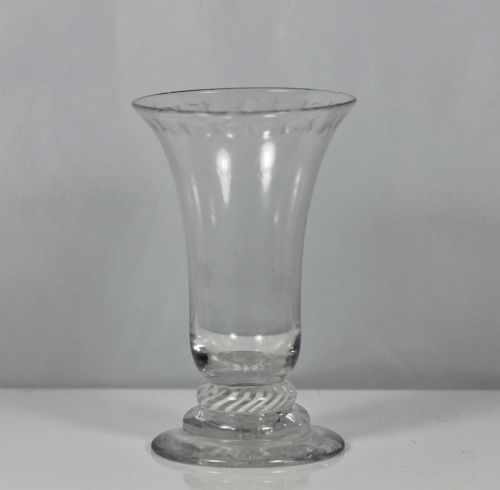
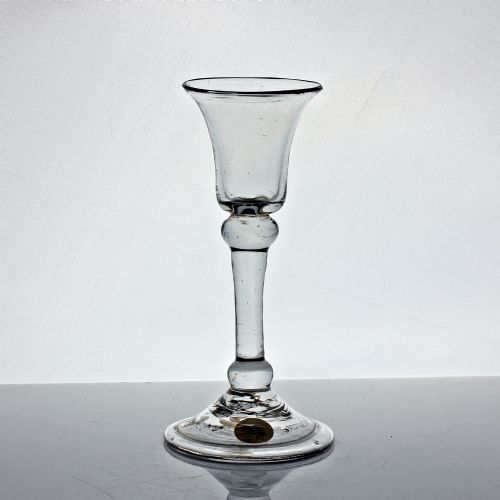
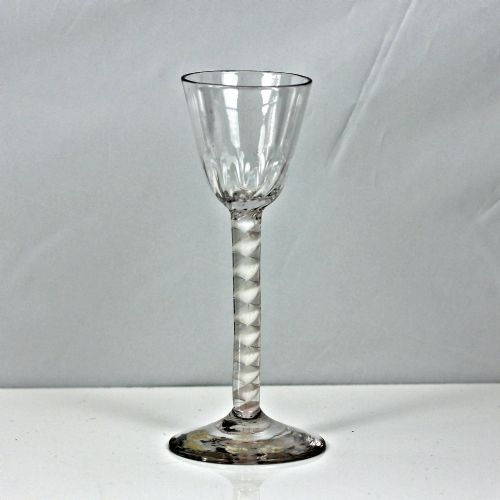
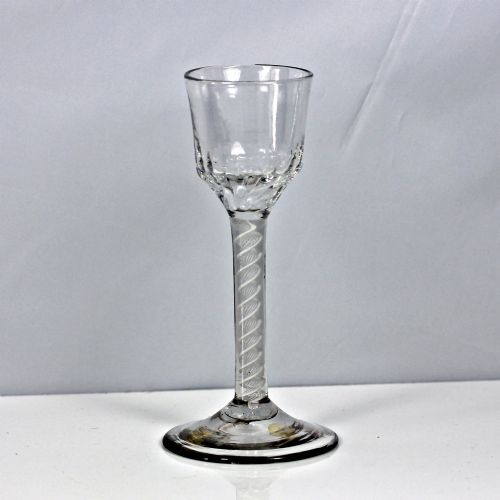
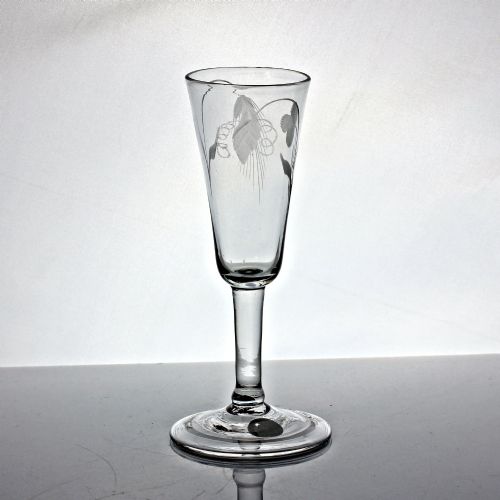
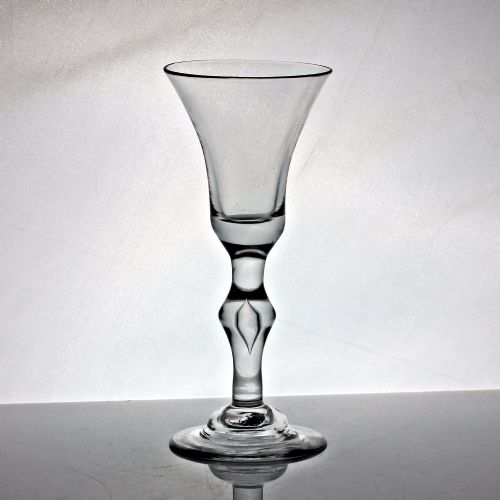
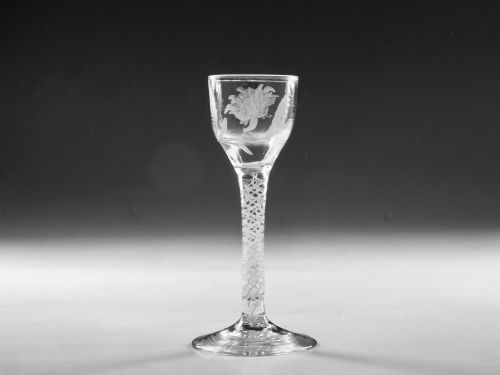
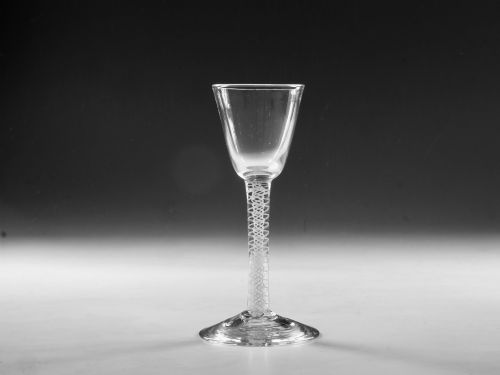
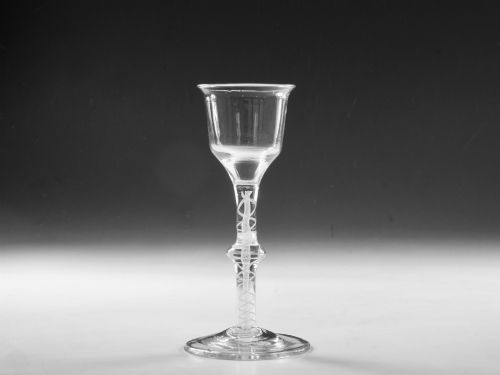
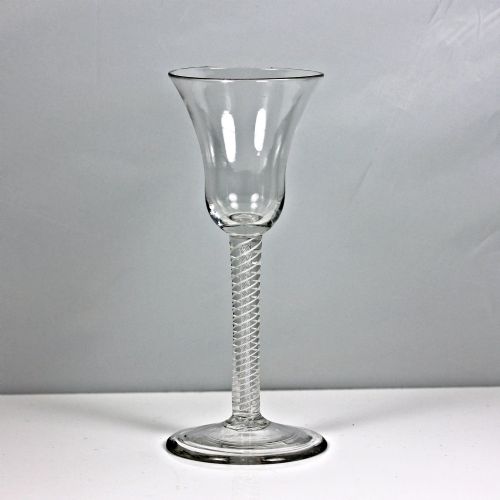
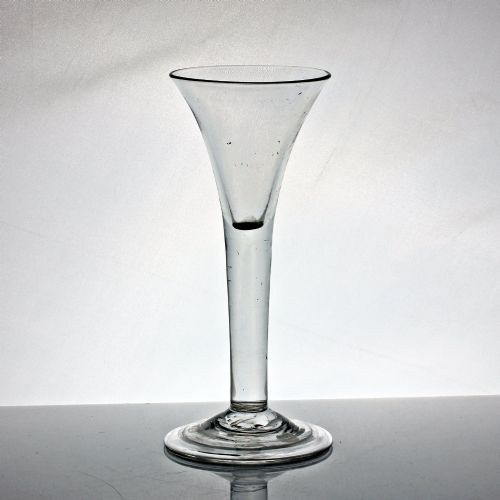
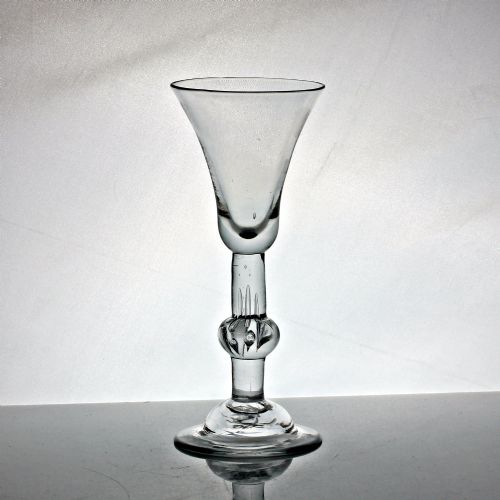
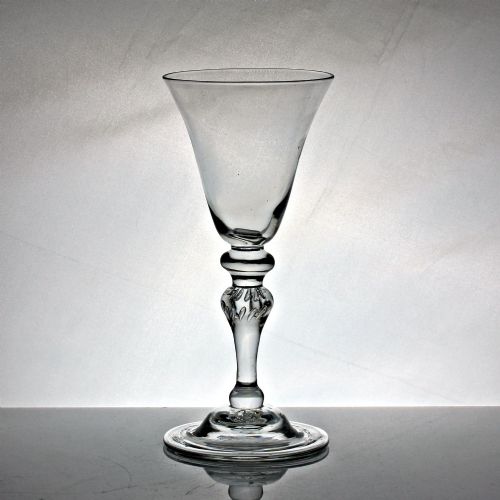
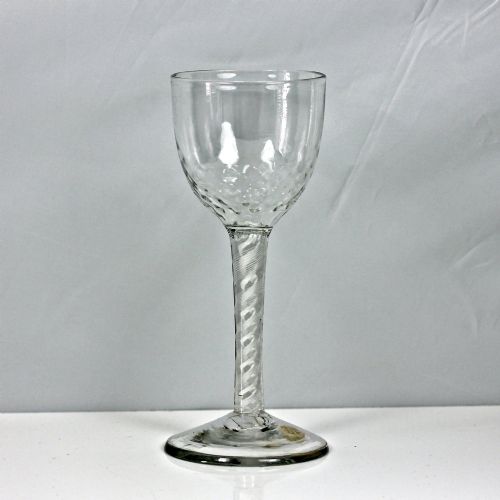
When you search for a lead glass drinking glass, you encounter an array of vessels spanning the eighteenth and nineteenth centuries alongside later twentieth-century examples. The selection on this page centres heavily on Georgian forms, encompassing delicate dram glasses, ale glasses, rummers and wine vessels featuring distinctive stems.
Early specimens from the mid-eighteenth century demonstrate traditional manufacturing techniques with folded feet and wrythen or balustroid stems. Alongside these drinking vessels, the listings include specialised forms such as jelly glasses, bonnet glasses and sweetmeat glasses that reflect period dining habits.
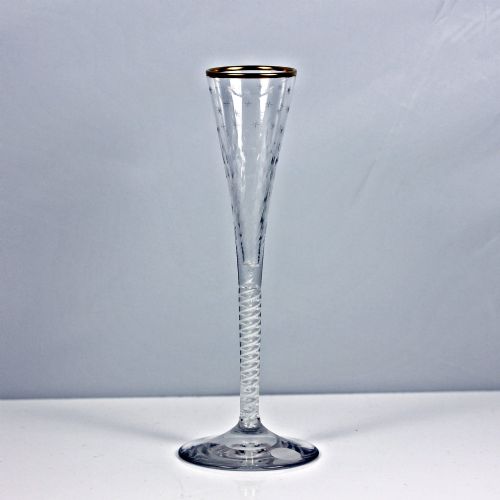
Later pieces progress into Victorian and Edwardian periods, introducing heavy rummers, acid-etched tumblers and tall wine flutes. These pieces maintain the fundamental composition of clear lead glass while shifting toward faceted stems and cut decoration characteristic of the nineteenth century.
Distinctions in quality
Quality in these drinking glasses rests upon the clarity of the metal and the dexterity displayed in forming the stem and bowl. Superior examples exhibit minimal optical distortion within the glass body and precise execution of air or opaque twists.
The refinement of the engraving and the proportion between the bowl, stem and foot determine the distinction between standard utilitarian vessels and masterworks of the glassmaker's art.
One remarkably specific rummer from the Georgian era arrives engraved with the rebellious toast 'Women & Wine'.
The Lead Glass Drinking Glass Glossary
- Air twist
- A decorative stem containing elongated spiral bubbles formed by drawing air out of hot glass before shaping. This technique creates a delicate internal pattern visible through the transparent metal.
- Opaque twist
- A stem featuring white or coloured enamel threads enclosed within clear glass. These threads are twisted into single or double series networks during manufacture.
- Rummer
- A large, heavy drinking glass used for beer, ale or wine during the Georgian and Victorian eras. They typically sit on a short stem with a wide, stable foot.
- Firing glass
- A small, thick-based glass designed to be thumped onto a tavern table without breaking. The heavy foot absorbs the impact during toasts.
- Folded foot
- A base edge doubled over underneath to provide extra strength and weight. This feature appears frequently on mid-eighteenth-century drinking vessels.
- Wrythen
- A spiral moulded pattern running through the body of the glass bowl. It creates a subtle optical ripple across the surface.
Lead Glass Drinking Glass: Frequently Asked Questions
How do I identify a Georgian wine glass?
Look for the characteristics of the stem and foot, such as air twists, opaque twists or heavy baluster forms combined with folded feet. The metal often displays a darker tone and tactile weight unique to eighteenth-century formulations.
Examine the bowl shape, which typically follows forms like pan top, ogee or flared bucket styles common to the period before mass production began.
What is an air twist stem?
An air twist is formed when tiny bubbles trapped in the molten glass are stretched into spiral threads within the stem. This intricate technique requires immense skill from the glassblower.
Under magnification, the internal channels appear as smooth, continuous threads of air running through the clear metal of the stem.
Why are some rummers so heavy?
Rummers were designed for everyday tavern and domestic use where durability mattered alongside capacity. The substantial lead content and thick walls prevented easy breakage during vigorous toasts.
This heft also provided stability for larger bowls intended to hold ale, beer or wine in quantity.
How do I care for antique glass?
Wash antique pieces by hand in warm water using a mild detergent, supporting the base rather than the stem. Avoid sudden temperature changes to prevent thermal shock and cracking.
Store them upright on a stable surface away from the edge of cupboards to protect the fragile rims and historical foot rims.