


Lavaliere Pendant Necklace
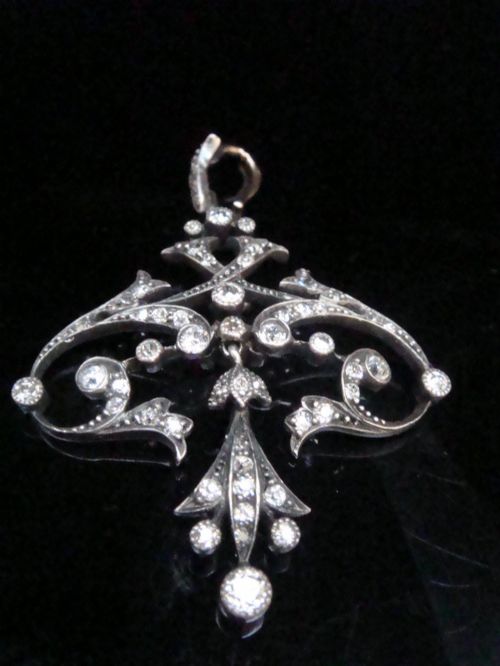
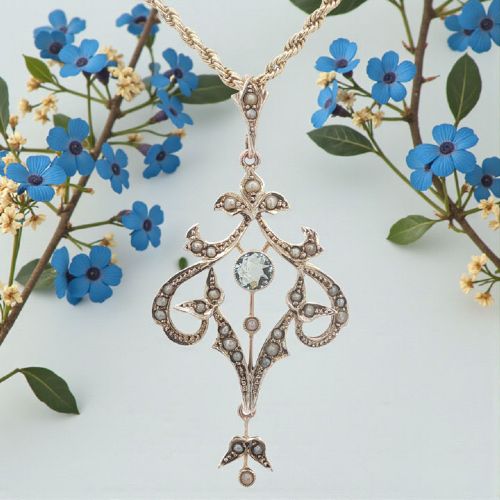
A lavaliere pendant necklace hangs with a characteristic central drop, offering the delicate swing typical of early twentieth-century jewellery.
Lavaliere Pendant Necklace
A lavaliere pendant necklace combines a suspended drop element with delicate chainwork, appearing frequently in Edwardian and Victorian designs.
Makers constructed these pieces across distinct periods including the late nineteenth century, the Edwardian era, and the Art Deco years.
Victorian and Edwardian examples dominate the selection, often featuring central gemstone drops accompanied by seed pearls.
How they were made
Goldsmiths utilised various grades of gold alongside platinum and silver to form the structure of each lavaliere pendant necklace.
Set stones range from diamonds and seed pearls to coloured gemstones like amethyst, aquamarine, garnet, and opal.
Craftsmen incorporated specialised techniques including plique-à-jour enamel and detailed stone settings within original boxes.
Several surviving pieces still rest safely inside their original fitted cardboard boxes, having avoided the dust of a century.
What varies in quality
The choice of precious metals and the selection of gemstones dictate the baseline value and refinement of each lavaliere pendant necklace.
Intricate metalwork, such as fine platinum detailing or complex gold swags, separates standard workshop output from exceptional examples.
The survival of original fitted boxes and matching original chains adds notable provenance and completeness to specific pieces.
Eduard Foehr
The Lavaliere Pendant Necklace Glossary
- Lavaliere
- A pendant necklace featuring a primary gemstone drop suspended below the main setting. This style gained popularity during the late nineteenth and early twentieth centuries.
- Seed pearl
- A very small, naturally formed saltwater pearl used extensively in clusters and borders. These tiny pearls characterise Edwardian and Victorian ornamentation.
- Plique-à-jour
- An enamelling technique where enamel is applied without a backing, creating a translucent stained-glass effect. It appears frequently in Art Nouveau jewellery.
Lavaliere Pendant Necklace: Frequently Asked Questions
What is a lavaliere pendant necklace?
A lavaliere pendant necklace is a specific jewellery form characterised by a suspended drop hanging below the main neckline setting. These pieces gained immense popularity during the Victorian and Edwardian eras.
Craftsmen often designed them with swinging gemstone drops and delicate chain assemblies. They remain sought after for their fluid movement and distinct period charm.
How do I date a lavaliere necklace?
Dating relies heavily on the materials used, the metal hallmarks, and the prevailing artistic style of the piece. Victorian examples often feature rich yellow gold and garnet or opal stones.
Edwardian pieces typically showcase platinum or white gold combined with diamonds and seed pearls. Art Nouveau versions display characteristic flowing lines and enamelling techniques like plique-à-jour.
Can I wear these necklaces daily?
Wearing antique jewellery requires care due to the delicate nature of fine settings and tiny seed pearls. Many collectors reserve these pieces for special occasions to protect fragile chains and antique clasps.
Storing them flat in their original fitted boxes helps prevent accidental bending of the drop elements. Gentle cleaning without harsh chemicals preserves the historical metals and stones.
What gemstones appear on these necklaces?
Common gemstones include diamonds, seed pearls, amethysts, aquamarines, garnets, opals, and sapphires. Jewellers frequently paired central coloured stones with intricate borders of smaller seed pearls.
Platinum and various carat golds served as the primary mountings for these varied stones. Each combination reflects the aesthetic preferences of its specific decade of manufacture.