
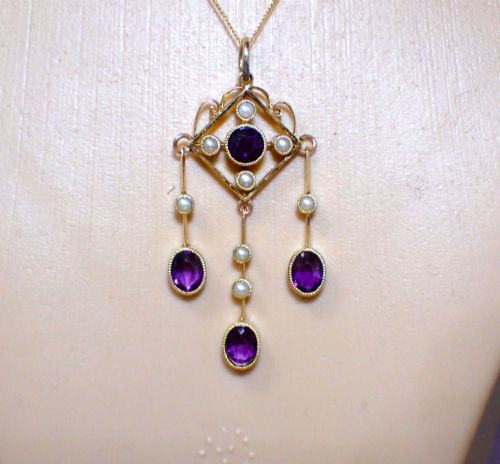


Pearl and Amethyst Drops
Pearl and amethyst drops combine purple quartz with lustrous pearls in pendants, earrings, and lavaliers designed to hang with movement.
Pearl and Amethyst Drops
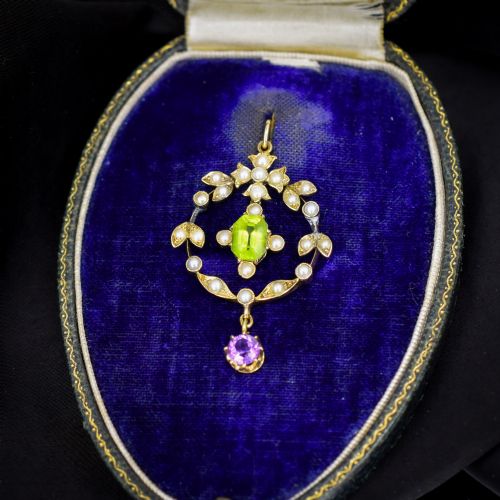
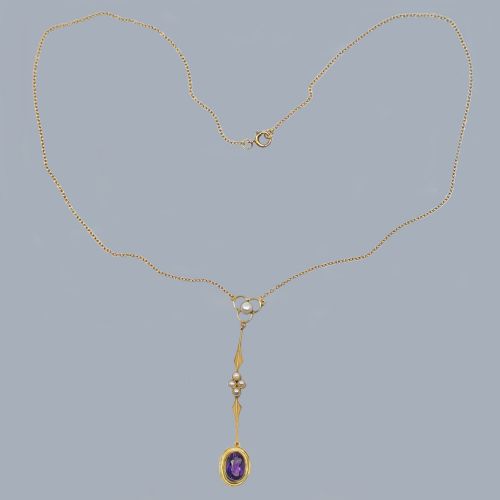
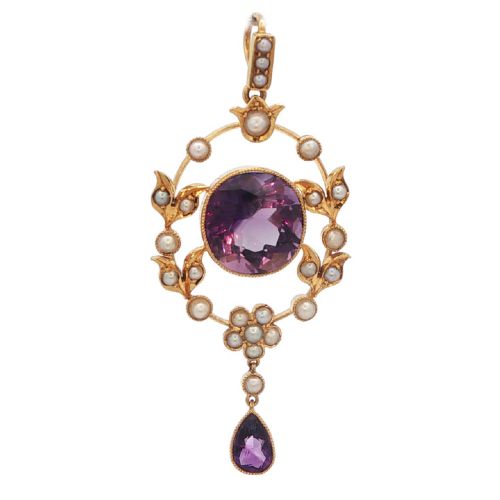
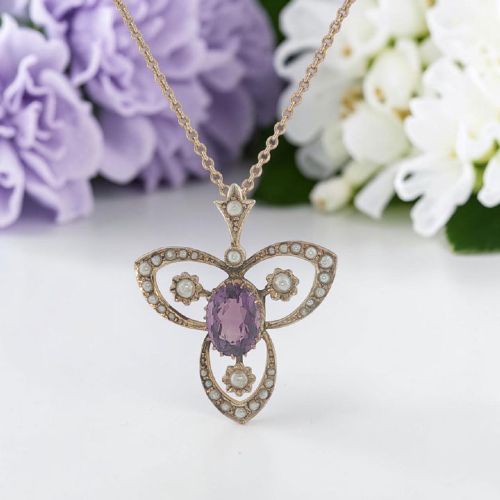
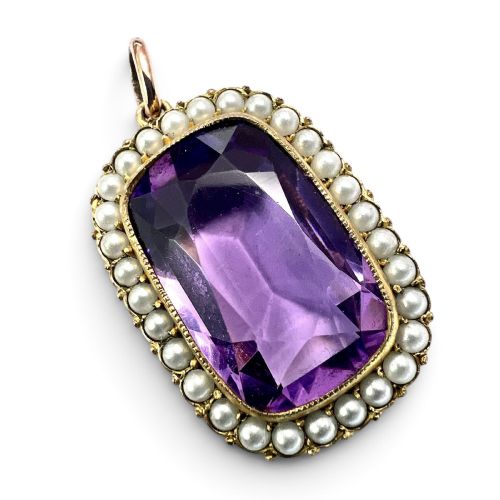
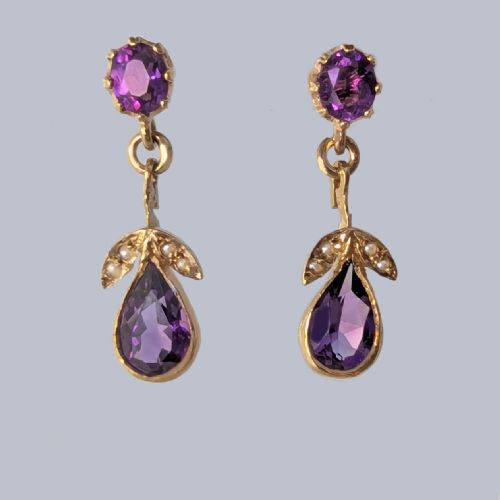
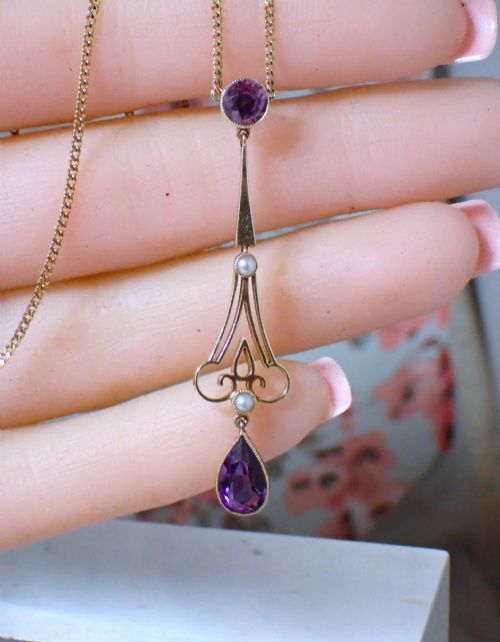
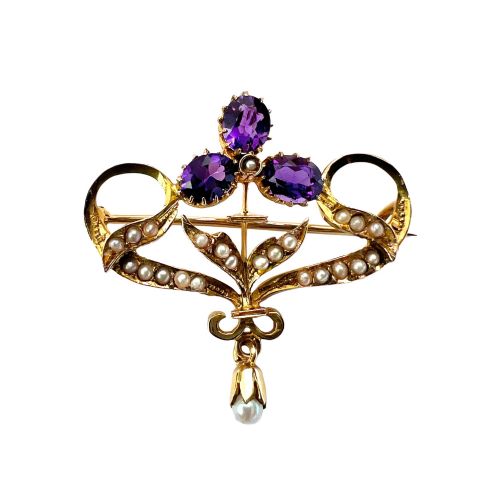
Pearl and amethyst drops encompass a range of jewellery forms designed to suspend faceted purple stones alongside pearls from necklaces, pendants, and earrings. These pieces emerge predominantly in Edwardian and Victorian contexts, with distinct iterations appearing through the early twentieth century.
The selection centres on pendants, lavaliers, and drop earrings configured in gold or silver settings. Buyers frequently encounter Edwardian and Victorian designs that integrate seed pearls with deep purple amethysts in foliate or geometric arrangements.
Art Nouveau and Arts and Crafts examples also appear, showcasing organic motifs or plique-a-jour enamel alongside the central gems. Simpler forms include teardrop earrings and halo pendants suited to everyday wear or evening attire.
Materials and construction methods
Goldsmiths of the nineteenth and twentieth centuries set amethysts and pearls into nine-carat, fifteen-carat, and occasionally yellow or white gold, alongside silver and silver gilt. Stones are typically faceted to catch the light, while pearls are chosen for their round or seed configurations.
Construction techniques involve delicate wirework, claw settings, and bezel mounts that secure both the central amethyst and the dangling pearl drops. Art Nouveau and Arts and Crafts pieces incorporate specialist enamel work like plique-a-jour to complement the metal and gemstone components.
One clever Victorian maker tucked a tiny tourmaline right beside the amethyst to catch the light.
Distinguishing quality in drops
Quality rests upon the saturation and clarity of the amethyst, the matching and lustre of the pearls, and the delicacy of the metalwork. Superior examples exhibit deep, even colour in the quartz and securely mounted pearls that retain their nacre.
The sophistication of the design dictates the upper tier, where intricate Art Nouveau whiplash lines or balanced Edwardian lavalier construction elevate the piece above simpler stamped mounts.
S. Blanckensee and Son·Hamilton and Co·Eduard Loss
The Pearl and Amethyst Drops Glossary
- Lavalier
- A pendant featuring a dangling stone or drop suspended below the main body, popular during the Edwardian period.
- Seed pearl
- A very small, naturally formed or cultured pearl, often drilled and strung in clusters or used to accent metalwork.
- Plique-a-jour
- An enamelling technique where enamel is applied within a cellular framework without a backing, resembling stained glass.
- Foliate
- Ornamentation modelled on leaves, vines, or foliage, frequently seen in Victorian and Edwardian settings.
Pearl and Amethyst Drops: Frequently Asked Questions
What periods do these drops come from?
The listings span the Victorian, Edwardian, and Art Nouveau eras, stretching from the late nineteenth century into the mid twentieth century. Edwardian and Victorian pieces dominate the selection.
Later items include mid-century revivals that mirror earlier aesthetic traditions. Each era brings distinct mounting styles and gold purities to the drops.
How do I wear a lavalier pendant?
Lavalier pendants hang from fine chains designed to rest centrally on the collarbone or chest. Their articulated drops move freely as the wearer walks.
They pair well with open necklines that allow the cascading stones and pearls to remain visible. Shorter or longer chains can adjust the drop to suit different garments.
Are these pieces made of solid gold?
Many examples utilise nine-carat or fifteen-carat yellow gold, while others employ silver or silver gilt. Hallmarks and metal tests indicate the specific alloy composition used by the maker.
Gold settings provide the structural strength needed for delicate claw and bezel mounts. Silver is frequently found in Arts and Crafts and Art Nouveau specimens.
How do I distinguish Edwardian from Victorian styles?
Victorian designs tend to feature heavier gold work, closed backs, and robust foliate or halo motifs. Amethysts in these pieces are often paired with rich yellow gold settings.
Edwardian pieces lean towards lighter, airier platinum or high-karat gold wirework, incorporating seed pearls into delicate garlands and lavaliers. Art Nouveau variants introduce flowing, organic lines and enamel.