







Late Victorian River Scene
A late victorian river scene brings the quiet grace of nineteenth-century waterways into a room through painterly observation.
Late Victorian River Scene
A late victorian river scene captures British and Irish waterways during the nineteenth century and the turn of the twentieth century. These works depict rural streams, valley landscapes, and urban riversides through traditional painting methods.
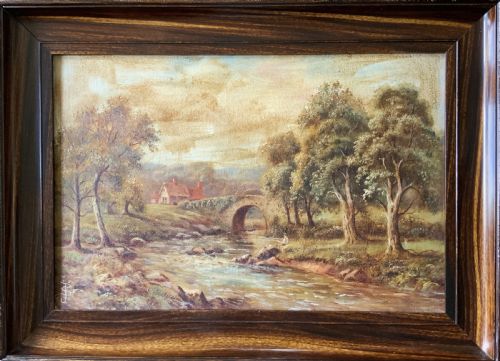
The pieces appearing on this page take the form of framed oil paintings on canvas or wood panel alongside delicate waterworks on paper. Artists record specific locations ranging from the Thames Valley to Scottish highlands and Devonshire streams.
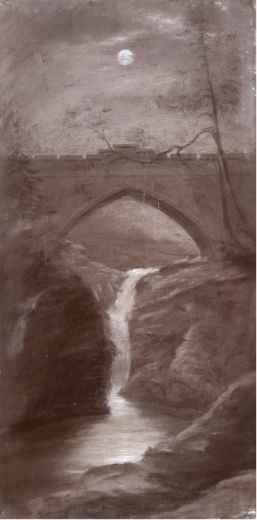
Subjects frequently include figures by the water, fishermen on locks, cattle watering, and boats navigating tranquil currents. The visual language spans naturalism, realism, and atmospheric nocturne styles characteristic of the period.
How they were made
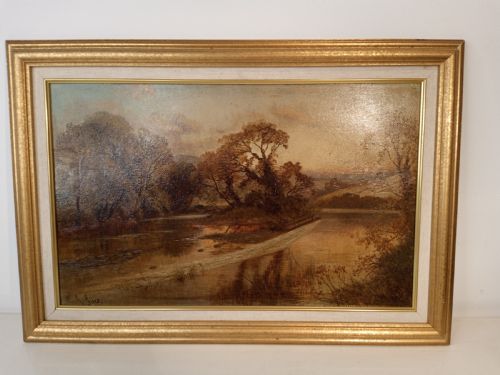
Painters utilised oil paint applied to stretched canvas, prepared wood panels, or heavy paper supports. Brushes built up pigment in layered strokes that render the shifting light upon water and autumn woodlands.
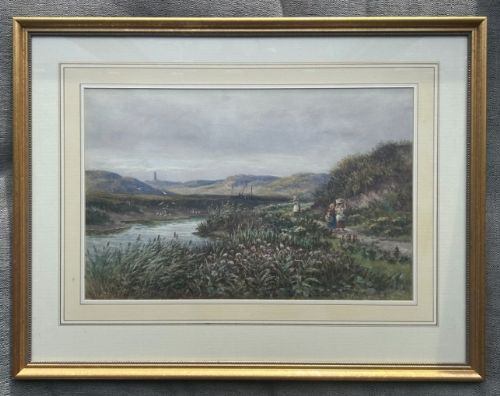
Watercolour works employ transparent washes on paper, often supported by charcoal or ink underdrawing to define the riverbanks and architectural details. Finished compositions typically sit within original gilt frames that complement the palette.
The documented locations stretch from Windsor Castle on the Thames to the Scottish highlands of Braemar.
What varies in quality
Quality rests upon the handling of light and the atmospheric depth achieved within the composition. A superior hand captures the subtle reflection of the sky upon water and the natural movement of foliage.
The strength of the provenance and the clarity of the artist signature distinguish regional works from major academic outputs. Preservation of the original canvas and the integrity of the paint surface dictate the standing of each piece.
Alfred Young Nutt·Frederick Marriott·Sydney Yates Johnson·Arthur Herbert Rigg·Colin H Greenwood·Alfred Grey·William Manners·Thomas Pyne·John Syer·Carleton Grant
The Late Victorian River Scene Glossary
- Oil on canvas
- A painting medium where pigment suspended in drying oil is applied to a woven fabric support. This technique allows for rich texture and deep colour saturation.
- Watercolour
- A painting method where water-soluble pigments are used on paper. It produces translucent washes that capture bright atmospheric conditions.
- Wood panel
- A rigid wooden support used by painters as an alternative to canvas. It offers a smooth surface suited to detailed brushwork.
- Gilt frame
- A decorative wooden frame coated with gold leaf or metallic paint. These frames enhance the visual weight and period authenticity of the artwork.
- Victorian naturalism
- An artistic approach focusing on the accurate depiction of the natural world. It prioritises truthful observation of landscape and light over romantic idealisation.
Late Victorian River Scene: Frequently Asked Questions
What periods do these river scenes cover?
The works span the nineteenth century and the early twentieth century, encompassing the Victorian era and the Edwardian transition.
Most examples date from the eighteen-eighties through to nineteen hundred, reflecting late-century landscape traditions.
How should I hang an oil painting?
Hang paintings away from direct sunlight and steady moisture to protect the canvas and the pigments.
Ensure the wall fixings match the weight of the piece and its original period frame.
Are these watercolours framed?
Many works on paper arrive protected behind glass within period frames that suit the artwork.
Glazing shields the delicate paper and watercolour pigments from dust and environmental damage.
How do I identify a watercolour from an oil painting?
Watercolours feature transparent pigments on paper with visible grain beneath the wash.
Oils present a textured surface of heavier paint applied to canvas or wood panel.