
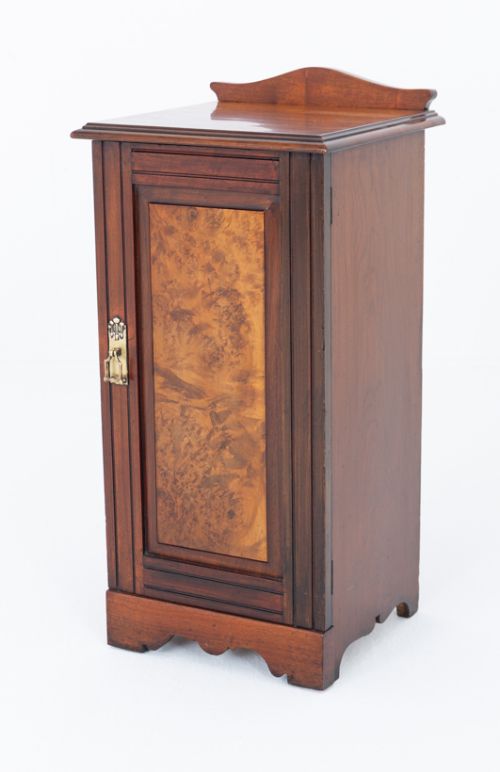


Late Victorian Pot Cupboard
A late victorian pot cupboard brings compact utility and rich timber grain to the bedside, offering hidden storage with distinct period character.
Late Victorian Pot Cupboard
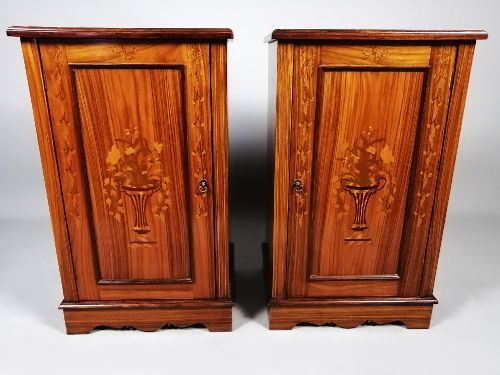
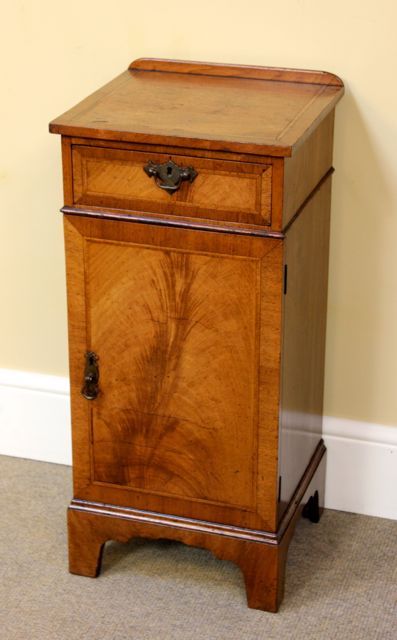
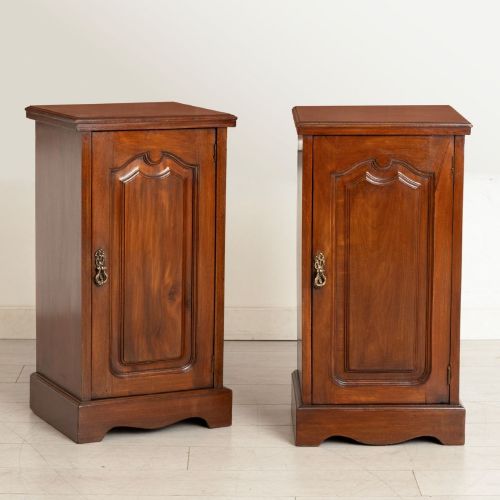
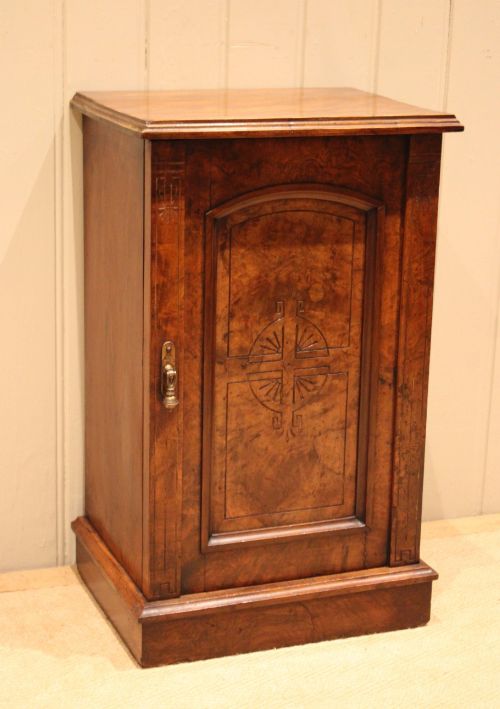
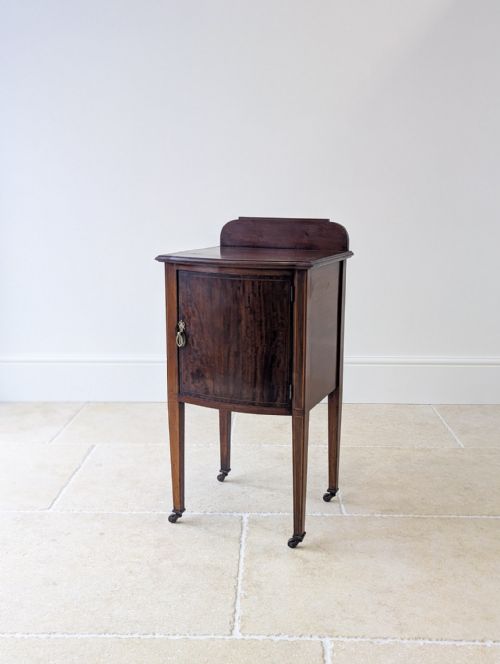
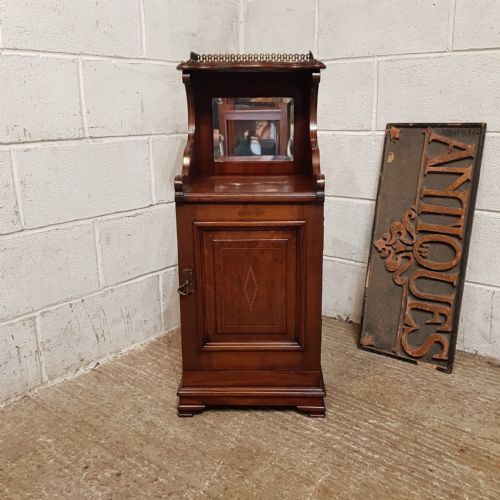
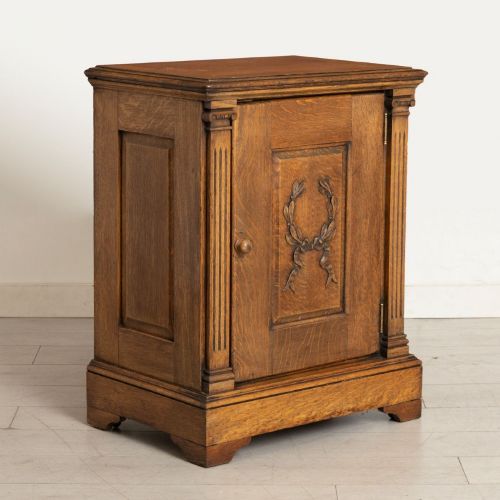
A late victorian pot cupboard functions as a bedside cabinet or pedestal night locker, designed to house a chamber pot behind a single panelled door alongside an interior shelf.
Most examples found here date from the final decades of the nineteenth century, emerging in forms ranging from simple freestanding carcases to paired bedroom pedestals.
These pieces serve modern interiors equally well as compact lamp tables or small storage cabinets, retaining their original domestic purpose in a contemporary bedroom.
Materials and construction
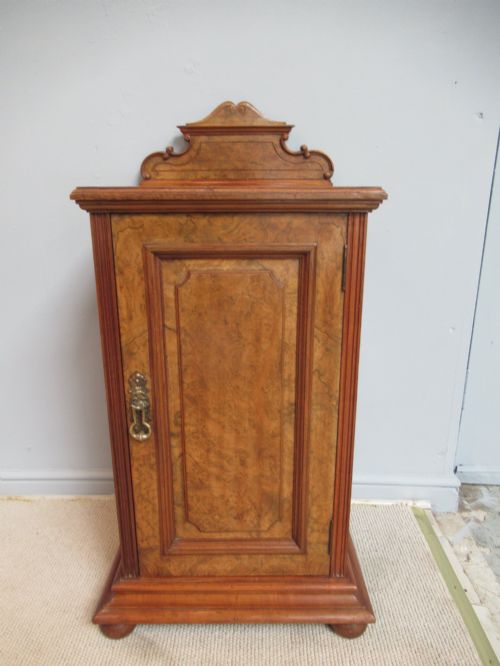
Cabinet makers utilised a robust carcase construction of solid pine or oak, veneered with figured timbers such as mahogany, walnut, and burr walnut.
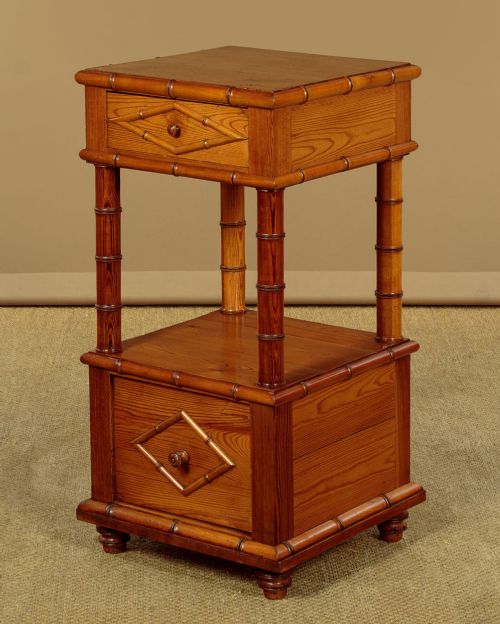
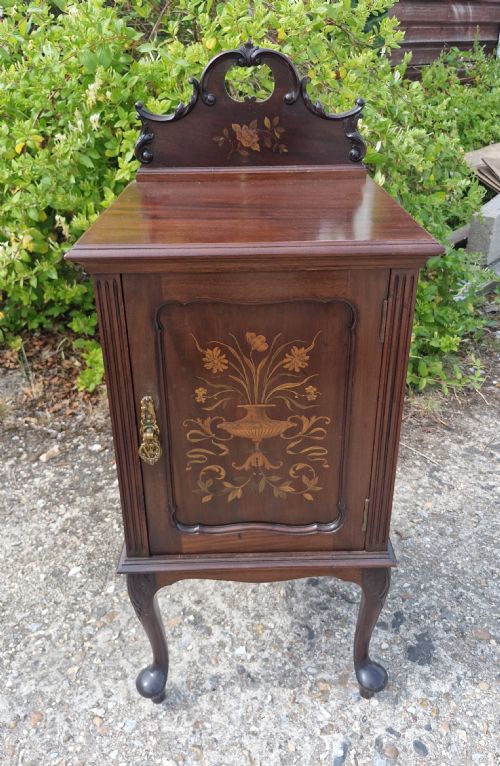
Surface decoration frequently involved intricate marquetry inlay, contrasting exotic hardwoods, or simulated finishes like faux bamboo, complemented by turned brass handles or ceramic pulls.
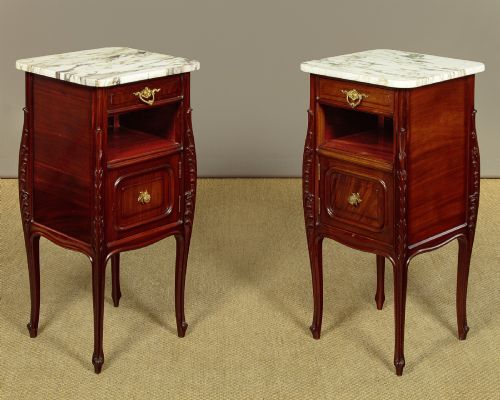
Selected variants feature inset marble tops designed to provide a durable, wipe-clean surface for washing pitchers and bedroom paraphernalia.
Some nineteenth-century sleepers trusted their morning comfort entirely to a locked wooden box disguised as a very tidy side table.
What separates the finest examples
Quality rests upon the selection of timber figures, where book-matched burr veneers and finely figured mahogany distinguish superior workshops from standard utility pieces.
Joinery execution defines the longevity of the carcase, evidenced by tight dovetail drawers, well-fitted door panels, and original brass hardware that remains sturdy through decades of use.
Heals·Trapnell & Gane
The Late Victorian Pot Cupboard Glossary
- Pot cupboard
- A small bedside cabinet originally constructed to enclose a chamber pot. This form evolved into the standard bedside locker by the close of the nineteenth century.
- Marquetry
- Decorative patterns formed by fitting together thin slices of wood veneer of different colours and grains. Artisans applied this technique to door panels and top surfaces.
- Faux bamboo
- Wood turned and painted to imitate natural bamboo stems. This decorative style gained popularity during the aesthetic movement.
- Carcase
- The structural framework or body of a piece of furniture before drawers, doors, and decorative veneers are added. It provides the foundational strength for the cabinet.
Late Victorian Pot Cupboard: Frequently Asked Questions
What is a pot cupboard used for today?
These cabinets serve admirably as bedside tables, providing a discreet interior compartment for books, charging cables, and small items while holding a reading lamp on top.
Their modest footprint allows them to fit easily into narrow spaces as hallway stands or occasional living room side tables.
Did these pieces always come in pairs?
While many survive as single items intended for modest rooms, cabinet makers also produced matched pairs to flank larger double beds.
Single cabinets remain common because bedrooms often utilised only one, or the pairs became separated over decades of shifting domestic arrangements.
How do I spot an aesthetic movement cabinet?
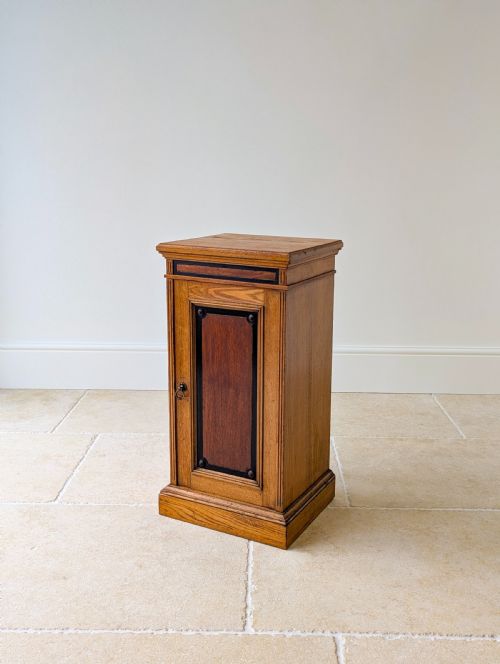
Aesthetic movement pieces often incorporate geometric lines, ebonised details, or faux bamboo turnings that reflect a shift away from heavy revivalist ornamentation.
They rely on simpler forms and thoughtful material contrasts rather than dense carving.
Why do some have marble tops?
Marble inserts provided a cool, waterproof surface that easily withstood moisture from water jugs and basins used for morning washing before plumbed bathrooms.
This practical addition also added weight and stability to the top of the cabinet.