
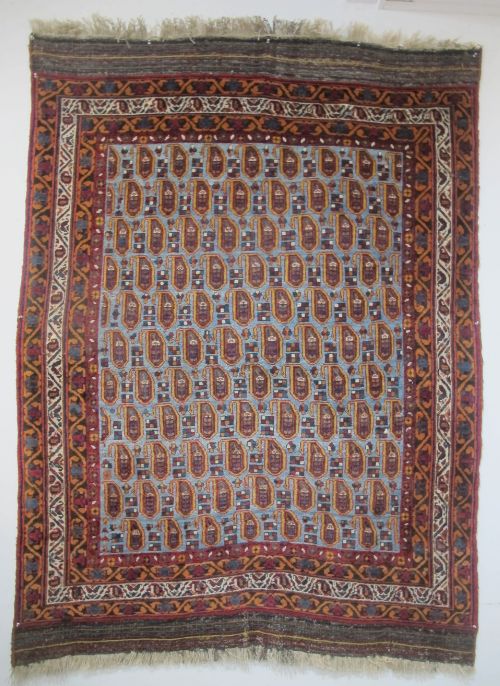
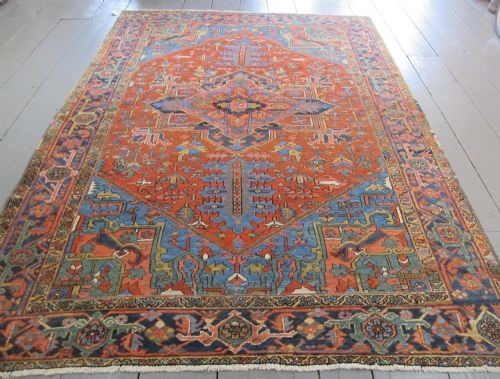


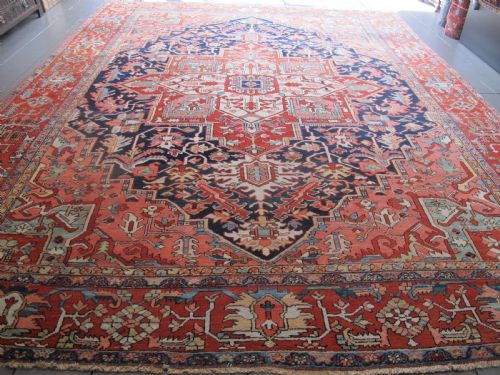

Late Victorian Persian Carpet
A late victorian persian carpet anchors a room with rich dyes and dense patterns woven in wool and cotton.
Late Victorian Persian Carpet
When you search for a late victorian persian carpet, you enter a field of room-sized floor coverings and regional rugs dating from the late nineteenth century. These woven textiles come from specific districts and tribal confederations across Persia and Central Asia, including Heriz, Sultanabad, and Fereghan.
The pieces most frequently met on this page combine traditional Persian designs with the robust wool construction characteristic of the period around eighteen ninety. Buyers encounter large floor carpets alongside smaller tribal rugs, each bearing the distinct palette of its origin.
Regional weaving traditions define the selection, ranging from the bold geometric medallions of North-West Persia to the intricate floral fields of Kerman. Every piece reflects the specific aesthetic of its maker, whether working in a village workshop or a nomadic camp.
Materials and Construction
These carpets rely on wool pile knotted tightly onto cotton foundations, creating a dense and durable surface designed for heavy use. Natural dyes provide the underlying palette, yielding deep tones that soften gracefully over decades.
Weavers utilised traditional hand-knotting techniques passed down through generations, securing each tuft by hand along the warp and weft threads. The choice of materials ensures the pile retains its structure while the foundation maintains stability across large floor expanses.
Late Victorian Persian Carpet Retail Price Guide 2026
Typical asking prices for late victorian persian carpet among the pieces listed under this phrase on Sellingantiques today, from the lower quarter to the upper quarter. They describe what is for sale here now, not the wider market.
An antique pencil box design hides quietly within the geometric borders of a tribal carpet, drawn by a weaver long ago.
Assessing Quality and Execution
The fineness of the knot count and the precision of the drawing separate standard village work from master examples. Finer execution allows complex floral motifs and intricate medallion outlines to remain sharp and legible.
The depth and saturation of the natural dyes influence the visual weight of the piece, with well-preserved colour distribution adding presence to the floor. Handle and suppleness in the wool further distinguish superior pieces from stiffer, heavily restored examples.
The Late Victorian Persian Carpet Glossary
- Warp
- The vertical foundation threads stretched tightly on the loom before knotting begins. These cotton or wool strands carry the structural tension of the entire carpet.
- Weft
- The horizontal threads passed between rows of knots to bind the pile securely in place. Multiple weft shots help determine the rigidity and handle of the finished textile.
- Pile
- The soft, upright surface of knotted wool that forms the visible and tactile part of the carpet. Its height and density dictate how the rug feels underfoot.
- Natural Dyes
- Colourants derived from plants, insects, and minerals rather than synthetic chemistry. They age by developing subtle variations in tone known as abrash.
- Medallion
- A large central ornamental design motif placed in the middle of the carpet field. Its geometry often identifies the specific weaving district or town.
Late Victorian Persian Carpet: Frequently Asked Questions
How do I clean a carpet?
Regular gentle vacuuming without a beater bar removes surface dust and prevents grit from settling into the wool pile. Professional specialist cleaning remains essential for deep washing to protect the natural dyes and cotton foundation.
Harsh chemical treatments or household detergents must be avoided entirely, as they strip natural oils from the wool and cause colours to bleed. Immediate blotting of accidental spills with a dry white cloth prevents permanent staining.
Where were these carpets made?
Production centres span various regions of Persia, including village workshops in Heriz and Sultanabad, alongside nomadic tribal areas. Each location developed distinct pattern repertoires and colour palettes based on local materials and cultural traditions.
Town workshops produced refined floral room carpets, while tribal groups favoured geometric designs and symbolic motifs. This geographical diversity gives each textile its specific character and regional identity.
Are these rugs durable?
The combination of wool pile and cotton foundations creates a resilient surface suited for everyday placement in domestic spaces. High traffic areas benefit from the natural lanolin present in quality wool, which resists dirt and wear.
Placing a suitable underlay beneath the carpet prevents slipping and reduces friction between the backing and the floorboards. This simple measure extends the working life of the textile significantly.
How do I identify regional styles?
Regional attribution relies on examining the specific geometry of the central medallion, corner spandrels, and border guard stripes. North-West Persian pieces often display bold geometric structures, whereas Kerman or Fereghan examples feature dense floral sprays.
Colour combinations also offer strong clues, as different workshops relied on distinct dye recipes and local mineral sources. Comparing border motifs helps narrow down the origin among neighbouring tribal confederations.