



Late Victorian Oriental Rug
These late victorian oriental rug examples are woven floor coverings from the nineteenth century that anchor a room with genuine regional character.
Late Victorian Oriental Rug
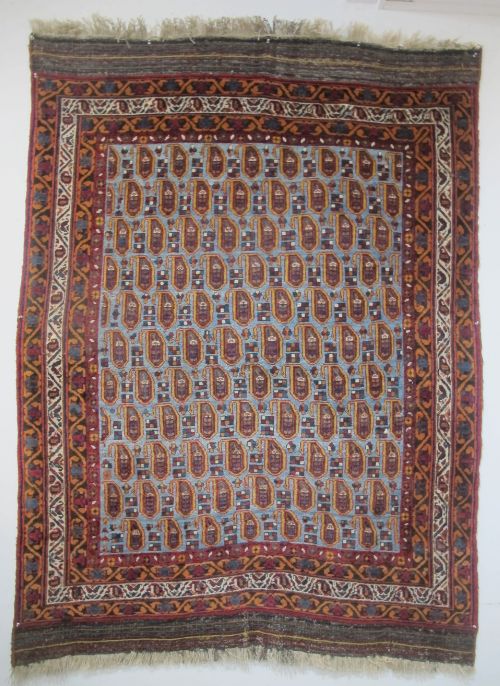
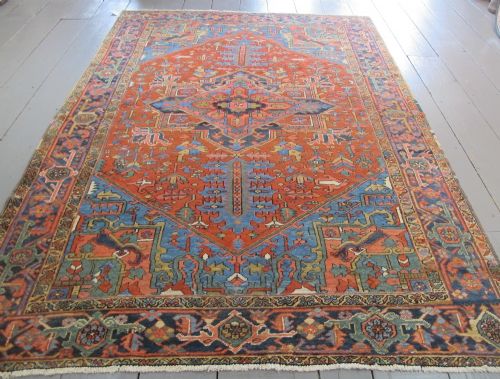
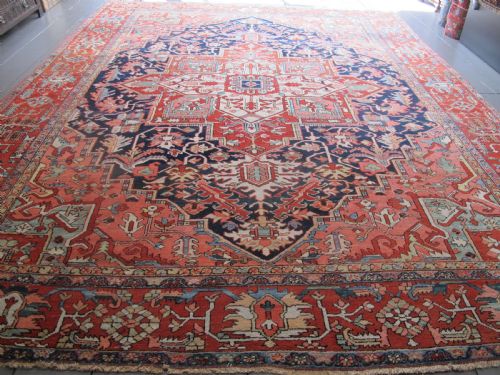
When you search for a late victorian oriental rug, you encounter hand-knotted floor coverings produced across Persia, the Caucasus, Anatolia, and India during the latter decades of the nineteenth century. These pieces encompass both large room-sized carpets and smaller tribal formats created by village weavers and confederations.
The most common examples on this page originate from Persian workshops and tribal groups, including Heriz, Sultanabad, and Fereghan weaves. Alongside these, Caucasian prayer rugs and Baluch tribal pieces appear frequently, showing distinct regional patterns and colour palettes.
How they were made
Weavers constructed these rugs using hand-spun wool for the pile, set onto sturdy cotton foundations for structural durability. Natural dyes provided the deep blue, red, and yellow grounds recorded across the inventory.
Nomadic and village makers employed traditional upright looms, tying dense knots by hand to secure geometric and floral motifs. This meticulous method produced thick, resilient textiles capable of enduring decades of heavy use.
Late Victorian Oriental Rug Retail Price Guide 2026
Typical asking prices for late victorian oriental rug among the pieces listed under this phrase on Sellingantiques today, from the lower quarter to the upper quarter. They describe what is for sale here now, not the wider market.
Pencil box designs bring tiny stationery straight to your floor.
What varies in quality
The grade of wool and the consistency of the hand-spinning dictate the handle and resilience of each weaving. Tighter knot counts allow for sharper delineation of intricate field designs and borders.
The saturation and depth of natural dyes create visual harmony that distinguishes superior examples. Expert balancing of contrasting grounds and motifs elevates an ordinary weaving into a work of lasting distinction.
The Late Victorian Oriental Rug Glossary
- Prayer rug
- A small format rug featuring a mihrab or niche design historically used for daily prayers. These pieces often display directional patterns orienting toward Mecca.
- Main carpet
- A large floor covering woven for domestic use within a tribal tent or village home. These formats typically display complex all-over or medallion designs.
- Runner
- A long, narrow carpet format designed for corridors, hallways, or staircases. They repeat geometric or shrub motifs along an extended length.
- Ground
- The main background colour of the field behind the central medallions and secondary motifs. Scarcely seen ground colours often denote regional rarity.
- Natural dye
- Colourants derived from plants, insects, and minerals rather than synthetic aniline compounds. These dyes yield rich, complex tones that mellow gracefully over time.
Late Victorian Oriental Rug: Frequently Asked Questions
How do I clean an old carpet?
Professional dusting and gentle hand washing preserve the delicate wool pile and natural dyes of nineteenth-century weavings. Avoid harsh chemical treatments and excessive water immersion.
Regular light vacuuming without a rotating power brush removes embedded grit between the knots. This simple routine protects the foundation threads from premature wear.
Where were these carpets made?
Production centres spanned Persia, the Caucasus, Anatolia, and northern India during the late nineteenth century. Village workshops, nomadic confederations, and city ateliers each developed distinct regional styles.
Specific towns such as Heriz, Kerman, and Shiraz produced identifiable weaving traditions. These origins dictate the specific palette and structural characteristics of each piece.
What is a tribal weave?
Tribal rugs are woven by nomadic or semi-nomadic confederations such as the Baluch, Khamseh, and Kurdish groups. Their designs rely on memory and ancestral tradition rather than drawn workshop cartoons.
These pieces often exhibit charming irregularities in symmetry and spontaneous shifts in colour. Such variations reflect the individual maker's artistic choices during production.