
Late Victorian Open Bookcase
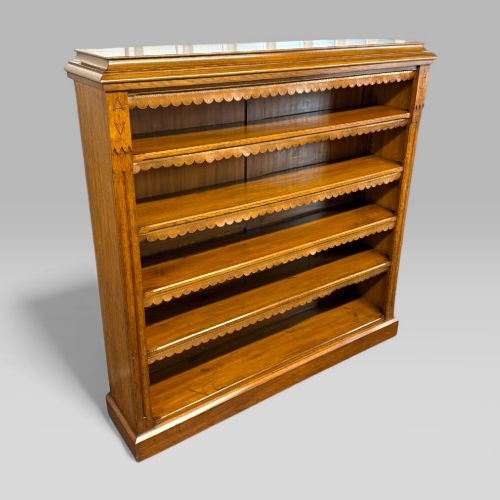
A late victorian open bookcase provides accessible shelving for domestic libraries, combining period joinery with practical proportions.
Late Victorian Open Bookcase
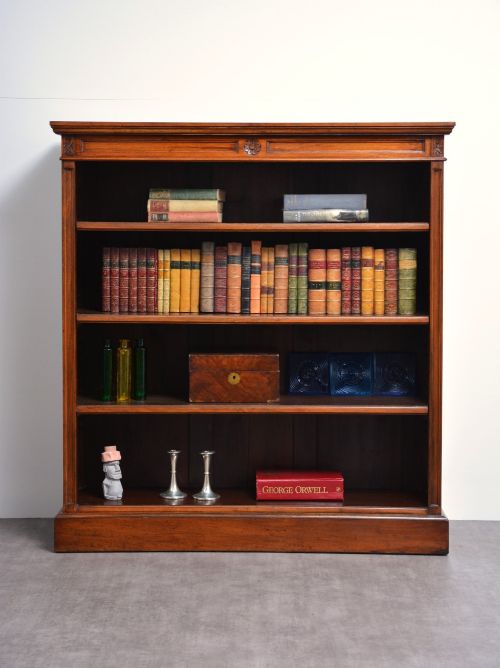
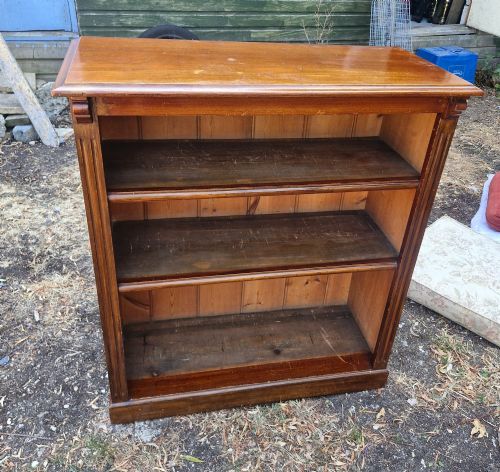
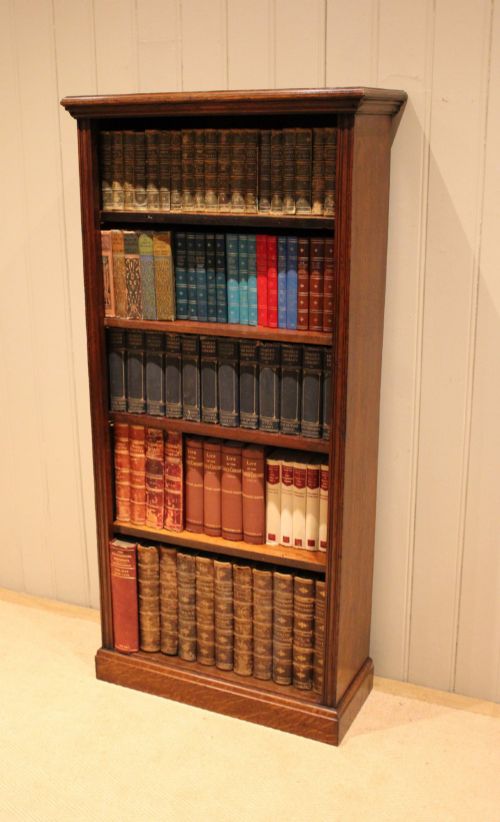
A late victorian open bookcase functions primarily as an upright furniture piece designed for holding volumes without enclosing doors. These pieces emerge from the later nineteenth century, appearing in domestic settings from parlours to studies.
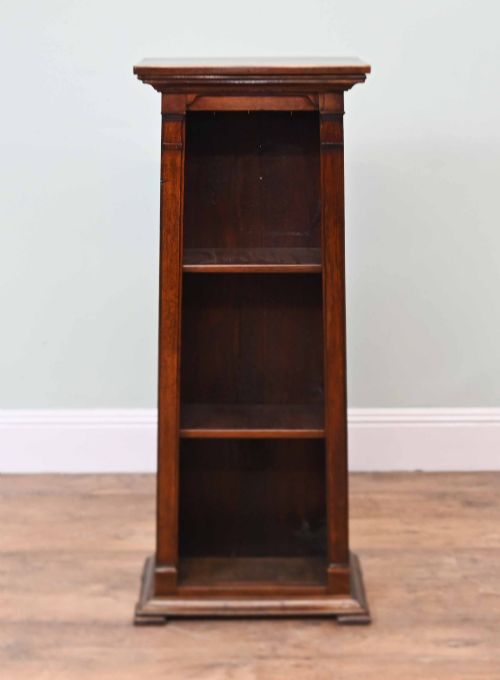
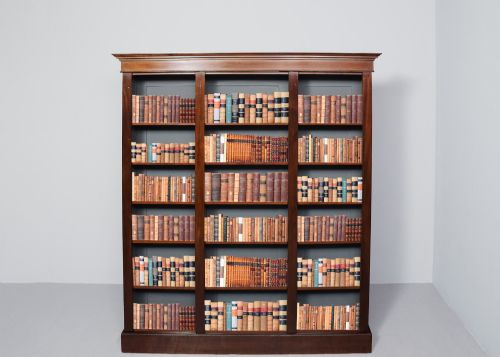
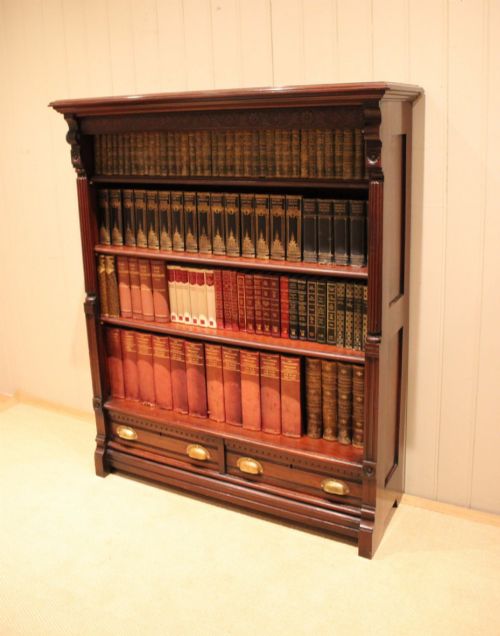
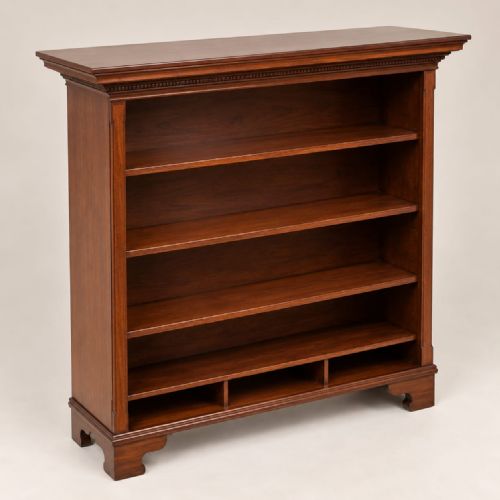
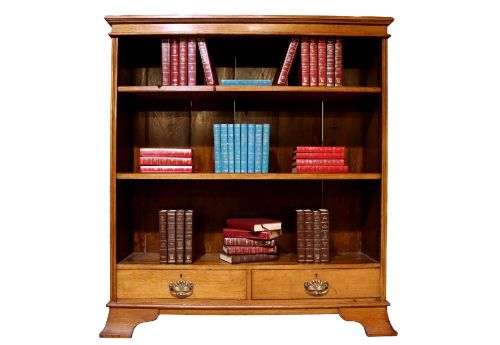
The version most commonly met on this page is constructed from mahogany or oak, frequently incorporating adjustable shelves to accommodate varying book sizes. Formats range from low dwarf units to tall, multi-section breakfront configurations.
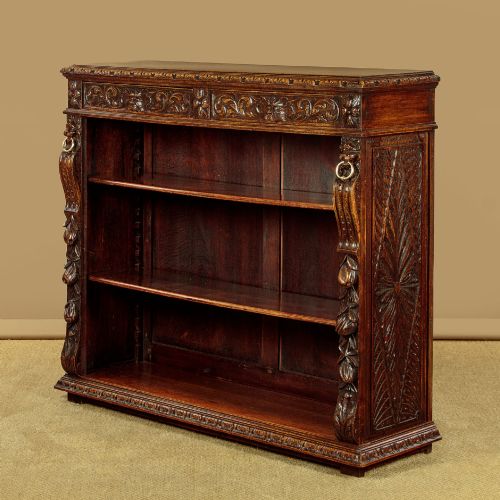
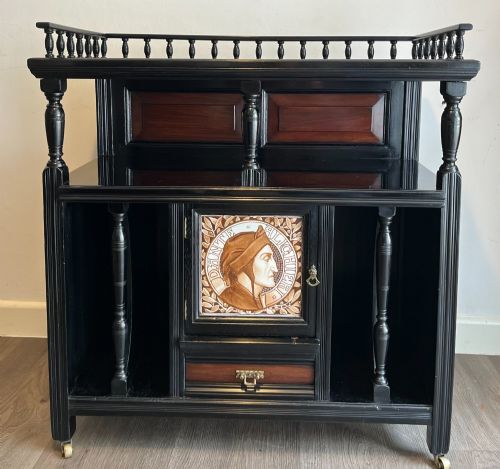
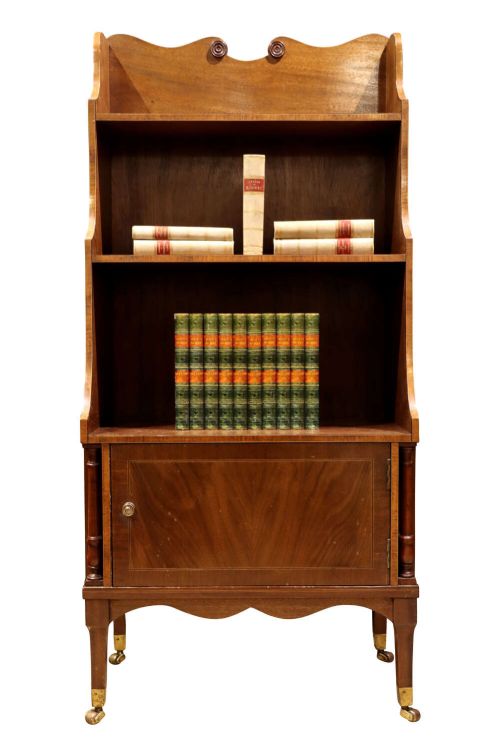
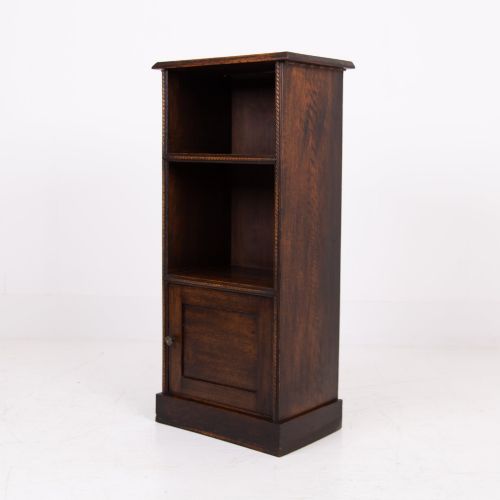
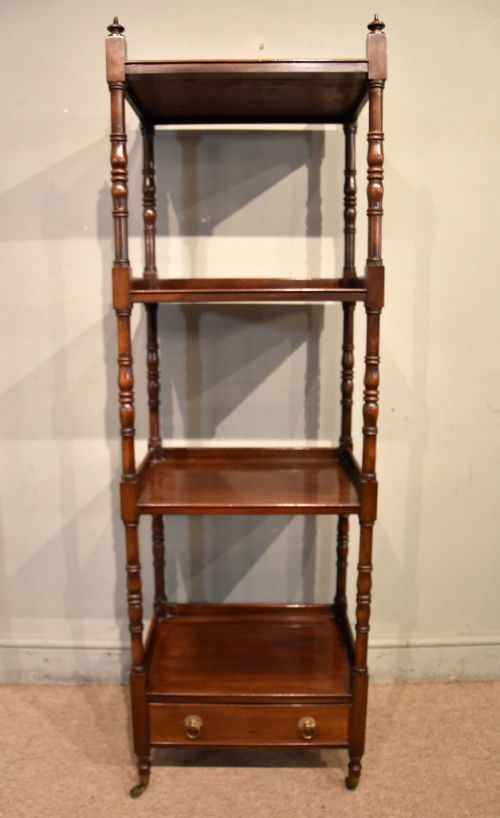
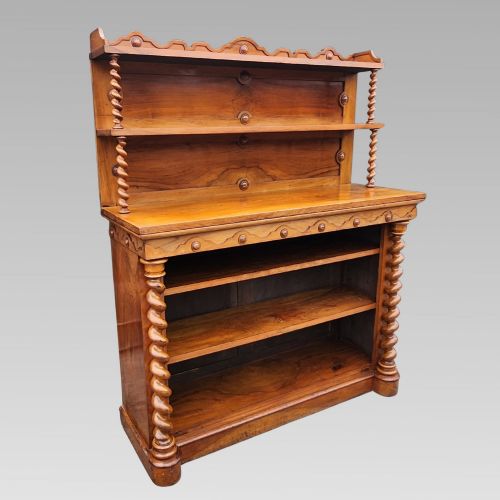
Beyond standard shelving, variations include waterfall forms, pieces paired with lower cupboards, and formats incorporating brass castors. Stylistic influences span from plain utilitarian designs to aesthetic movement and renaissance revival treatments.
How They Were Made
Makers utilised solid timbers alongside veneered surfaces, selecting mahogany, walnut, oak, and pine for carcass construction. Inlays of satinwood and ebonised wood details provided decorative contrast on finer examples.
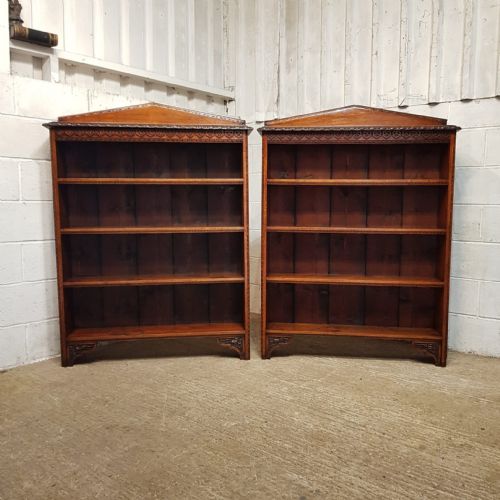
Internal shelving systems relied on adjustable wooden supports or metal ratchets, allowing owners to alter shelf heights. Carved ornamentation, including Flemish and renaissance revival motifs, was applied directly to timber frames or cornices.
Some bookcases arrived on brass castors so Victorian homeowners could chase the afternoon sun across the library floor.
What Varies in Quality
Construction methods establish the baseline of quality, distinguishing pieces built with solid framing and substantial backboards from lighter utility furniture. The presence of secondary timbers and the precision of drawer joinery, where applicable, mark the tier of manufacture.
Decorative ambition separates standard workshop output from exceptional examples. Integrated carving, refined satinwood inlay work, and specialist maker attribution elevate a piece above utilitarian storage.
Lambs of Manchester·Shoolbred and Co·S and H Jewell
The Late Victorian Open Bookcase Glossary
- Adjustable shelves
- Shelves that can be moved to different heights using internal slots or metal brackets. This feature allows the bookcase to hold books of various sizes.
- Breakfront
- A piece of furniture where the central section projects forward from the side sections. This layout creates depth and architectural interest.
- Waterfall bookcase
- A set of open shelves that steps back progressively from bottom to top. The profile resembles cascading water.
- Dwarf bookcase
- A low open bookcase designed to sit below window height. These pieces often feature a finished top surface suitable for displaying objects.
- Aesthetic movement
- A late nineteenth century design style emphasising visual beauty over narrative meaning. Pieces in this style often incorporate ebonised wood and classical motifs.
Late Victorian Open Bookcase: Frequently Asked Questions
How do I adjust the shelves?
Shelves rest on wooden bearers or metal pegs fitted into vertical slots inside the cabinet walls. Lift the shelf slightly to disengage it from the supports and reposition it at the desired height.
Ensure the shelf sits evenly on all four supports before loading books back onto it to maintain stability.
Where were these bookcases placed?
These pieces stood primarily in libraries, studies, and drawing rooms to keep frequently read volumes within easy reach. Lower dwarf versions fitted neatly beneath windows without blocking natural light.
Tall breakfront or multi-section examples lined the walls of larger Victorian reception rooms to display substantial private book collections.
How do I identify different revival styles?
Renaissance revival pieces display heavy carved details, strapwork, and architectural cornices drawn from sixteenth century motifs. Flemish revival variants feature similar deep relief carvings, often depicting scrolling foliage and grotesque masks.
Georgian revival examples adopt cleaner classical proportions and simpler mahogany framing reminiscent of the previous century.
What is the difference between open and closed bookcases?
Open bookcases lack glass or wooden doors, providing direct, unhindered access to the contents. This open front design prioritises convenience and immediate visibility of book spines over dust protection.
Closed variants utilise glazed doors to safeguard leather bindings from environmental wear while maintaining visual display.