


Late Victorian Open Armchair
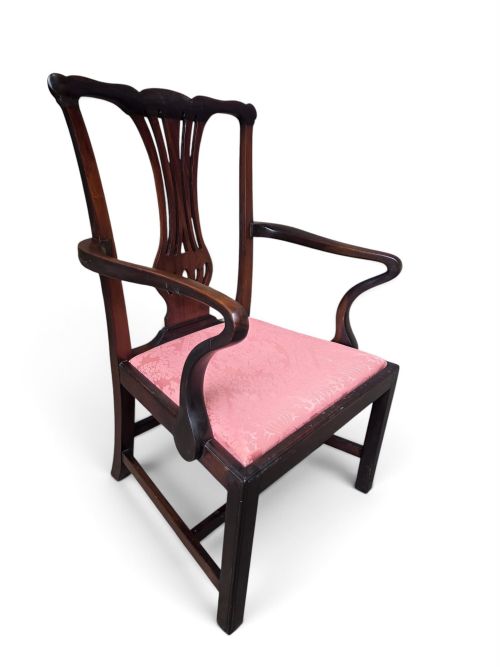
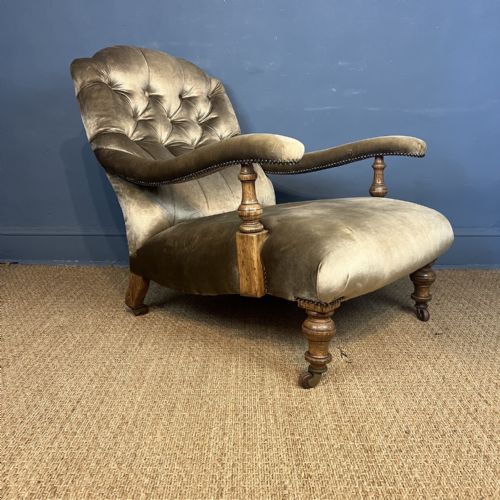
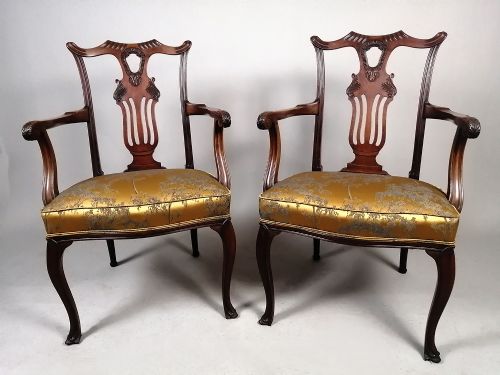
These late victorian open armchairs bring solid timber frames and period upholstery into a room.
Late Victorian Open Armchair
A late victorian open armchair offers a sturdy timber frame paired with open sides, designed for sitting upright in a parlour or study. Most examples on this page date from the later nineteenth century, spanning mahogany and oak builds influenced by revival styles.
Makers of the period drew heavily on earlier aesthetics, resulting in pieces shaped by Chippendale style, William and Mary style, and Arts and Crafts principles. Buyers encounter everything from carved mahogany elbow chairs to walnut fauteuils and ebonised frames.
The form encompasses button back upholstery, needlework covers, and carved backs alongside simpler timber designs. These chairs function practically as seating while carrying the distinct decorative motifs of the late nineteenth century.
What Varies in Quality
The definition of the carved detail and the weight of the timber frame dictate the tier of the piece. Crispness in the mahogany or walnut carving separates standard production from finer workshop outputs.
The choice of covering and the integrity of the internal stuffing influence the overall finish. Original needlework, damask, or tapestry upholstery elevates the character compared to later replacement fabrics.
Listings feature mahogany, walnut, and oak frames paired with velvet, tapestry, and damask upholstery across Victorian and Edwardian periods.
Collier and Plucknett
The Late Victorian Open Armchair Glossary
- Fauteuil
- An open-sided upholstered armchair with exposed wooden arms originating in France. These versions frequently reflect late nineteenth-century revivals.
- Gainsborough chair
- A wide, upholstered armchair with open arms and a square back designed in the eighteenth century. Later iterations appear in carved mahogany.
- Chippendale style
- A cabinetmaking style characterised by carved ribbon backs and cabriole legs. Makers drew heavily on these mid-eighteenth-century motifs during the Victorian era.
- Ebonised
- Timber treated with a dark finish to resemble ebony. This treatment appears frequently on aesthetic movement furniture.
- Needlework
- Hand-stitched textile covers applied to seat pads and backs. These covers utilise wool or silk threads on a canvas ground.
Late Victorian Open Armchair: Frequently Asked Questions
Where should I place this armchair?
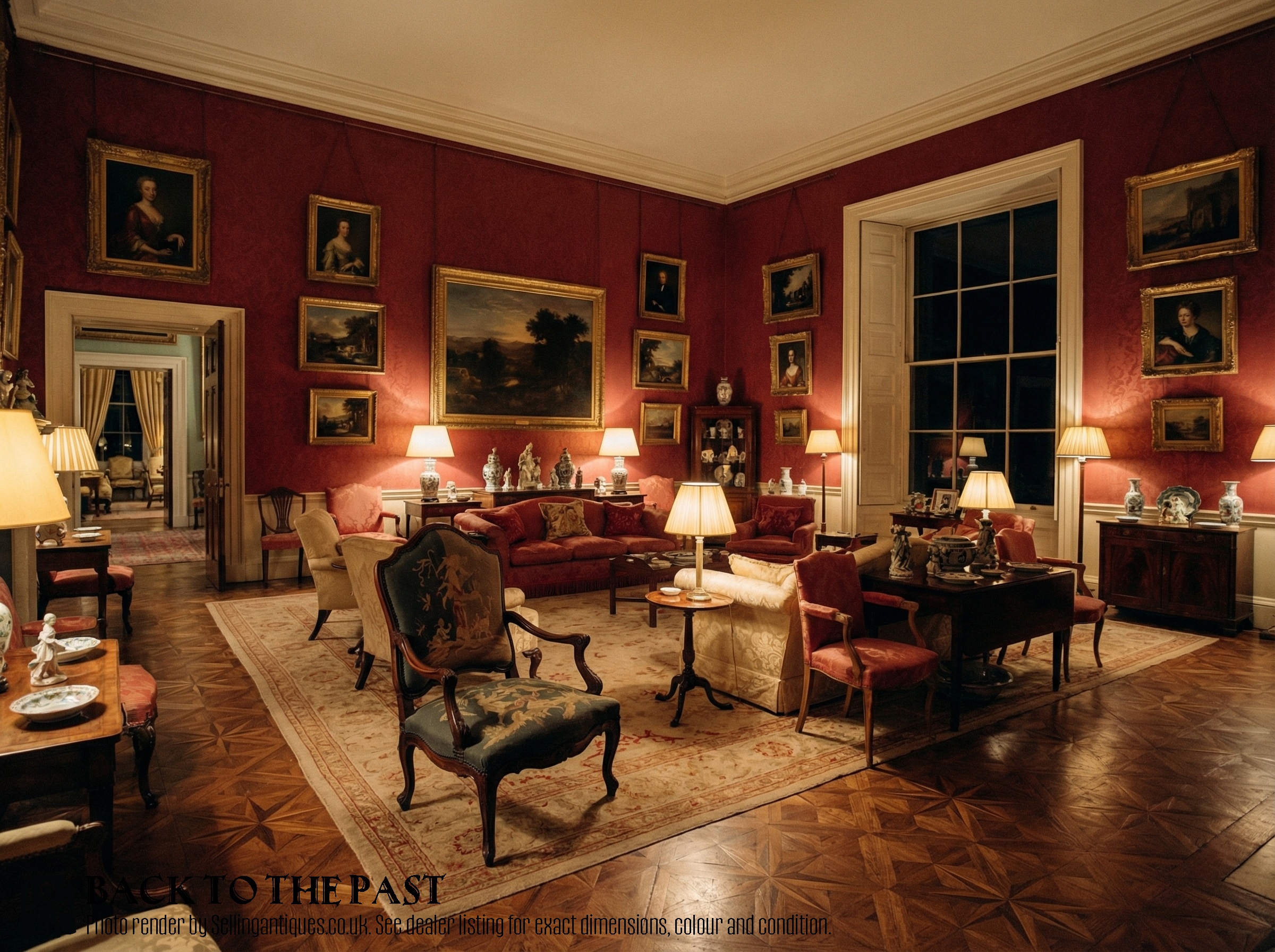
These chairs suit studies, living rooms, or bedrooms where an upright seat with open arms is useful. Their decorative timber frames and upholstered backs allow them to sit effectively away from walls.
Ensure the dimensions of the elbow rests and seat height match your intended desk or table setup if used for working.
Are the upholstery fabrics original?
Many chairs retain later textiles due to the wear experienced over decades of use. Needlework, tapestry, and damask covers sometimes date to the period of manufacture but frequently represent subsequent reupholstery.
Examine the tacks and internal webbing to gauge the age of the current covering.
What defines the Arts and Crafts examples?
Arts and Crafts chairs emphasise honest construction in oak with minimal surface ornamentation. They prioritise structural simplicity over the revival ornamentation seen in Chippendale or Renaissance styles.
These pieces align with the reform movements of the late nineteenth century.