



Late Victorian Oak Mirror
A late victorian oak mirror brings solid timber grain and reflective depth to an interior, shaped by the distinct revival and craft movements of the late nineteenth century.
Late Victorian Oak Mirror
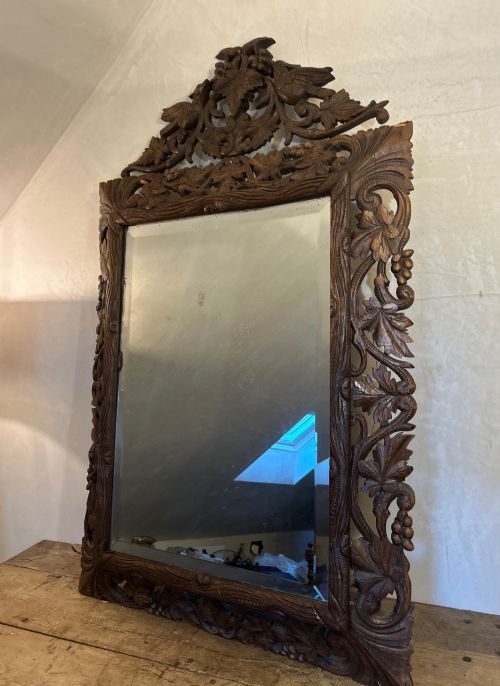
A late victorian oak mirror combines sturdy native timber with the decorative ambitions of the late nineteenth century, spanning wall-hung plates, overmantels, and dressing glass. You encounter simple framed wall versions alongside heavily carved pieces influenced by the Arts and Crafts and French Renaissance revival styles.
The objects appearing under this description frequently take rectangular, oval, or octagonal forms, often incorporating bevelled glass plates. They serve functional roles in hallways, above mantelpieces, and within bedroom suites alongside matching dressing chests.
Origins typically trace to English workshops operating between eighteen eighty and nineteen hundred, reflecting a period of diverse stylistic experimentation. Makers ranged from regional cabinetmakers to prominent London firms producing both utility items and showpieces.
Judging quality and craftsmanship
Depth and sharpness of the hand-carved detail distinguish standard production from superior examples, particularly in foliage and figural motifs. The selection of timber grain, such as figured pollard oak or carefully matched quarter-sawn boards, elevates the visual weight of the piece.
Structural integrity relies on traditional joinery at the frame corners and the original mounting hardware supporting the weight of heavy glass. The clarity of the mirror plate and the retention of original brass hooks or bevels indicate a well-preserved survivor.
Late Victorian Oak Mirror Retail Price Guide 2026
Typical asking prices for late victorian oak mirror among the pieces listed under this phrase on Sellingantiques today, from the lower quarter to the upper quarter. They describe what is for sale here now, not the wider market.
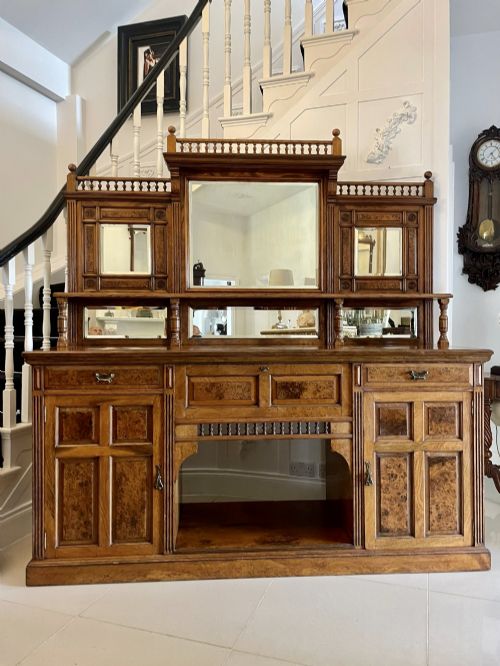
The inventory records practical domestic items including wall mirrors, overmantels, dressing chests, hall stands, and purdoniums alongside larger sideboards.
Garnett & Sons·Wright & Hunter of Belfast·Harris Lebus of London
The Late Victorian Oak Mirror Glossary
- Quarter-sawn oak
- Timber cut radially to the growth rings, producing a characteristic striped figure known as medullary rays. This cut provides superior dimensional stability for large frames.
- Pollard oak
- Wood taken from trees that have been pollarded, resulting in clustered, swirling grain patterns. It was favoured by nineteenth-century cabinetmakers for veneering prominent surfaces.
- Bevelling
- The process of grinding and polishing the outer edges of a mirror plate down to an angled slope. This catches the ambient light and adds perceived depth to the glass.
- Overmantel mirror
- A large mirror designed specifically to hang on the wall directly above a fireplace mantel. These often feature extended wooden frames to anchor the visual space of a room.
- Arts and Crafts
- A design movement emphasising handcraftsmanship, simple structural forms, and traditional materials. Pieces from this aesthetic often eschew excessive ornamentation in favour of honest construction.
Late Victorian Oak Mirror: Frequently Asked Questions
How do I hang a heavy late victorian oak mirror safely?
These frames carry substantial weight due to dense timber and thick glass plates. Secure the mounting directly into wall studs using robust steel brackets or mirror plates rated for the load.
Distribute the weight evenly across two fixing points rather than a single central wire to prevent the frame from warping over time.
Where should I place a late victorian oak mirror in my home?
Position the glass opposite a window or light source to maximise the reflection and brighten darker corners of a room. Overmantels naturally anchor a fireplace wall, while wall-hung variants suit entrance halls above small tables.
Keep the timber away from direct heat sources like radiators to prevent the oak from drying out and splitting.
How do I clean and maintain the oak frame and glass?
Dust the carved wooden surfaces regularly with a dry, soft cloth and apply a traditional beeswax polish sparingly to nourish the grain. Avoid modern aerosol sprays that contain silicone.
Clean the mirror plate using a mild glass cleaner applied to a cloth rather than sprayed directly onto the glass, preventing moisture from seeping behind the silvering.
How can I tell if the mirror plate is original?
Original nineteenth-century glass often exhibits subtle imperfections, faint grey specking, or slight distortion in the reflection due to historical manufacturing methods. The edges should feature a hand-ground bevel that matches the proportions of the frame.
Inspect the rear of the piece to see if the original wooden backing boards and retaining wedges remain undisturbed.