




Late Victorian Library Chair
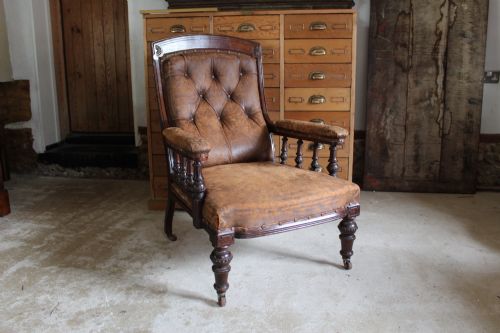
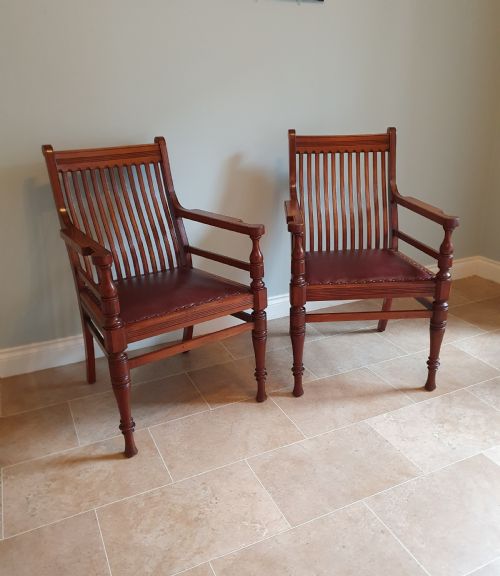
A late victorian library chair offers sturdy seating built for long hours at a desk or reading table, combining robust timber frames with comfortable leather or fabric upholstery.
Materials and Construction
Frames rely on durable hardwoods including mahogany, walnut, oak, and burr elm, sometimes accented with satinwood or boxwood stringing. These timbers provide the structural integrity required for heavy daily use in studies and libraries.
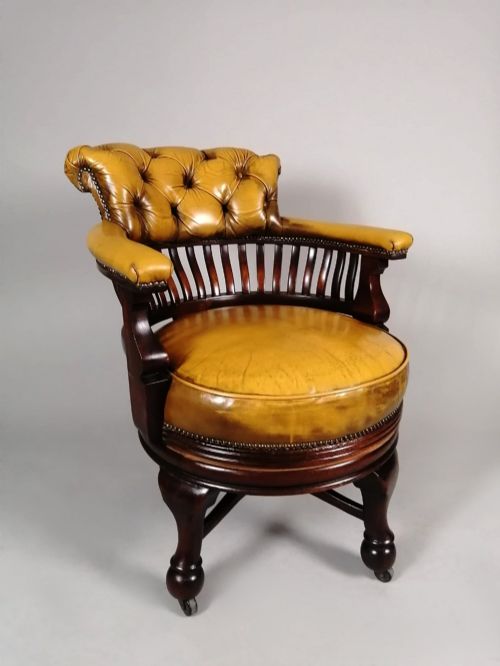
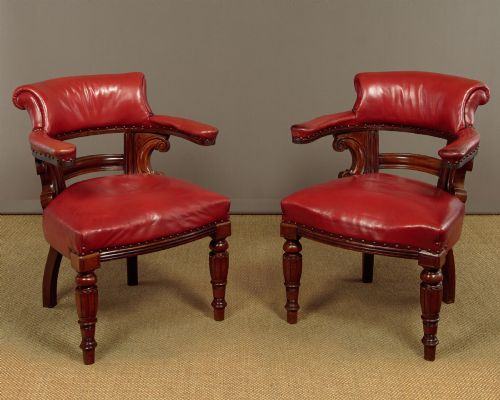
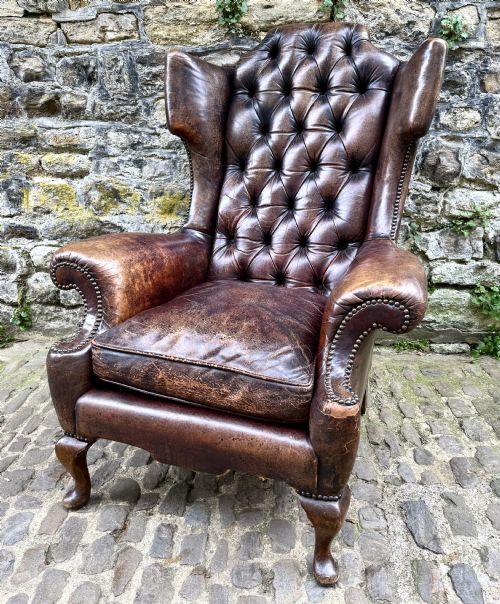
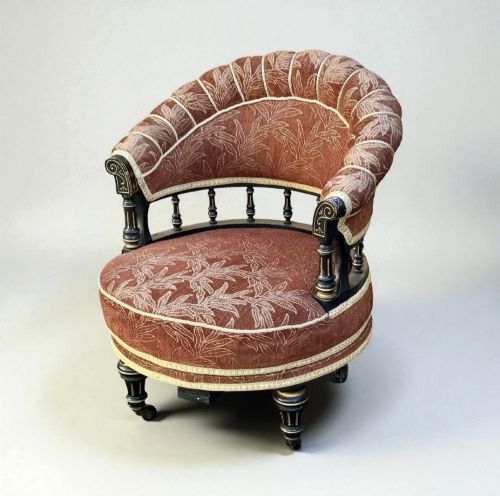
Upholstery materials include supple leather, velvet, and woven fabric, frequently secured with buttoning or brass tacks. Wood surfaces show careful carving, ebonising, or inlay work that reflects the revival styles popular during the period.
Distinctions in Standard
The standard of a late victorian library chair rests upon the selection of timber and the crispness of the cabinetmaker's carving. Dense, well-figured mahogany or walnut paired with precise joinery elevates a piece above standard workshop production.
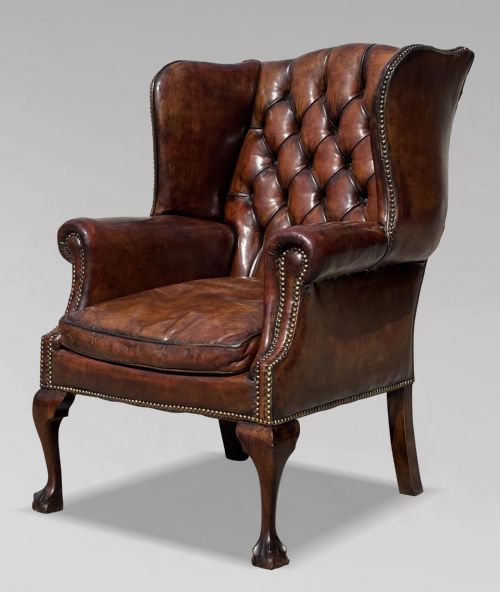
The quality of the upholstery execution, from button tufting to leather grain selection, dictates the overall finish. Pieces retaining original patination on both wood and leather demonstrate superior care and material pedigree.
The listings show oak, mahogany, and walnut as the primary frame materials, paired with leather, fabric, and velvet upholstery.
James Shoolbred
The Late Victorian Library Chair Glossary
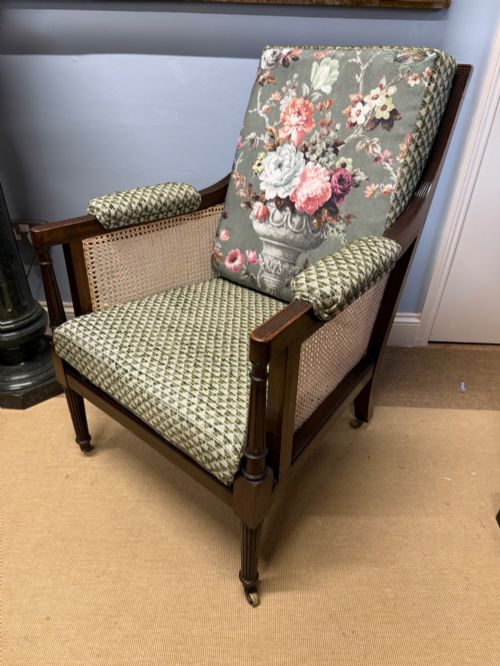
- Bergere
- An enclosed upholstered armchair with cane or upholstered sides and back. This French-influenced form appears frequently in late nineteenth-century drawing rooms and libraries.
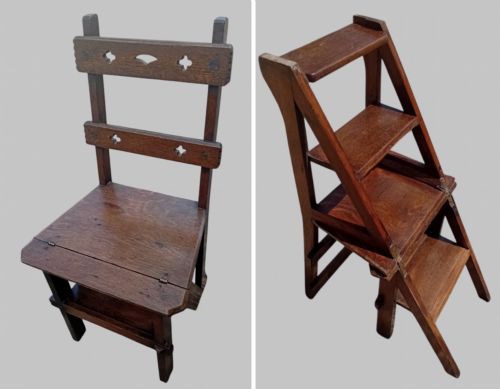
- Metamorphic chair
- A dual-purpose piece of furniture designed to transform into library steps. This ingenious mechanism assists readers in reaching high bookshelves.
- Fauteuil
- An open-armed upholstered armchair originating in France. Late examples often incorporate revival styles such as William and Mary scrollwork.
- Button back
- An upholstery technique where buttons are pulled deep into the padding to create a diamond pattern. This method secures the filling while adding textural depth.
- Os de mouton
- A distinctive scrollwork leg shape resembling sheep bone. This Baroque detail appears on revival seating from the late nineteenth century.
Late Victorian Library Chair: Frequently Asked Questions
What is a metamorphic library chair?
A metamorphic library chair is a convertible piece of furniture designed to fold out into a set of sturdy steps. It provided nineteenth-century readers with a practical way to reach high bookshelves without fetching a separate ladder.
Craftsmen engineered discreet hinges and pivots into the wooden frame so the transition between seat and steps remained smooth and secure during daily use.
How do I identify a genuine period piece?
Authentic late nineteenth-century seating displays traditional joinery methods, hand-turned wooden components, and natural material ageing. Examining the underside and framing reveals the hand-cut joints and timber shrinkage characteristic of the era.
Revival styles from this time often incorporated earlier decorative motifs, but construction details and wood patination confirm the true manufacturing date around eighteen-eighty to nineteen-hundred.
Which woods were commonly used?
Cabinetmakers of this era favoured dense hardwoods such as mahogany, walnut, and oak for their structural strength and rich grain. Burr elm, satinwood, and ebonised timber also appear in specific revival designs.
These durable materials ensured that heavy desk and reading chairs could withstand decades of use in private studies and institutional libraries.
Are desk chairs and reading chairs different?
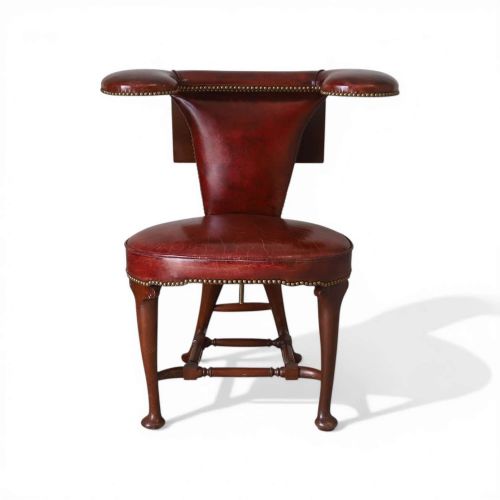
Desk chairs typically feature revolving mechanisms or fixed bases tailored for writing desks, while reading chairs focus on relaxed upholstered comfort for extended periods of study. Both forms share sturdy frames and supportive armrests.
Desk variants often utilise swivelling brass and wood assemblies, whereas reading models emphasise padded wingbacks or low seats.