




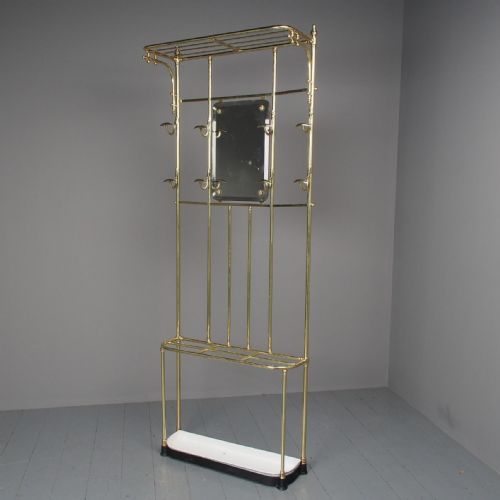
Late Victorian Hall Mirror
A late victorian hall mirror brings immediate presence to an entranceway, combining practical reflection with the solid craft of the late nineteenth century.
Late Victorian Hall Mirror
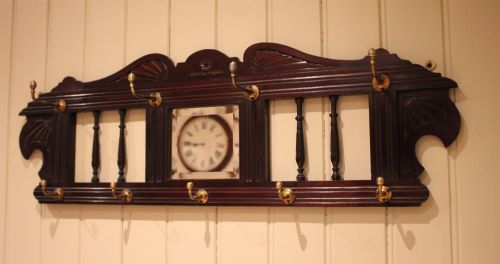
A late victorian hall mirror is primarily encountered as a wall-hanging glass or as part of a larger hall stand combining coat hooks, umbrella storage, and umbrella trays. These pieces serve the domestic function of greeting visitors and checking attire before stepping out.
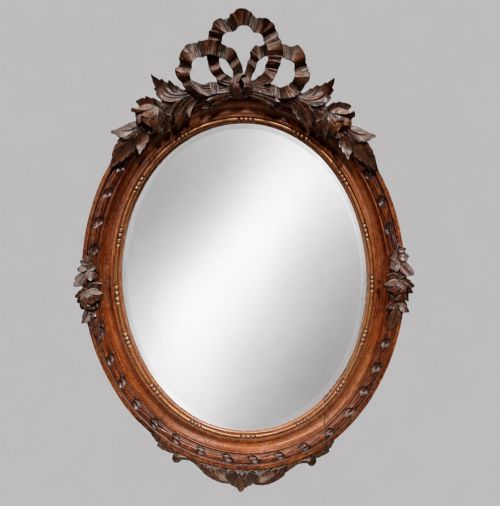
The objects seen here span wall mirrors, console tables with matching mirrors, and multi-functional hall stands produced around the turn of the twentieth century. They reflect the Victorian domestic priority of organising the hallway while projecting a respectable household aesthetic.
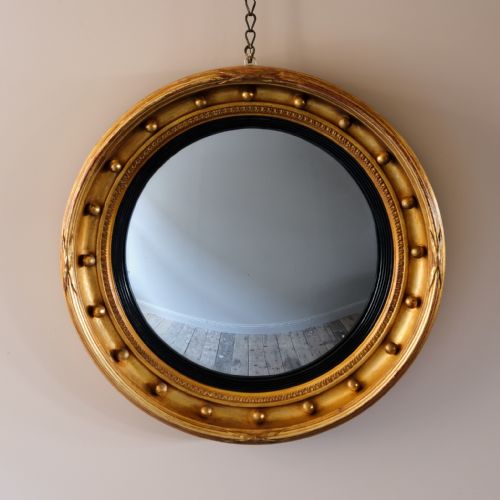
Buyers will most frequently find walnut, mahogany, and giltwood frames, sometimes accompanied by marble console tops and brass or cast iron fittings. Their forms range from simple oval and convex wall plates to large architectural hall furniture.
How they were made
Cabinetmakers utilised dense timbers like mahogany and walnut, often shaping them with carved detailing, gesso, or faux bamboo turns. Frames were constructed using traditional joinery suited to supporting heavy glass plates and hanging loads.
Metalwork played a structural and decorative role, featuring cast brass and bronze for hooks, frames, and umbrella rings. Giltwood and carved elements added surface richness, while marble was slabbed to top console tables.
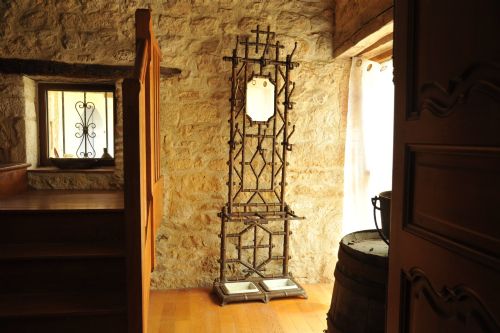
A cast iron faux bamboo hat stand proves the Victorians had a wonderful imagination for turning hard metal into whimsical jungle plants.
What varies in quality
Quality rests in the crispness of the carving, the selection of timber veneers, and the substantial weight of the brass or bronze fittings. Finer examples show careful hand-finishing on wooden details and integrated marble tops that sit true within their frames.
The proportion and architectural integrity of the piece determine its standing, particularly in combined hall stands where structural joinery must bear the daily weight of coats and hats. Superior glass plates retain their original depth without distortion.
The Late Victorian Hall Mirror Glossary
- Convex mirror
- A round mirror glass curved outward to provide a wide-angle reflection of the room. This form was popular for bringing light into narrow hallways.
- Hall stand
- A piece of hallway furniture combining a mirror, coat hooks, and umbrella storage. Many surviving examples include small ledges or marble-topped console tables.
- Gesso
- A plaster-like mixture applied to wood frames and carved or moulded before gilding. It provides the crisp relief work seen on ornamental mirrors.
- Faux bamboo
- Wood turned and carved to imitate natural bamboo stalks. This technique was widely used in late nineteenth-century hall furniture for an exotic aesthetic.
Late Victorian Hall Mirror: Frequently Asked Questions
Where should I hang a hall mirror?
Hang the mirror near the entrance door where it receives natural light from sidelights or hall fixtures. This placement maximises both its practical use for checking appearance and its ability to brighten a narrow passage.
Ensure the wall fixings are secured into studs or masonry because these frames often carry significant weight from dense timber and thick glass.
How do I clean an antique mirror plate?
Use a soft cloth and a minimal amount of mild glass cleaner applied to the cloth rather than directly onto the glass. This prevents moisture from seeping behind the silvering.
Avoid harsh chemical ammonia cleaners which can damage the aged backing and the surrounding wooden or gilt frame.
Did these mirrors always have coat hooks?
Many wall mirrors stood alone as decorative pieces in the hallway, while others formed part of larger combined hall stands equipped with brass hooks and umbrella wells.
The presence of integrated hooks depends entirely on whether the item was designed as a standalone wall plate or as multifunctional hall furniture.
How do I date a late Victorian mirror?
Dating relies on examining the timber species, the style of carving, and the construction of the wooden backboards. Late nineteenth-century pieces often display characteristic Victorian proportions and machine-assisted joinery alongside hand-finished details.
The character of the glass plate and any original brass hardware also provide clues to the production period around eighteen eighty to nineteen hundred.
Can these mirrors support heavy coats?
Mirrors that are part of a substantial hall stand or feature a sturdy wooden backboard generally support coat hooks securely. Standalone wall mirrors are typically intended for reflection rather than load-bearing storage.
Check the wall mounting system and the fixing of the hooks to the frame before hanging heavy garments.