
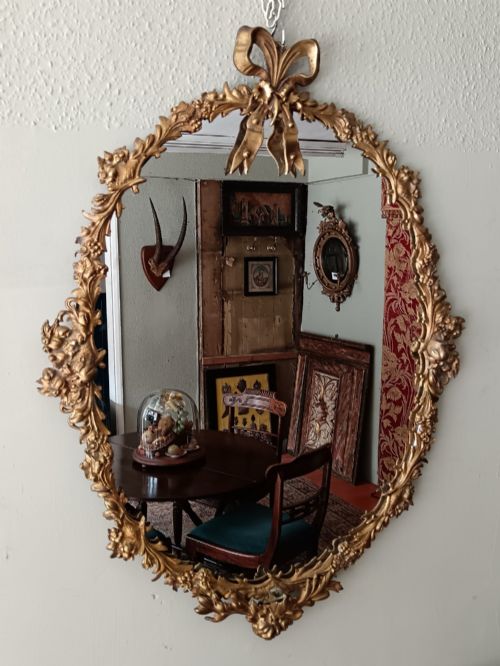
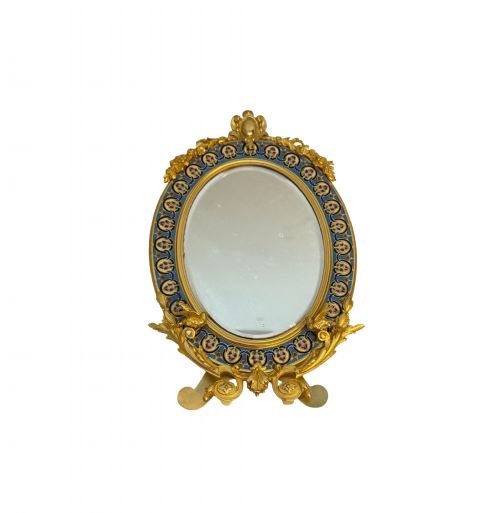


Ornate Bronze Mirror
An ornate bronze mirror brings tactile weight and rich metalwork to a room, drawing the eye instantly to its decorative frame.
Ornate Bronze Mirror
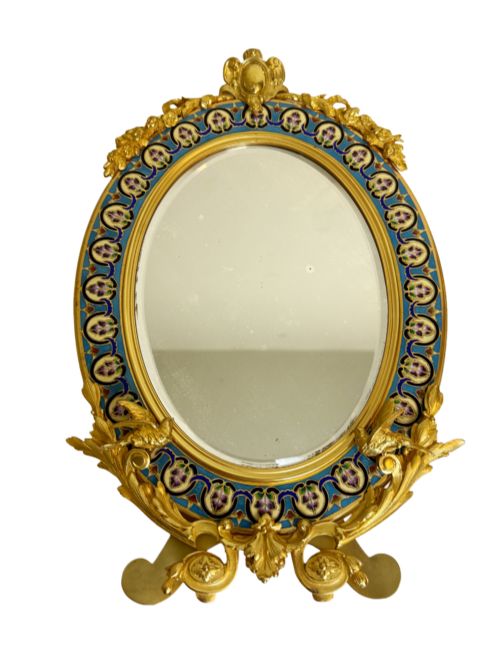
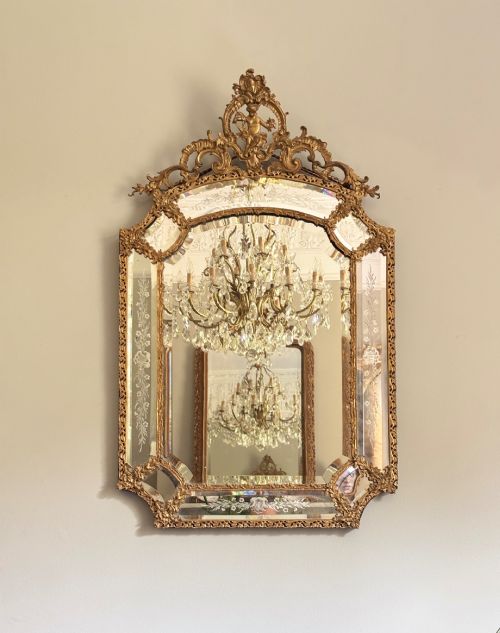
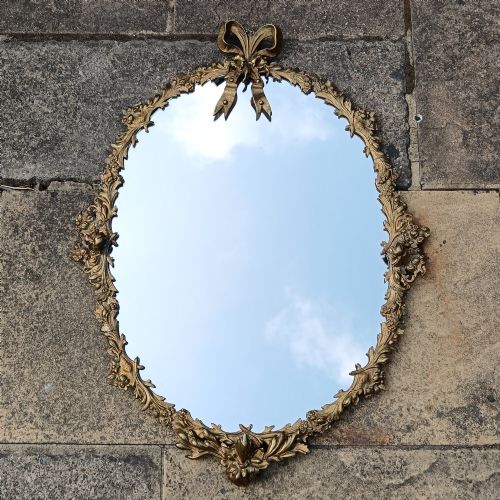
An ornate bronze mirror is typically a French or Victorian wall, table, or vanity piece designed with decorative metalwork. These items appear across the nineteenth and early twentieth centuries, spanning periods such as the Victorian era and the Napoleon III style. You will most frequently encounter table mirrors, wall mirrors, and wall sconces framed in cast bronze, gilt bronze, or ormolu.
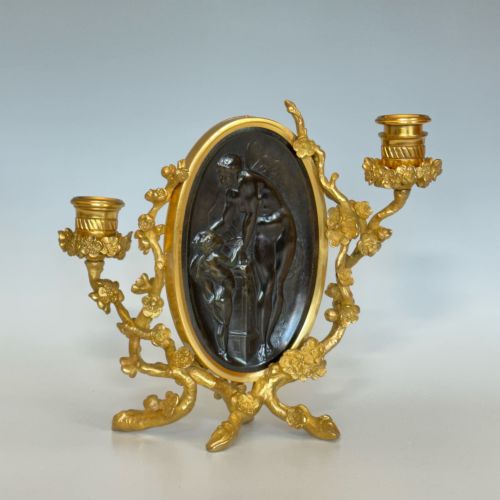
The decorative vocabulary of an ornate bronze mirror borrows heavily from Rococo Revival and Louis XVI Revival aesthetics. Frames often display asymmetrical scrollwork, floral motifs, and detailed cast elements that reflect nineteenth-century European craftsmanship. Many pieces incorporate champleve enamel panels or integrated candle arms known as girandoles.
Beyond standard hanging and dressing table variants, the selection includes vanity sets, hand mirrors, and picture frames sharing the same metalwork vocabulary. Origins lean heavily toward French workshops and Parisian makers active in the late nineteenth century. The glass itself is commonly original bevelled or flat mirror glass housed securely within the heavy metal armature.
How they were made
Makers of an ornate bronze mirror relied on traditional foundry methods, primarily casting bronze in moulds to achieve high relief and intricate detail. Once cast, the metal components were chased by hand to sharpen the motifs and clean the edges. Gilt bronze, ormolu, and dark patinated finishes were then applied to the metal surfaces.
Glass panels were cut to fit precisely within the rebated channels of the cast frames, often secured with original backing plates. Champleve enamel elements, where present, were created by recessing troughs into the bronze surface and filling them with coloured glass paste before firing and polishing smooth.
What varies in quality
The crispness of the casting and the depth of the hand-chasing separate standard production from finer workshop output. Superior examples display sharp relief in the scrollwork and foliage, whereas lesser pieces can appear soft and indistinct in their detailing.
The quality of the gilding and the preservation of the original surface patina dictate the visual impact of the piece. Intact champleve enamel work and heavy, stable cast bronze frames without structural distortion indicate higher manufacturing standards.
Thiebaut Freres·E.G Paris
The Ornate Bronze Mirror Glossary
- Gilt bronze
- Bronze that has been coated with a thin layer of gold to give a bright, rich metallic finish. It resists tarnishing and provides a warm, reflective surface.
- Champleve
- An enamelling technique where troughs are dug into the bronze surface and filled with vitreous enamel before firing. This adds colourful geometric or floral patterns to the metal frame.
- Ormolu
- A term used to describe applied gold-coloured metal finishes or gilded bronze ornaments popular in French furniture and mirror frames. It requires careful cleaning to preserve the underlying detail.
- Girandole
- A branched wall mirror or sconce designed to hold candles, multiplying the light in a room through reflection. These often feature matching bronze arms flanking the central glass.
- Rococo Revival
- A nineteenth-century style imitating the ornate, asymmetrical curves and naturalistic motifs of the eighteenth-century Rococo movement. It dominates many of the frames seen here.
Ornate Bronze Mirror: Frequently Asked Questions
Are the mirror glasses usually original?
Many pieces retain their original bevelled or flat glass plates, often showing minor foxing or light ageing that confirms their nineteenth-century origins.
Original glass should be cleaned with care using gentle solutions to avoid damaging the silver backing or the surrounding bronze mount.
What is the difference between gilt bronze and ormolu?
Gilt bronze and ormolu both describe bronze treated with gold, though ormolu specifically denotes the high-status fire-gilding technique common in French decorative arts.
Both materials deliver a brilliant golden lustre that highlights the detailed casting of the frame.
How should I clean a bronze frame?
Dust the metal gently with a soft, dry brush to remove particles from the deep recesses of the cast ornamentation without disturbing the patina.
Avoid abrasive metal polishes, particularly on gilt or ormolu surfaces, as harsh chemicals will strip the historic finish.