


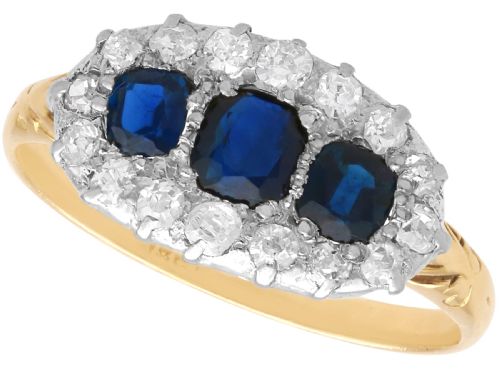


Late Victorian Engagement Ring
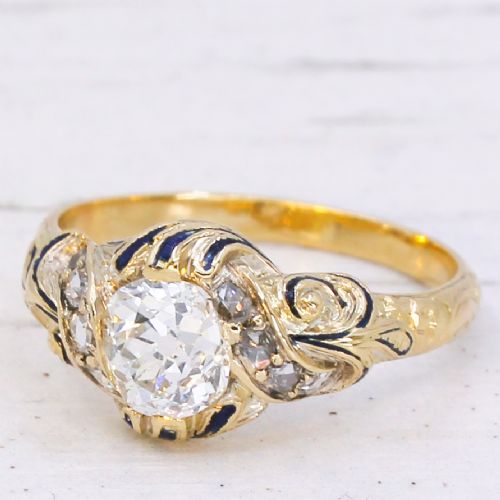
A late victorian engagement ring carries the hand-cut stones and rich yellow gold of the turn of the twentieth century.
Late Victorian Engagement Ring
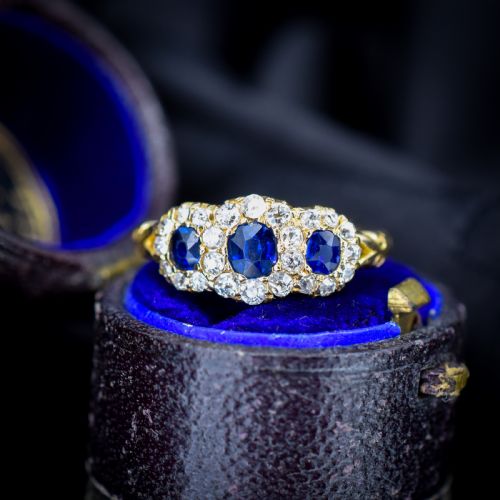
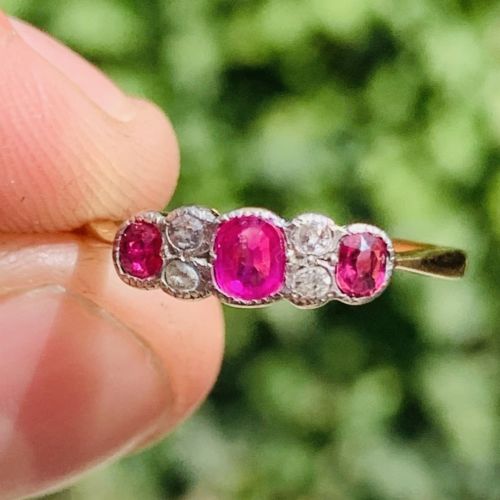
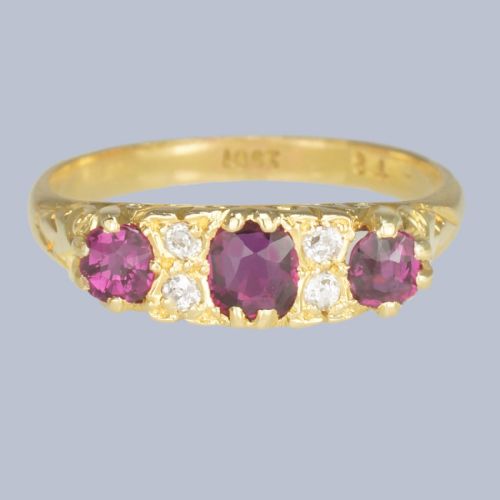
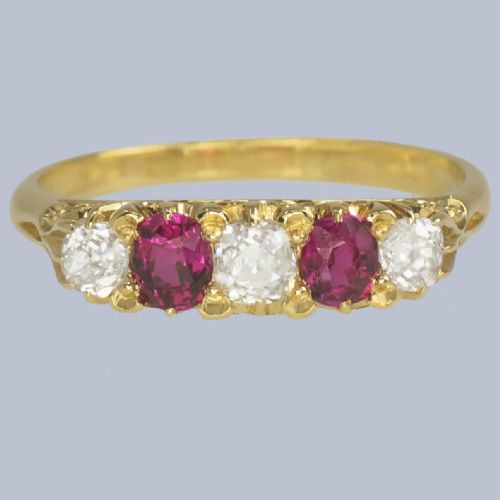
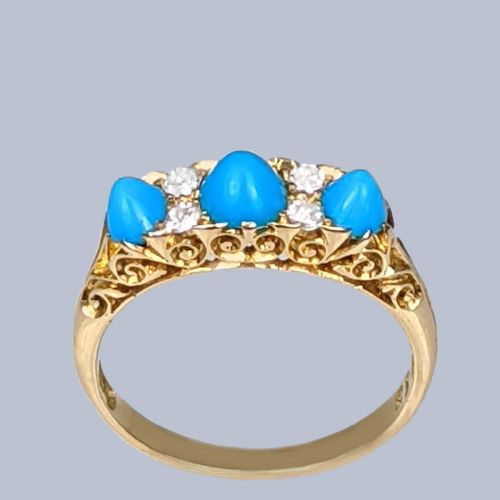
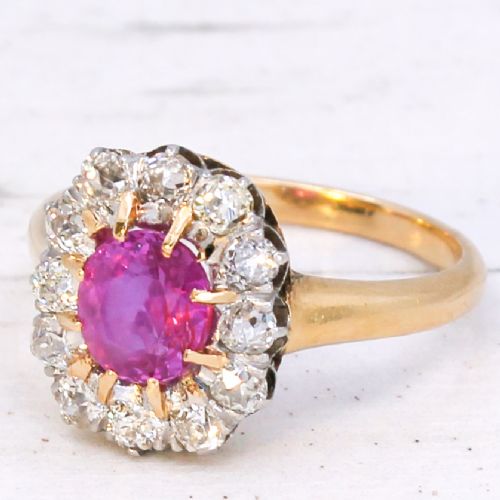
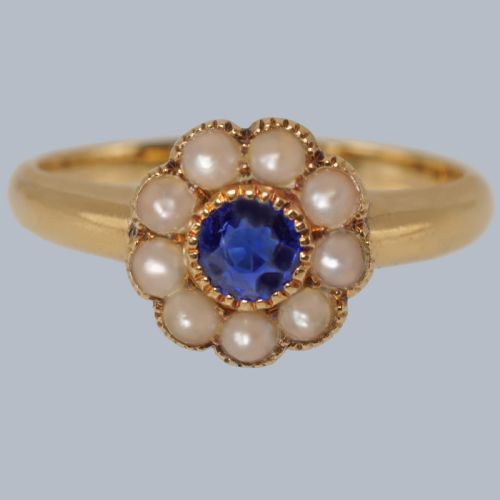
Buyers seeking a late victorian engagement ring will frequently encounter traditional configurations such as solitaires, multi-stone clusters, and trilogy settings. Old cut diamonds, sapphires, rubies, and opals dominate these selections, often arranged in boat or navette shapes.
The materials and periods represented on this page reflect the craftsmanship of late nineteenth and early twentieth century workshops. Yellow gold and platinum serve as the primary settings for these historically significant gemstones.
Materials and Techniques
Goldsmiths of this era predominantly employed eighteen carat yellow gold and platinum to construct the mounts and shanks. Stones were hand-set into claw, bezel, or flush mountings designed to secure old cut diamonds and coloured gems.
Gemstones such as rubies, sapphires, opals, and turquoise were hand-selected and paired with old mine cut or old European cut diamonds. The metals were cast and hand-finished, often incorporating detailed shoulders and galleries.
Late Victorian Engagement Ring Retail Price Guide 2026
Typical asking prices for late victorian engagement ring among the pieces listed under this phrase on Sellingantiques today, from the lower quarter to the upper quarter. They describe what is for sale here now, not the wider market.
Chester assay office marks on nineteenth-century opal rings remind us that provincial hallmarking was alive and well.
Judging Quality
The standard of a late victorian engagement ring depends upon the proportion and matching of the central stones alongside the supporting side gems. Gemstone origin, particularly unheated Burmese rubies and sapphires, contributes significantly to the distinction of a piece.
The integrity of the original claw work and the crispness of the hand-carved shoulders reveal the skill of the original maker. Well-preserved hallmarks and minimal metal wear indicate careful preservation over the decades.
The Late Victorian Engagement Ring Glossary
- Old Cut Diamond
- A hand-faceted diamond cut before the standardisation of modern round brilliants, typically featuring a smaller table and higher crown.
- Trilogy Ring
- A ring featuring three primary gemstones set in a row, often symbolising the past, present, and future.
- Navette
- A boat-shaped or marquise cluster setting that tapers to points at either end, popular in late nineteenth century design.
- Cluster Ring
- A central gemstone surrounded by a border of smaller accent stones, often diamonds framing a sapphire or ruby.
- Solitaire
- A mounting designed to showcase a single prominent gemstone without distraction from secondary side stones.
Late Victorian Engagement Ring: Frequently Asked Questions
What periods define a late victorian engagement ring?
The pieces span the late nineteenth century into the early twentieth century, specifically covering the eighteen nineties up to around nineteen ten. These dates encompass the end of Queen Victoria's reign and the subsequent Edwardian transition.
Craftsmen during this window utilised characteristic hand-cutting methods for diamonds and coloured stones, resulting in distinct stylistic markers that separate them from earlier mid-century pieces.
How do I care for my ring?
Routine maintenance involves gentle cleaning with warm soapy water and a soft brush, avoiding harsh chemical ultrasonic cleaners particularly for softer gems like opals and turquoise. Regular inspection by a professional jeweller ensures the claws remain secure.
Store the piece separately from other jewellery to prevent scratching the softer yellow gold or chipping the hand-cut facets of the central diamonds.
Were platinum and gold used together?
Platination became increasingly common at the very end of this period, often paired with yellow gold to provide a white reflective surface for diamond settings while maintaining a warm gold shank. This combination allows jewellers to highlight the sparkle of old cut diamonds.
Such mixed-metal construction is a hallmark of the transitional design period leading into the twentieth century.