
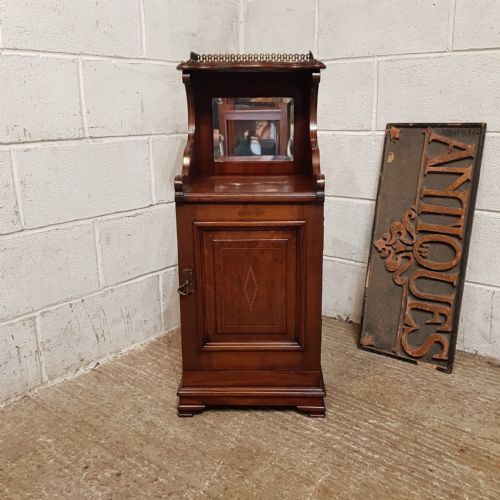
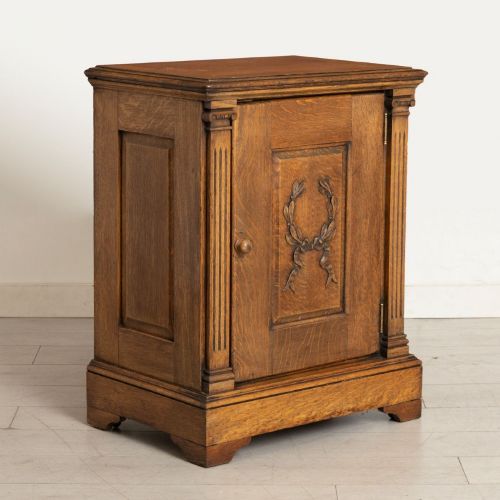
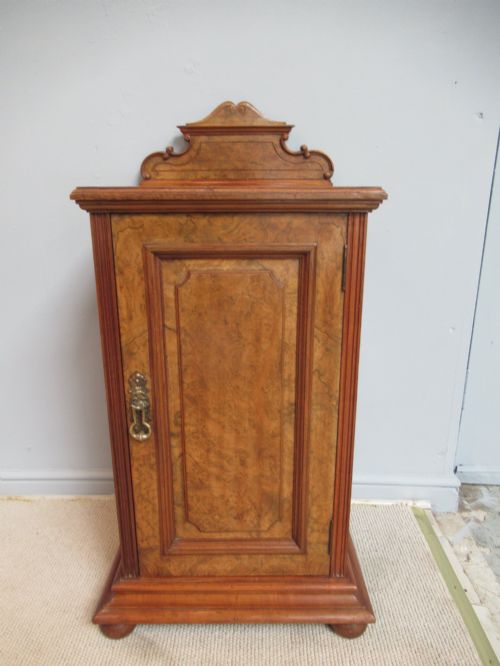
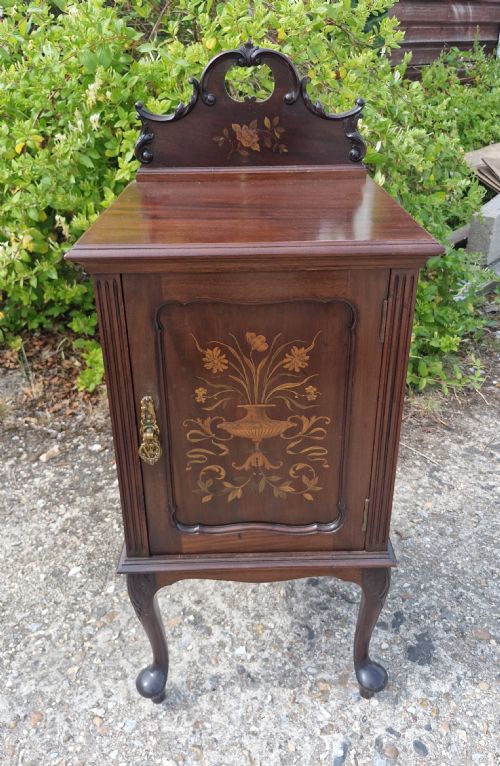

Late Victorian Bedside Cupboards
Late Victorian bedside cupboards bring practical storage to the bedroom with the rich timber surfaces and varied revival styles of the nineteenth century.
Late Victorian Bedside Cupboards
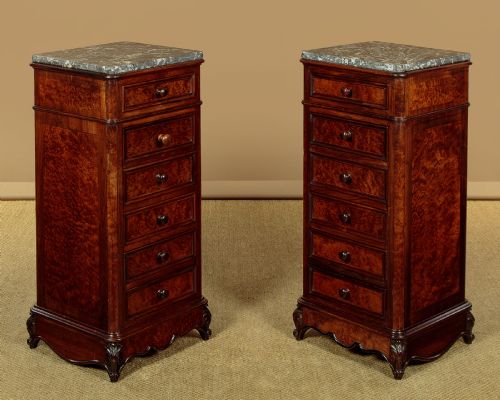
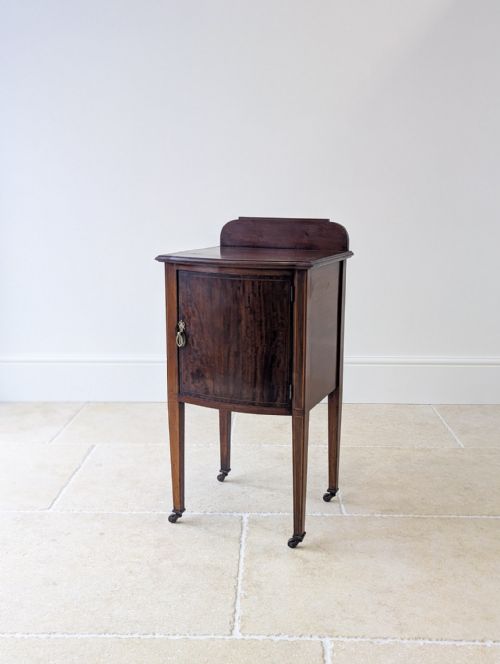
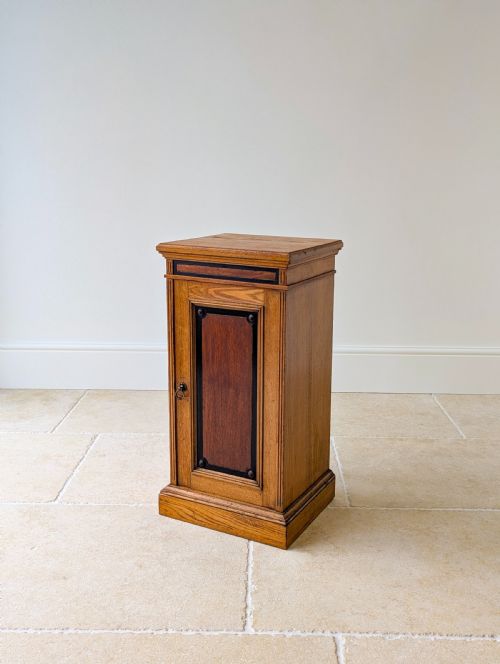
Late Victorian bedside cupboards encompass small cabinets, bedside chests, and pedestal lockers designed to sit beside a bed. The selection includes single pieces and matched pairs spanning the Victorian era and the closing decades of the nineteenth century.
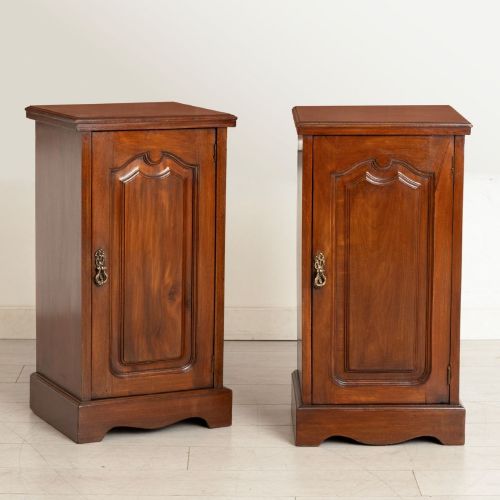
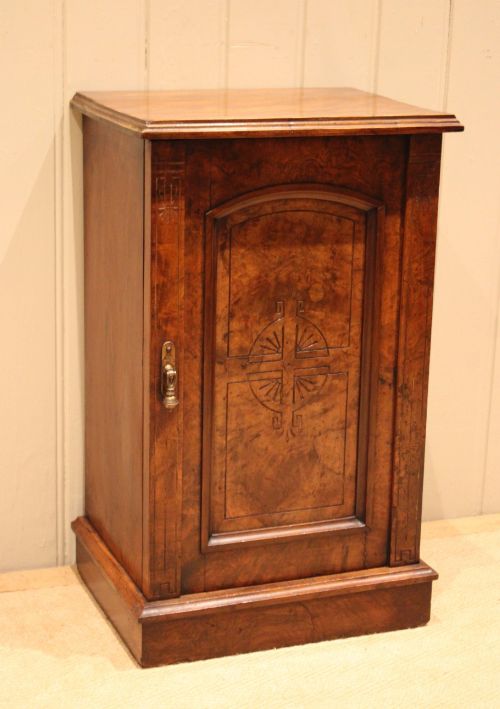
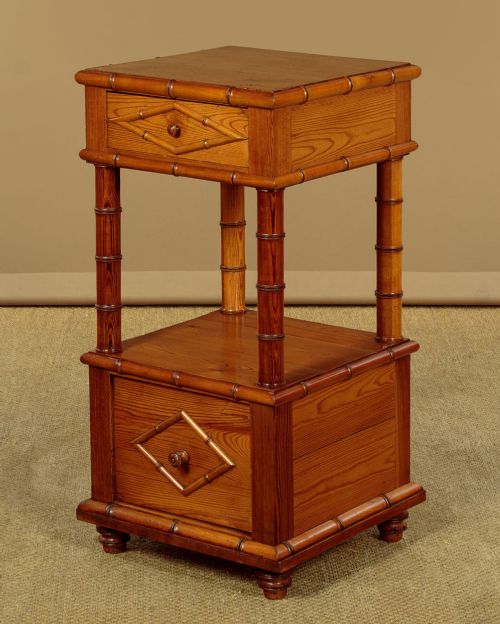
Mahogany and walnut appear frequently, alongside rarer timbers like rosewood, satinwood, and burr walnut. Buyers meet forms ranging from simple door cupboards to multi-drawer lockers and marble top designs.
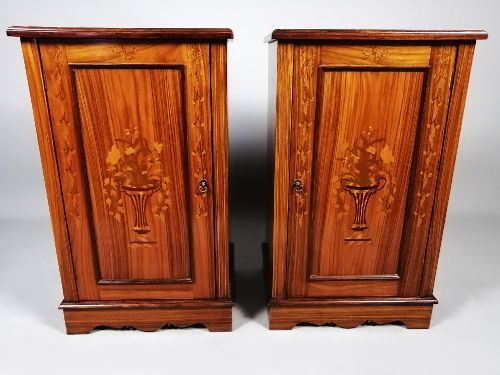
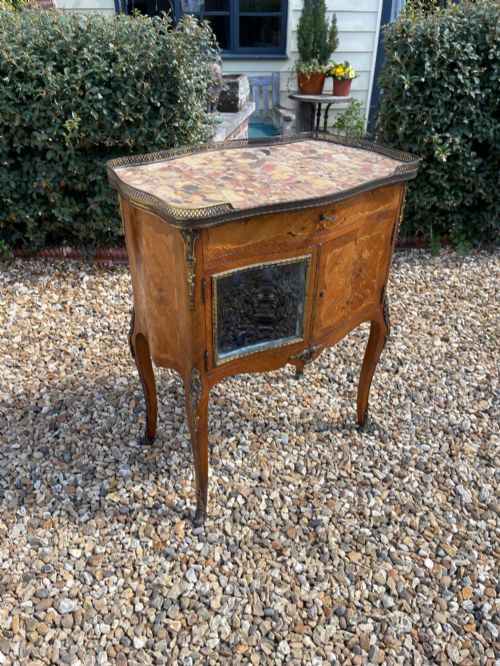
Stylistic variety runs from plain functional items to pieces decorated with marquetry, inlay, or carved details in Gothic Revival and French revival styles. Aesthetic Movement examples also feature among the recorded objects.
Materials and construction
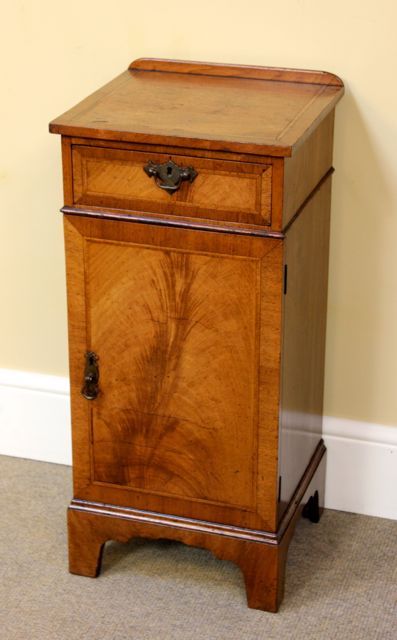
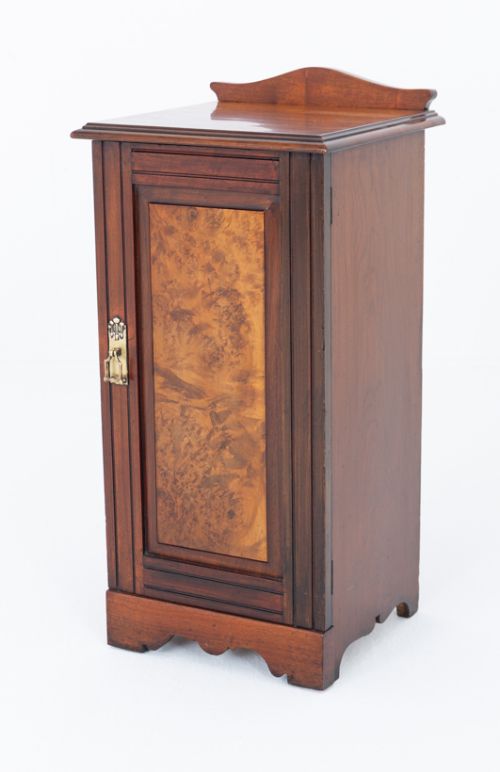
Cabinet makers utilised dense hardwoods such as mahogany and walnut for the primary carcases, often applying figured veneers like burr walnut or amboyna to the exterior surfaces. Solid oak and pine also provide structural integrity for regional and utilitarian pieces.
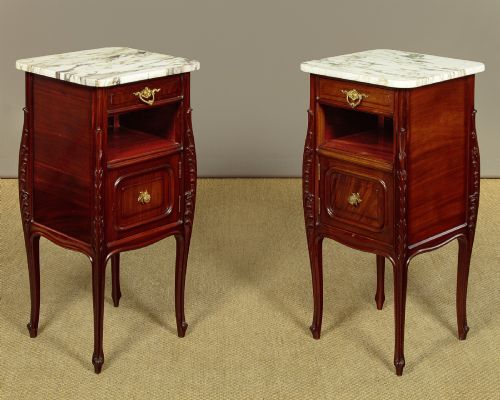
Surface ornamentation involved marquetry inlay, contrasting exotic timbers, and carved motifs reflecting Gothic or Louis styles. Functional elements include fitted brass handles and inset marble tops designed to resist water from bedroom washing jugs.
Revival styles represented include Gothic, Louis XIV, and Louis XV alongside the Aesthetic Movement.
Judging quality and execution
Quality rests on the selection of timber veneers and the precision of the joinery and inlay work. Cabinets with tightly figured burr walnut or delicate marquetry represent finer workshop output than plain utility pieces.
The choice of secondary woods, the integration of heavy materials like marble tops, and the subtlety of carved revival details distinguish standard production from exceptional cabinet work.
Heals·James Shoolbred·Maples
The Late Victorian Bedside Cupboards Glossary
- Marquetry
- Decorative patterns formed by fitting small pieces of veneer into a wood background. This technique creates pictorial or geometric designs on cabinet doors.
- Aesthetic Movement
- A late nineteenth century design style that rejected heavy Victorian ornamentation in favour of simplicity and artistic refinement. Pieces often display clean lines and subtle inlay.
- Gothic Revival
- An architectural and decorative style drawing inspiration from medieval forms. Cabinets in this style feature pointed arches, heavy mouldings, and carved oak.
- Burr Walnut
- Wood taken from the warted growths on walnut trees, showing highly twisted and knotted grain patterns. It provides a decorative surface veneer on luxury cabinets.
- Pedestal
- A tall support or base form used in bedside furniture to elevate enclosed storage compartments or drawers.
Late Victorian Bedside Cupboards: Frequently Asked Questions
What is the difference between a bedside cabinet and a bedside locker?
Bedside cabinets generally feature a panelled door enclosing a cupboard space, whereas lockers often incorporate multiple small drawers for enclosed storage.
Both forms served the same nineteenth-century bedroom function of holding night-time essentials and personal items out of sight.
Are marble top bedside cupboards original?
Marble tops were fitted to protect the wooden surface from water pitchers and washbasins used before indoor plumbing became standard.
Many period cabinets retain their original inset stone slabs, particularly those influenced by French rococo and revival designs.
How do I identify Aesthetic Movement bedside furniture?
Aesthetic Movement pieces display simpler geometric forms, lighter timber tones, and restrained use of inlay rather than heavy carving.
They reflect a shift toward artistic design principles during the late nineteenth century.
Do late Victorian bedside cupboards come in pairs?
Matched pairs appear frequently in nineteenth-century bedroom furniture production to balance the layout around a double bed.
Single cabinets also occur regularly depending on original room configurations.