



Late Seventeenth Century Chest
A late seventeenth century chest brings heavy timber and centuries of domestic history straight into a room.
Late Seventeenth Century Chest
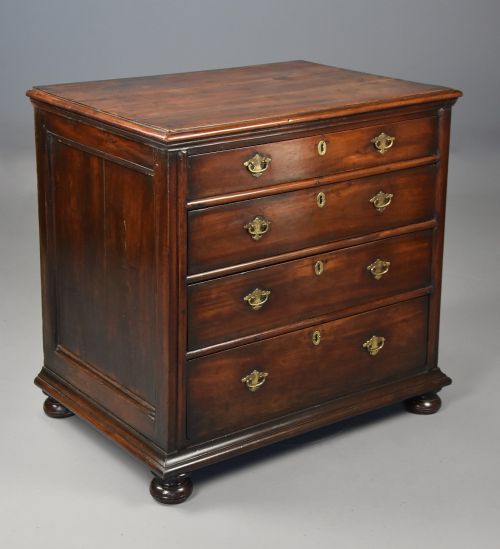
A late seventeenth century chest encompasses robust storage furniture built during the Jacobean, Charles II, and Carolean periods. Buyers searching for a late seventeenth century chest encounter sturdy utilitarian forms including chests of drawers, coffers, trunks, and desk boxes.
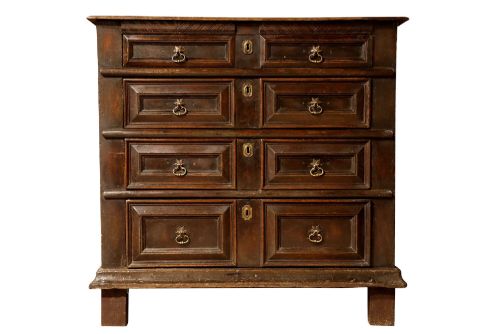
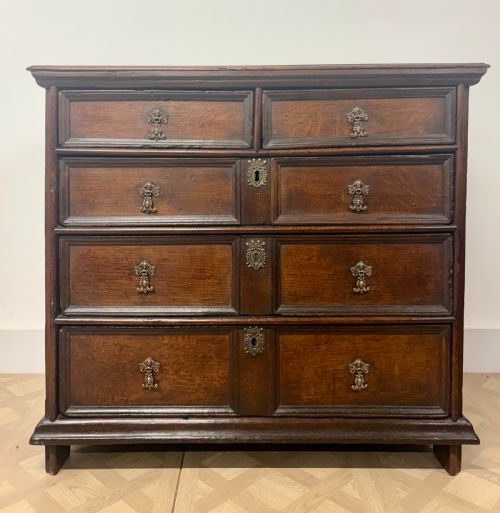
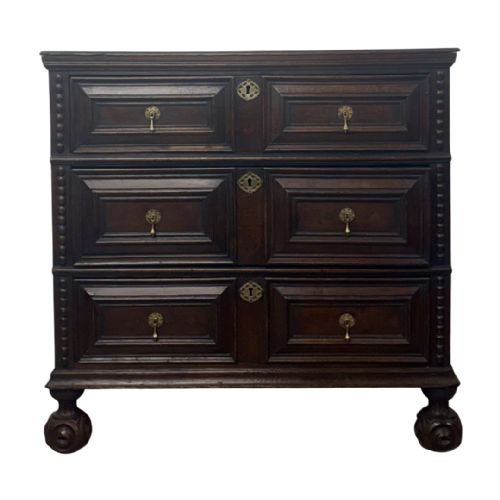
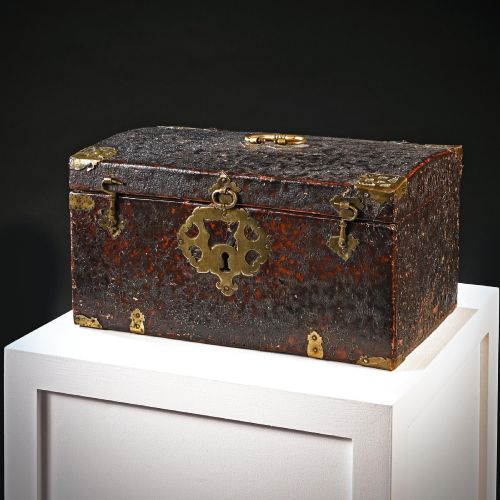
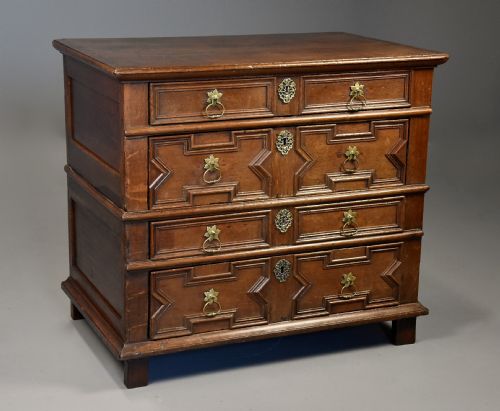
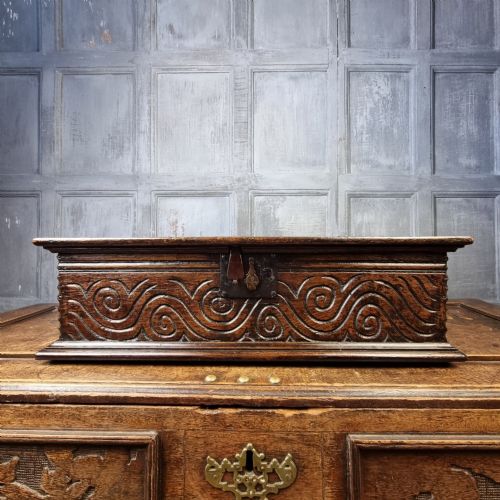
The pieces appearing on this page span several specific formats, most notably oak chests of drawers featuring moulded fronts or geometric panels. Alongside standard chests, the selection includes smaller desk boxes, travelling boxes covered in leather with brass work, and occasional pieces raised on stands.
Originating primarily from English workshops, these items serve as both practical storage vessels and tangible examples of seventeenth-century joinery. The prevailing forms rely on solid timber construction designed to endure household use over many generations.
What varies in quality
Quality rests in the integrity of the timber and the crispness of the hand-cut mouldings or carved details. Pieces with well-preserved fruitwood surfaces or faded oak patination command greater interest from collectors.
The survival of original brass or iron hardware and the stability of the structural joints dictate the overall standing of an individual chest. Alterations to drawer configurations or replaced timber lower the historical value.
Late Seventeenth Century Chest Retail Price Guide 2026
Typical asking prices for late seventeenth century chest among the pieces listed under this phrase on Sellingantiques today, from the lower quarter to the upper quarter. They describe what is for sale here now, not the wider market.
The Late Seventeenth Century Chest Glossary
- Coffer
- A heavy wooden chest traditionally used for storing valuables or linens. These sturdy boxes often feature panelled construction and hinged lids.
- Geometric moulding
- Raised wooden profiling applied to drawer fronts or panels in repeating geometric patterns. This decorative technique is characteristic of the Charles II period.
- Fruitwood
- Dense timber derived from fruit-bearing trees such as pear or apple. Cabinet makers utilised this material for smaller chests and decorative elements.
- Chest on stand
- A taller storage form consisting of a primary chest section elevated upon a separate support frame or base. This arrangement provides easier access and a lighter visual presence.
- Patina
- The surface sheen and colour developed by wood through decades of handling, polishing, and natural oxidation. A desirable finish shows depth and age.
Late Seventeenth Century Chest: Frequently Asked Questions
What fits inside a seventeenth century chest?
These vessels suit the storage of heavy blankets, winter textiles, or household linens. Smaller desk boxes and travelling trunks accommodate letters, documents, or personal valuables.
The enclosed space remains dry and secure, though modern users often line the interior with acid-free tissue to protect delicate fabrics from rough wood.
Where should I place a chest of drawers?
A sturdy oak chest anchors a hallway, living room, or bedroom effectively. The low profile of many examples also permits placement beneath windows or along substantial partition walls.
Keep timber furniture away from direct heat sources and strong sunlight to prevent the dry oak or fruitwood from splitting.
How do I identify a Charles II period piece?
Look for distinctive geometric moulding patterns across the drawer fronts and applied split-spindle decorations. These stylistic markers typically date production to the later decades of the sixteen-hundreds.
Construction details such as hand-cut dovetails and pegged frame joints further support the seventeenth-century origin.
Are these chests heavy to move?
Solid oak and fruitwood construction makes these pieces exceptionally heavy and dense. Relocating a chest usually requires two people to lift it safely without straining the historical frame.
Emptying the drawers entirely before any move protects both the internal runners and the external joins from undue stress.